
Imagine locking your money in a bank and getting paid to keep it there. Now imagine that "payment" comes in the form of new tokens you can sell for profit, but with zero insurance if the system breaks. That’s yield farming. It sounds like free money, right? Well, not exactly. While some early adopters turned $5,000 into $87,000 by simply moving their assets around different protocols, many others lost half their principal due to hidden risks. If you’ve ever wondered how people make double-digit returns on stablecoins while traditional banks offer barely 4%, this guide explains what Yield Farming is, how it actually works, and whether it’s worth the headache.
The Core Concept: Liquidity Is King
At its heart, yield farming is about providing liquidity. In centralized finance (CeFi), banks take your deposits and lend them out. In decentralized finance (DeFi), there are no middlemen. Instead, users deposit their crypto into shared pots called Liquidity Pools. These pools allow traders to swap tokens instantly without waiting for a buyer or seller on an order book.
To incentivize people to lock up their funds, protocols pay rewards. These rewards usually come from two sources:
- Transaction Fees: Every time someone swaps tokens in the pool, they pay a small fee (e.g., 0.3%). This fee is split among those who provided the liquidity.
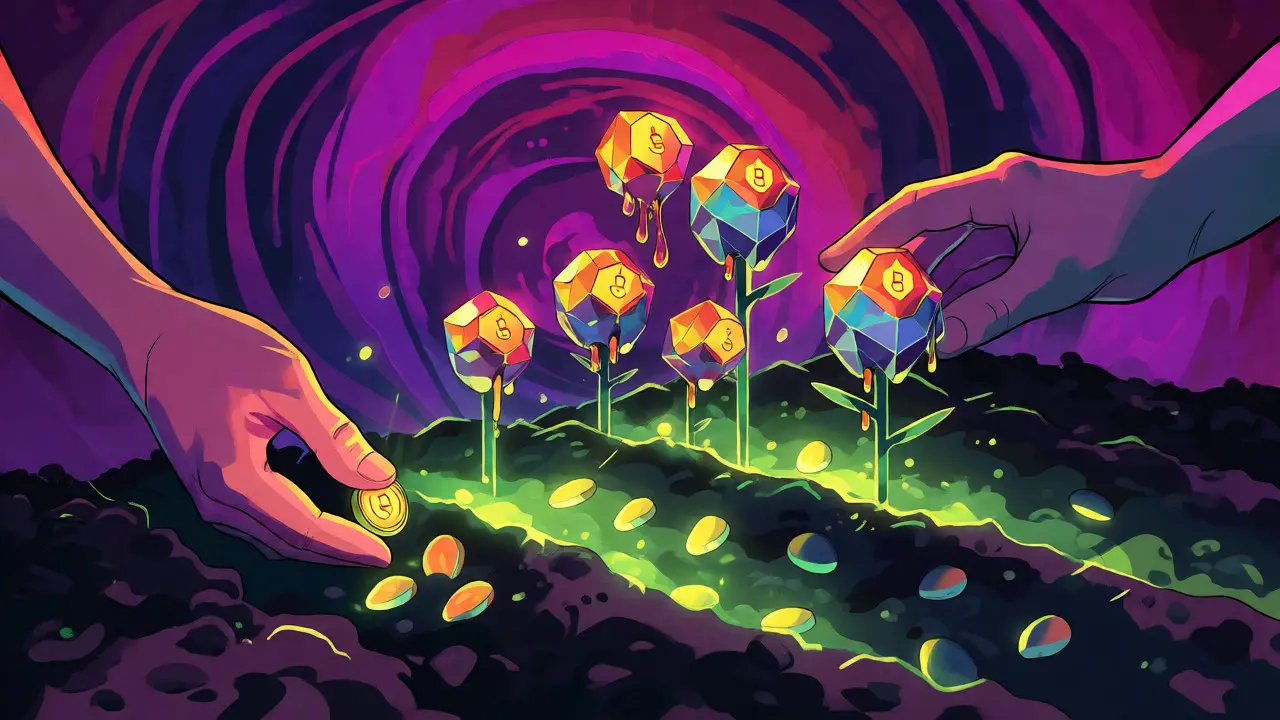
- Governance Tokens: Protocols often mint new tokens (like COMP on Compound or UNI on Uniswap) and distribute them to liquidity providers as an extra bonus. This is where the "farming" analogy comes in-you plant your capital, wait, and harvest these new tokens.
This mechanism exploded during the "DeFi Summer" of 2020. Before then, lending platforms struggled to attract users. By introducing token emissions, projects like Compound Finance bootstrapped their ecosystems rapidly. Today, yield farming remains a cornerstone of DeFi, managing billions in Total Value Locked (TVL).
How It Works Step-by-Step
You don’t need a degree in computer science to start, but you do need to understand the mechanics. Here’s the typical workflow for a yield farmer:
- Connect Your Wallet: You use a non-custodial wallet like MetaMask. Unlike a Coinbase account, you control your private keys. If you lose them, your funds are gone forever.
- Choose a Protocol: Platforms like Uniswap, Aave, or Curve Finance offer different risk/reward profiles. Uniswap is great for swapping pairs; Curve specializes in stablecoins.
- Provide Liquidity: Most pools require paired tokens in equal value. For example, if you want to farm an ETH/USDC pool, you must deposit $1,000 worth of ETH and $1,000 worth of USDC. The protocol mints LP Tokens representing your share of the pool.
- Stake Your LP Tokens: Simply holding LP tokens isn’t enough. You must stake them in a specific "farm" contract to earn governance tokens. Think of this as putting your receipt into a lottery machine that pays out more receipts.
- Harvest and Compound: Periodically, you claim your reward tokens. Smart farmers reinvest these rewards back into the pool to compound earnings, similar to how interest works in a savings account, but faster.
Risks You Can’t Ignore
High APYs (Annual Percentage Yields) are attractive, but they’re rarely free. Here are the three biggest threats to your capital:
Impermanent Loss
This is the silent killer of yield farming profits. When you provide liquidity for a pair like ETH/USDC, the ratio of tokens in the pool changes as prices move. If ETH skyrockets, the pool automatically sells some of your ETH for USDC to maintain balance. When you withdraw, you might have less total value than if you had just held the ETH in your wallet. During high volatility, impermanent loss can exceed 50%, wiping out all your farming rewards.
Smart Contract Vulnerabilities
DeFi runs on code. If that code has a bug, hackers exploit it. In 2022 alone, over $3 billion was lost to DeFi hacks. Unlike a bank, there’s no FDIC insurance. If a protocol gets hacked, you could lose everything. Always check if a project has been audited by reputable firms, though even audits aren’t foolproof.
Token Volatility
If you’re earning rewards in a new, obscure token, its price might crash before you can sell it. Early SushiSwap farmers saw SUSHI go from $0.10 to $22.80, but many latecomers bought at the peak and watched it drop 90%. Real yield-earned from transaction fees-is generally more stable than inflationary token emissions.
Yield Farming vs. Staking vs. Traditional Savings
Not sure which strategy fits your risk tolerance? Compare the options below.
| Feature | Traditional Savings | Crypto Staking | Yield Farming |
|---|---|---|---|
| Average APY | 3-5% | 3-8% (e.g., ETH) | 5-200%+ (highly variable) |
| Risk Level | Very Low (FDIC insured) | Moderate (slashing risks) | High (smart contract & IL risks) |
| Complexity | Low | Medium | High (requires active management) |
| Liquidity | High | Varies (unbonding periods) | Medium (can exit anytime, but fees apply) |
| Primary Reward Source | Interest | Block Validation | Fees + Token Emissions |
Staking is simpler: you lock up native tokens (like ETH) to help secure the network. Yield farming is more active. You’re essentially acting as a market maker. If you prefer set-it-and-forget-it, staking is better. If you enjoy optimizing returns and monitoring markets, farming offers higher potential upside.

Getting Started: A Practical Checklist
Ready to try your first farm? Follow this roadmap to avoid rookie mistakes:
- Start Small: Never invest more than you can afford to lose. Test with $100-$500 before committing significant capital.
- Understand Gas Fees: On Ethereum mainnet, transactions can cost $5-$50. If you’re farming small amounts, gas fees will eat your profits. Consider Layer 2 networks like Arbitrum or Optimism, or alternative chains like BNB Chain, where fees are cents.
- Check TVL and Age: Look for protocols with substantial Total Value Locked and a track record of several months. Newer farms offer higher yields but carry extreme risk.
- Use Aggregators: Tools like Yearn.finance automate the process of moving funds between farms to maximize yield. They charge a fee, but save you time and gas.
- Monitor Impermanent Loss: Use calculators to estimate IL before entering volatile pairs. Stablecoin pools (USDC/DAI) have minimal IL risk and are ideal for beginners.
The Future of Yield Farming
The era of unsustainable 1,000% APYs driven purely by token printing is fading. The industry is shifting toward "real yield." This means protocols distributing actual revenue from trading fees rather than just inflating their own token supply. Projects like MakerDAO and Aave are leading this trend, offering sustainable returns backed by real economic activity.
Regulatory clarity is also looming. The SEC has scrutinized yield farming products, labeling some as unregistered securities. While this creates uncertainty, it may eventually bring institutional money into the space, stabilizing the market. For now, yield farming remains a powerful tool for those willing to learn the ropes, but it demands respect for its complexities.
Is yield farming safe?
It carries significant risk. While major protocols like Aave and Uniswap are battle-tested, smart contract bugs and hacks remain possible. Additionally, impermanent loss can erode profits. It is safer than meme coins but riskier than holding Bitcoin or using a bank savings account.
Do I need a lot of money to start yield farming?
No. You can start with as little as $50-$100. However, on expensive networks like Ethereum, high gas fees can make small investments inefficient. Using Layer 2 solutions or cheaper chains like Polygon or BNB Chain allows you to farm effectively with smaller amounts.
What is impermanent loss in simple terms?
It’s the difference in value between holding your tokens versus providing them to a liquidity pool when prices change. If one token in your pair rises significantly in price, the pool automatically sells some of it for the other token. When you withdraw, you might end up with less total value than if you had just held the tokens in your wallet.
Can I lose all my money in yield farming?
Yes. If a smart contract is hacked, or if the governance token you’re earning crashes to zero, you could lose most or all of your initial investment. There is no insurance in DeFi like FDIC protection in banking.
What is the difference between yield farming and staking?
Staking involves locking up native tokens to support a blockchain network (like Ethereum PoS). Yield farming involves providing liquidity to decentralized exchanges or lending platforms to earn fees and governance tokens. Farming is generally more complex and risky but offers higher potential returns.
Write a comment