
Remember the wild west days of 2017? When every new token launched on Ethereum needed a place to trade immediately after its ICO? That was EtherDelta’s moment. It was the go-to spot for early adopters chasing micro-cap gems. But here is the hard truth for anyone looking at this platform in June 2026: EtherDelta is effectively dead. The original site stopped functioning years ago. Its community-driven successor, ForkDelta, still exists, but it operates as a historical artifact rather than a competitive trading venue. If you are wondering whether you should trust your funds with ForkDelta today, the short answer is no-unless you have a very specific, high-risk reason to do so.
This review breaks down why EtherDelta failed, what ForkDelta actually is, and whether there is any utility left in these legacy platforms compared to modern decentralized exchanges like Uniswap or PancakeSwap. We will look at the security risks, the user experience nightmares, and the stark reality of their current market position.
The Rise and Fall of EtherDelta
To understand where we are, we need to look at where we started. EtherDelta was created by Zack Coburn in early 2017. It was one of the first true decentralized exchanges (DEXs) that allowed users to trade ETH and ERC-20 tokens without giving up control of their private keys. In an era when centralized exchanges were frequently hacked or shut down, this non-custodial model felt revolutionary.
For a brief window in late 2017, EtherDelta dominated. It held about 15% of the DEX market share. Why? Because it listed tokens instantly. If a project finished its Initial Coin Offering (ICO), it could get listed on EtherDelta almost immediately. Traders flocked there to buy into projects before they hit major exchanges like Binance or Coinbase.
Then, disaster struck. On December 24, 2017, hackers compromised EtherDelta’s DNS server. They redirected users to a phishing site that looked identical to the real exchange. At least 308 ETH (worth roughly $154,000 at the time) was stolen from unsuspecting traders. This wasn't just a technical glitch; it exposed a critical flaw in web-based DEX interfaces. Even if the smart contract is secure, the website connecting you to it can be hijacked.
Compounding the crisis, rumors spread that Coburn had sold the platform to unknown parties who launched an unvetted ICO. Trust evaporated overnight. By February 2019, the interface stopped updating orders. The platform was functionally dead.
What Is ForkDelta?
When EtherDelta fell, the community didn’t want to lose access to the underlying technology. The smart contract itself-the code that actually executed trades on the blockchain-was immutable and secure. The problem was the website and the governance. So, developers created ForkDelta.
ForkDelta is a fork of EtherDelta. It uses the exact same smart contract architecture but operates under independent, community-driven governance. It emerged immediately after the 2017 hack to provide a safe haven for traders who wanted the order-book functionality of EtherDelta without the compromised ownership structure.
As of late 2025 and into 2026, ForkDelta remains operational. It hosts over 200 ERC-20 tokens. However, calling it "active" is generous. There have been no major updates since September 2021. The GitHub repository is static. The web interface receives only critical security patches. It runs because the Ethereum blockchain keeps running, not because of active development.
Security Analysis: Immutable Code, Fragile Interface
Let’s talk safety. This is the most important part of this review. How secure is ForkDelta in 2026?
On paper, the model looks strong. You never send your coins to the exchange. Instead, you deposit them into a smart contract. You retain control of your private keys via your wallet (like MetaMask). This eliminates counterparty risk-the exchange can’t run away with your money because it never holds it.
However, experts warn that the surrounding infrastructure is weak. Dr. Sarah Chen, Blockchain Security Lead at Trail of Bits, noted in her 2024 Consensus Conference presentation that while the EtherDelta smart contract remains secure due to immutability, the web interface represents the weakest link. James Lovejoy, former CISO of Coinbase, echoed this in his 2025 report, stating that DNS vulnerabilities remain a fundamental weakness for all web-based DEX interfaces.
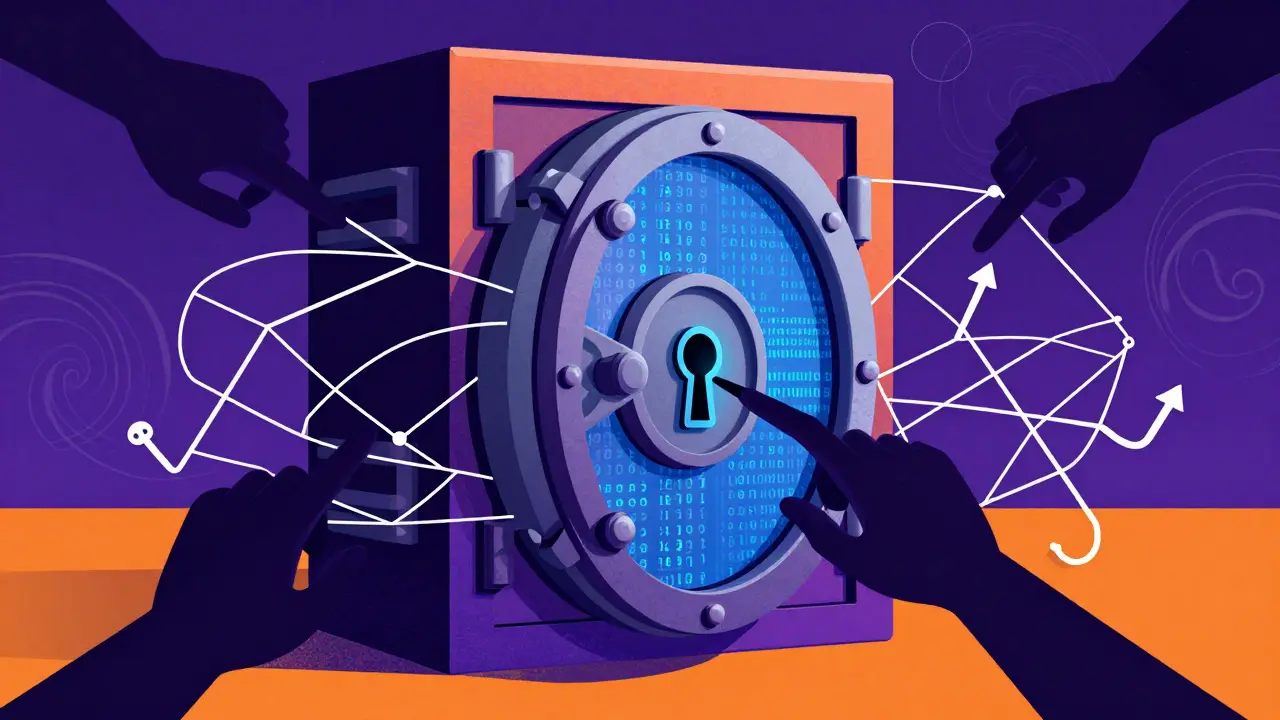
In simple terms: The vault is unbreakable, but the door leading to it can be picked. If you connect your wallet to a compromised version of the ForkDelta website, or if you mistype the URL, you could sign a malicious transaction that drains your funds. Given that ForkDelta has no active team monitoring for phishing attacks or updating security protocols regularly, this risk is higher than on mainstream platforms.
| Feature | ForkDelta | Uniswap V3 | Binance (CEX) |
|---|---|---|---|
| Custody | Non-Custodial (User holds keys) | Non-Custodial (User holds keys) | Custodial (Exchange holds keys) |
| Smart Contract Audits | Legacy (Last major audit 2018) | Regularly Audited (Multiple firms) | N/A (Proprietary backend) |
| Phishing Protection | None (Community reliant) | Active Monitoring & Alerts | 2FA, Device Management, Support |
| DNS/Infrastructure Risk | High (Static, unmaintained UI) | Low (Modern cloud infrastructure) | Medium (Centralized target) |
User Experience: A Steep Learning Curve
If security is a concern, usability is a dealbreaker. ForkDelta’s interface hasn’t changed in years. It looks like a website from 2017. For a beginner, it is confusing. For an expert, it is frustrating.
Here is how trading works on ForkDelta:
- Connect Wallet: You must use a Web3 wallet like MetaMask. There is no account creation, no email login.
- Deposit Funds: Unlike modern DEXs where you swap directly from your wallet, ForkDelta requires you to deposit ETH and tokens into its smart contract first. This is an extra step that costs gas fees.
- Place Order: You interact with an order book. You set a price and quantity. Your order sits in the book until someone matches it.
- Withdraw: After trading, you must manually withdraw your remaining balance back to your personal wallet.
This process is slow. CaptainAltcoin’s 2024 onboarding study found that new users take an average of 2.7 hours to complete their first successful trade. Compare that to 8 minutes on a centralized exchange or even 5 minutes on Uniswap. Why the delay? You have to understand Ethereum gas mechanics. If network congestion is high, your transactions fail, costing you money. During peak times, trade execution can take 60+ seconds, whereas Binance processes millions of orders per second.
There is also no mobile app. Everything happens on a desktop browser. In 2026, expecting crypto traders to abandon mobile trading feels archaic.
Fees and Trading Costs
ForkDelta charges a flat 0.3% transaction fee. There is no maker-taker distinction. While this seems standard, the hidden costs are significant.
- Gas Fees: Every interaction (deposit, place order, cancel order, withdraw) requires a separate Ethereum transaction. During high network activity, these gas fees can exceed the value of your trade.
- Slippage: Because ForkDelta has shallow liquidity (average order book depth of 15 ETH compared to Uniswap’s 85 ETH for major pairs), large trades suffer from high slippage. You might try to buy a token at $1.00, but end up paying $1.05 because there aren’t enough sellers at your desired price.

Market Position in 2026: Who Uses ForkDelta?
ForkDelta holds less than 0.1% of the DEX market share in Q4 2024, down from EtherDelta’s 15% peak. It ranks 15th among DEXs. Most retail traders have migrated to Automated Market Maker (AMM) platforms like Uniswap, SushiSwap, or Curve, which offer instant swaps without order books.
So, who is left? Two groups:
- Micro-Cap Hunters: Some veteran traders use ForkDelta to find obscure ERC-20 tokens with market caps under $1 million. These tokens often don’t list on major DEXs due to low volume or lack of audits. Reddit user u/EthereumVeteran claimed in 2023 that ForkDelta was the only reliable place to trade certain post-ICO tokens.
- Historical Researchers: Developers and students studying the evolution of DeFi use ForkDelta as a live case study of early DEX architecture.
For everyone else, ForkDelta offers little advantage. Delphi Digital’s 2025 DEX Report forecasts that ForkDelta’s volume will decline to near-zero by 2028 as users migrate to Layer-2 solutions that offer faster speeds and lower fees.
Alternatives: Where Should You Trade Instead?
If you are looking to trade ERC-20 tokens in 2026, ForkDelta is rarely the best choice. Here are better alternatives based on your needs:
- For Liquidity and Speed: Use Uniswap V3. It has deep liquidity, lower slippage, and a much more intuitive interface. It supports concentrated liquidity, allowing for more efficient capital usage.
- For Low Fees: Consider Layer-2 DEXs like PancakeSwap (on BNB Chain) or SushiSwap (on Arbitrum/Optimism). These networks offer faster transactions and significantly lower gas fees than Ethereum mainnet.
- For Beginners: Stick to reputable Centralized Exchanges (CEXs) like Binance or Coinbase if you are not comfortable managing private keys and gas fees. They offer fiat on-ramps and customer support.
Final Verdict
EtherDelta was a pioneer, but it is a relic. ForkDelta keeps the flame alive, but it burns dimly. In 2026, using ForkDelta involves accepting higher security risks, poorer user experience, and inferior liquidity compared to modern alternatives. Unless you are specifically hunting for a micro-cap token that isn’t listed anywhere else, you should avoid it. The crypto world has moved on to faster, safer, and more user-friendly platforms. Don’t let nostalgia cost you your funds.
Is EtherDelta still working in 2026?
No, the original EtherDelta platform ceased operations in 2019 following a DNS hack and loss of trust. Its successor, ForkDelta, is still technically functional but operates with minimal maintenance and negligible market share.
Is ForkDelta safe to use?
ForkDelta carries higher security risks than modern DEXs. While its smart contract is immutable, the web interface is outdated and lacks active protection against phishing attacks. Users must be extremely careful to verify URLs and protect their private keys.
Why does ForkDelta require deposits before trading?
ForkDelta uses an order-book model where funds must reside within the smart contract to facilitate matching buys and sells. This differs from AMM platforms like Uniswap, which allow direct swapping from your wallet without pre-depositing.
What are the fees on ForkDelta?
ForkDelta charges a 0.3% transaction fee per trade. Additionally, users pay Ethereum gas fees for every interaction (deposit, trade, withdrawal), which can be expensive during network congestion.
Should I use ForkDelta for new ICO tokens?
Only if the token is exclusively available on ForkDelta. However, be aware of high slippage, low liquidity, and significant security risks. Always verify the token contract address independently before trading.
Does ForkDelta have a mobile app?
No, ForkDelta does not have a native mobile application. All trading must be conducted through a desktop web browser connected to a Web3 wallet like MetaMask.
How does ForkDelta compare to Uniswap?
Uniswap is faster, has deeper liquidity, lower slippage, and a more user-friendly interface. ForkDelta is an older order-book DEX with limited utility today, primarily used for niche micro-cap tokens.
Write a comment