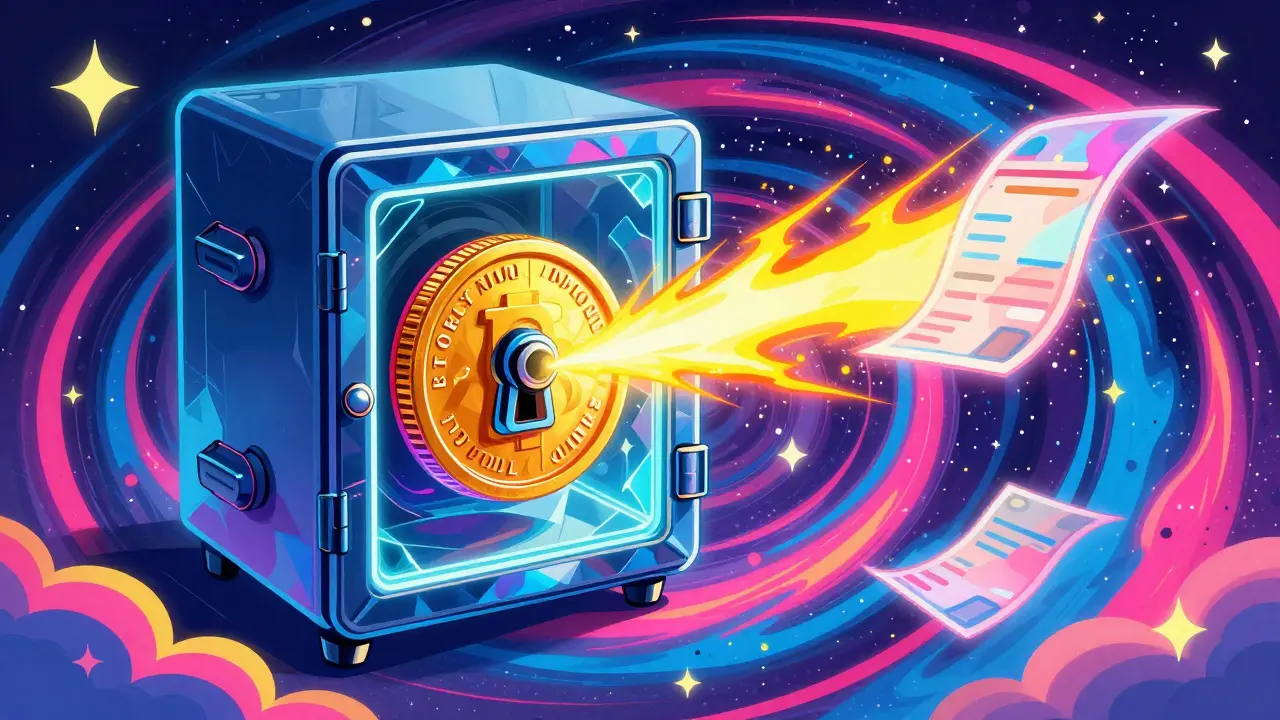
Imagine locking your gold in a vault and receiving a paper receipt that you can trade, spend, or lend anywhere in the city. As long as that vault is secure and the person holding the key is honest, your receipt is as good as gold. This is exactly how wrapped tokens is a digital representation of a blockchain asset that is locked on its native chain and minted as an equivalent token on another blockchain works. But what happens if the vault is robbed or the receipt-maker prints a million extra copies out of thin air? In the world of crypto, that's a bridge exploit, and it can turn your assets into worthless digital dust in seconds.
The Mechanics of Wrapping and Unwrapping
To understand the security risks, we first need to look at the plumbing. When you wrap an asset, you aren't actually "moving" a coin from one chain to another-that's technically impossible because blockchains are isolated silos. Instead, you use a Cross-Chain Bridge a protocol that allows the transfer of data and assets between two different blockchain networks .
The process usually follows a lock-and-mint model. For instance, if you want to use Bitcoin on Ethereum, you send your BTC to a custodian. They lock that BTC in a digital vault and then mint an equal amount of WBTC Wrapped Bitcoin, an ERC-20 token on the Ethereum network that maintains a 1:1 value peg to BTC on the Ethereum side. When you're done, you "burn" the WBTC, and the custodian unlocks your original BTC. It's a convenient way to bring liquidity to different ecosystems, but it introduces a massive point of failure: the bridge itself.
Where Bridges Break: The Two Biggest Attack Vectors
Most bridge hacks aren't random; they usually target two specific weaknesses. If you are using wrapped assets, you need to know these patterns to assess your risk.
The Collateral Drain: This happens when a hacker finds a way to withdraw the original assets from the source chain vault without actually owning the corresponding wrapped tokens. If a bridge is holding 1,000 BTC to back 1,000 WBTC, and a hacker steals the 1,000 BTC, the WBTC still exists on Ethereum, but it's no longer backed by anything. It becomes a "ghost token" with zero intrinsic value.
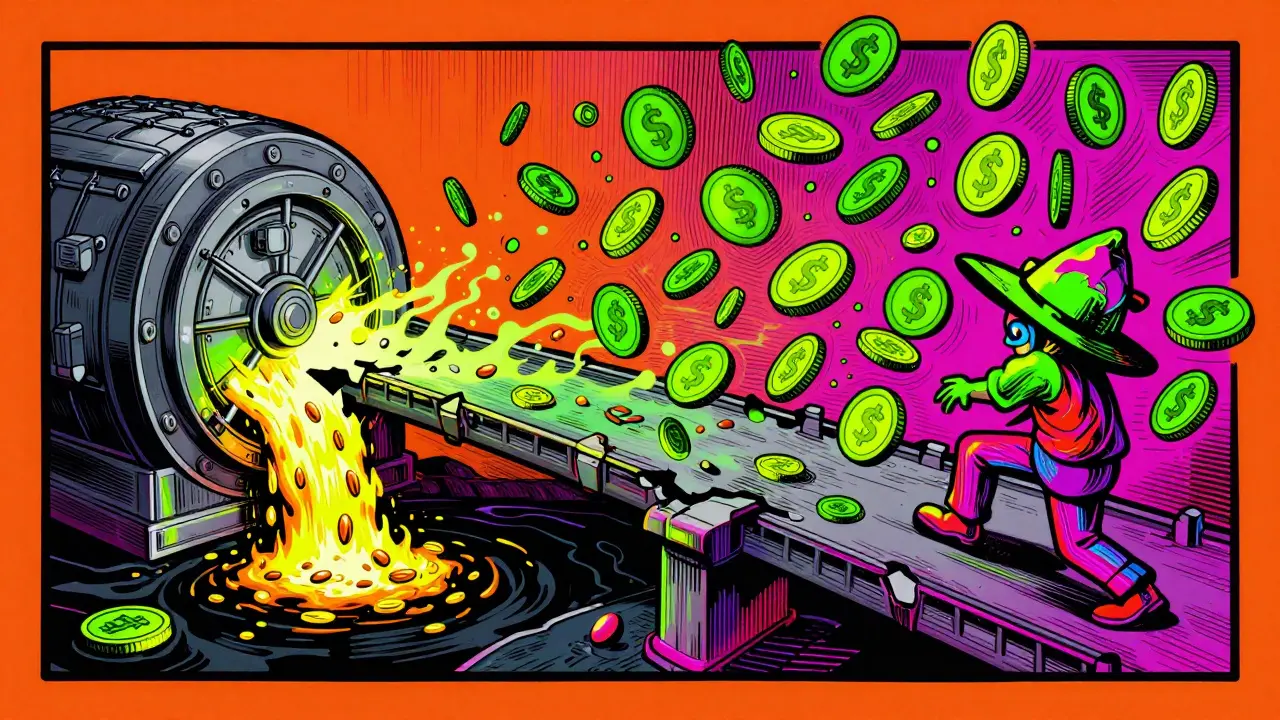
The Infinite Mint Glitch: This is the opposite problem. Instead of stealing the backing, the attacker exploits a bug in the smart contract to mint millions of new wrapped tokens without locking any actual collateral. This creates a fractional reserve nightmare. The hacker then dumps these fake tokens on decentralized exchanges, draining the liquidity pools and leaving honest holders with assets that the bridge cannot possibly redeem.
| Risk Type | Mechanism | Impact on User | Primary Cause |
|---|---|---|---|
| Collateral Drain | Vault assets stolen on source chain | Wrapped token becomes worthless | Private key compromise / Vault bug |
| Infinite Mint | Fake tokens created on target chain | Price crash / Liquidity drain | Smart contract logic error |
The Domino Effect: How One Bridge Affects All of DeFi
You might think, "I don't use that bridge, so I'm safe." Unfortunately, DeFi Decentralized Finance, an umbrella term for financial services built on blockchain technology doesn't work that way. Wrapped tokens are often used as collateral in lending markets.
Think of it like a house of cards. If a protocol allows WBTC as collateral for a loan in USDC, and the bridge securing that WBTC is hacked, the collateral suddenly vanishes or loses value. The protocol can't liquidate the position fast enough, leading to bad debt and potential insolvency. Even if you only lent native assets (like ETH) to that protocol, you could find your funds frozen or lost because the overall system is bankrupt. This systemic risk grows as more projects integrate wrapped assets to attract liquidity.

Evaluating Bridge Security: What to Look For
Not all bridges are created equal. Some are essentially "trust me, bro" operations, while others use institutional-grade security. If you're choosing a bridge, look for these three pillars of protection:
- Custodial Architecture: Avoid bridges that keep all assets in a "hot wallet" (connected to the internet). Look for those using Cold Storage An offline storage method for cryptocurrency keys to prevent hacking and MPC (Multi-Party Computation) A cryptographic method that allows multiple parties to jointly compute a function over their inputs while keeping those inputs private . Tools like Fireblocks or Gnosis Safe are industry standards for managing these vaults.
- Verification and Audits: A bridge without a public Smart Contract Audit A comprehensive security review of a blockchain contract's code by independent experts to find vulnerabilities is a red flag. Check if the audit was done by a reputable firm and if the bridge team actually fixed the issues found in the report.
- Insurance Wrappers: Some modern platforms provide insurance coverage for their wrapped assets. While not a cure for a total collapse, it provides a safety net for users if a bug is exploited.

The Trade-off: Efficiency vs. Trust
The biggest struggle in bridge security is the tension between user experience and safety. The most secure bridges are often the slowest because they require multiple approvals and manual checks. To solve this, some bridges use automated, single-transaction flows that eliminate the need for users to manually execute release transactions. While this is great for the user, it puts more pressure on the smart contract code to be perfect.
Ultimately, the "trusted custodian" model is the weak link. No matter how many audits a project has, you are still trusting a set of keys to be managed correctly. To mitigate this, diversify your assets across different bridges and avoid keeping a huge percentage of your portfolio in any single wrapped asset for long periods.
Are wrapped tokens safer than native tokens?
No. While the native token only carries the risk of the underlying network, a wrapped token carries both that risk AND the risk of the bridge/custodian. If the bridge is hacked, the wrapped token can lose its value even if the native token is doing fine.
What happens if a bridge is hacked?
If the collateral is stolen, the wrapped tokens are no longer backed and usually plummet in value. If an infinite mint occurs, the market is flooded with fake tokens, causing a price crash. In both cases, users may be unable to "unwrap" their assets back into the original coin.
How can I tell if a bridge is secure?
Check for three things: 1) Public audits from recognized security firms, 2) Use of multi-signature wallets and MPC for asset management, and 3) A clear, transparent record of where the collateral is stored (ideally in cold storage).
Can I lose my funds if I don't use the bridge directly?
Yes, through systemic risk. If you provide liquidity to a DeFi pool that accepts a hacked wrapped token as collateral, that pool could become insolvent, potentially affecting your returns or your ability to withdraw funds.
Is there a way to wrap tokens without a custodian?
Decentralized bridges attempt to do this using smart contracts and "relayers" or "oracles," but even these have security risks. No bridge is 100% risk-free because they all create a point of interaction between two different security environments.
Write a comment