
Imagine a company that buys Bitcoin or Ethereum, holds it forever, and gives all the profits to its shareholders. Now imagine doing that without a CEO, a board of directors, or a bank account. That is the core idea behind Rezerve Money, known by its ticker RZR. It is a decentralized treasury-accumulation protocol designed to build a massive reserve of major cryptocurrencies like ETH and BTC while distributing revenue directly to stakers.
If you have been following the crypto space, you might recognize this model. It borrows heavily from the strategies used by corporate giants like MicroStrategy and the algorithmic mechanics of projects like OlympusDAO. But instead of being controlled by a single entity, RZR runs on code. Before you decide whether to buy, stake, or ignore it, you need to understand how this "on-chain treasury" actually works, where the money goes, and why the price data looks so messy.
The Core Mission: Accumulating Assets
The primary goal of Rezerve Money is simple but ambitious: accumulate a huge reserve of blue-chip crypto assets. Most sources cite a target of 1,000,000 ETH, while others mention 5,000 BTC. This discrepancy likely reflects an evolution in their strategy or different interpretations by data aggregators, but the principle remains the same. The protocol aims to act as a collective savings account for the community.
Unlike traditional banks that lend your money out at interest, Rezerve uses DeFi mechanisms to grow this treasury. It operates as a fair-launched project, meaning there were no venture capital investors, no private sales, and no insider allocations. Every cent of revenue generated by the protocol is supposed to go back to the people who stake their RZR tokens. This "no VC, no insiders" approach is a key selling point for communities tired of early investors dumping tokens on retail buyers.
How the Protocol Works: Bonds and Rebasing
To understand RZR, you need to look at its two main engines: bond sales and rebase yields. These are not unique inventions; they are adapted from the OlympusDAO model, which pioneered this style of reserve currency.
- Bond Sales: When the protocol needs more assets for its treasury, it sells bonds. You can buy these bonds using stablecoins or other crypto assets. In return, you receive RZR tokens at a discount. This allows the treasury to accumulate assets cheaply without having to buy them at market price.
- Rebase Yield: If you hold RZR in a staking contract, your balance increases over time. This is called a rebase. The yield comes from the fees and revenues generated by the protocol's activities. Instead of sending you a separate reward token, the protocol simply mints more RZR and adds it to your wallet. This encourages long-term holding because the value of your stake grows with the health of the treasury.
This creates a feedback loop. As more people stake, the demand for RZR rises. As the treasury accumulates more ETH or BTC, the underlying value of each RZR token should theoretically increase. However, this only works if new participants keep buying bonds and providing liquidity.

Market Data and Price Confusion
Here is where things get tricky. If you look up RZR on different websites, you will see wildly different prices. One site might show $0.62, while another shows $12.72. Why does this happen?
RZR is a micro-cap asset with low liquidity. It trades primarily on decentralized exchanges (DEXs) like Uniswap, Shadow Exchange, and Equalizer. Because trading volume is often low-sometimes just a few hundred dollars a day-the price can vary significantly between different pools and chains. Some data aggregators might be indexing an old pool, a different chain version, or a pool with very little depth.
| Source | Reported Price (USD) | Circulating Supply | Market Cap Estimate |
|---|---|---|---|
| CoinGecko | $0.62 - $0.64 | ~1.5 million | ~$927,000 |
| CoinMarketCap | ~$13.20 (implied) | ~851,580 | ~$19.3 million |
| Binance Tracker | $12.72 | ~851,583 | ~$10.8 million |
| Bitget | $0.67 | ~851,583 | ~$578,000 |
Notice the supply numbers too. Some sources list a circulating supply of 1.5 million, while others say around 850,000. This inconsistency makes it hard to determine the true market cap. For a trader, this means you must check the specific DEX pool you intend to use rather than relying on a single aggregate price. Slippage can be high, and large orders could move the price significantly.
Comparing RZR to Other Models
To really grasp what Rezerve is, compare it to the two giants it mimics: MicroStrategy and OlympusDAO.
MicroStrategy is a publicly traded corporation that buys Bitcoin. Its stock price is tied to its Bitcoin holdings. However, it is centralized. A CEO makes decisions, and there are corporate overhead costs. RZR tries to replicate this accumulation strategy but removes the middleman. There is no salary for executives; the "company" is just smart contracts.
OlympusDAO (OHM) was the first major project to use the bond-and-rebase model. It aimed to create a decentralized reserve currency backed by a basket of assets. Olympus faced challenges with sustainability when market conditions turned bearish, leading to a collapse in value. Rezerve learns from this by focusing on a single, high-conviction asset (ETH or BTC) rather than a diverse basket, aiming for clearer valuation metrics.
The key difference is governance and transparency. In RZR, the rules are written in code. Anyone can audit the treasury balance on the blockchain. In MicroStrategy, you trust the auditors. In Olympus, you trusted the algorithm until the incentives misaligned. RZR sits in the middle: algorithmic distribution but with a clear, tangible asset backing.
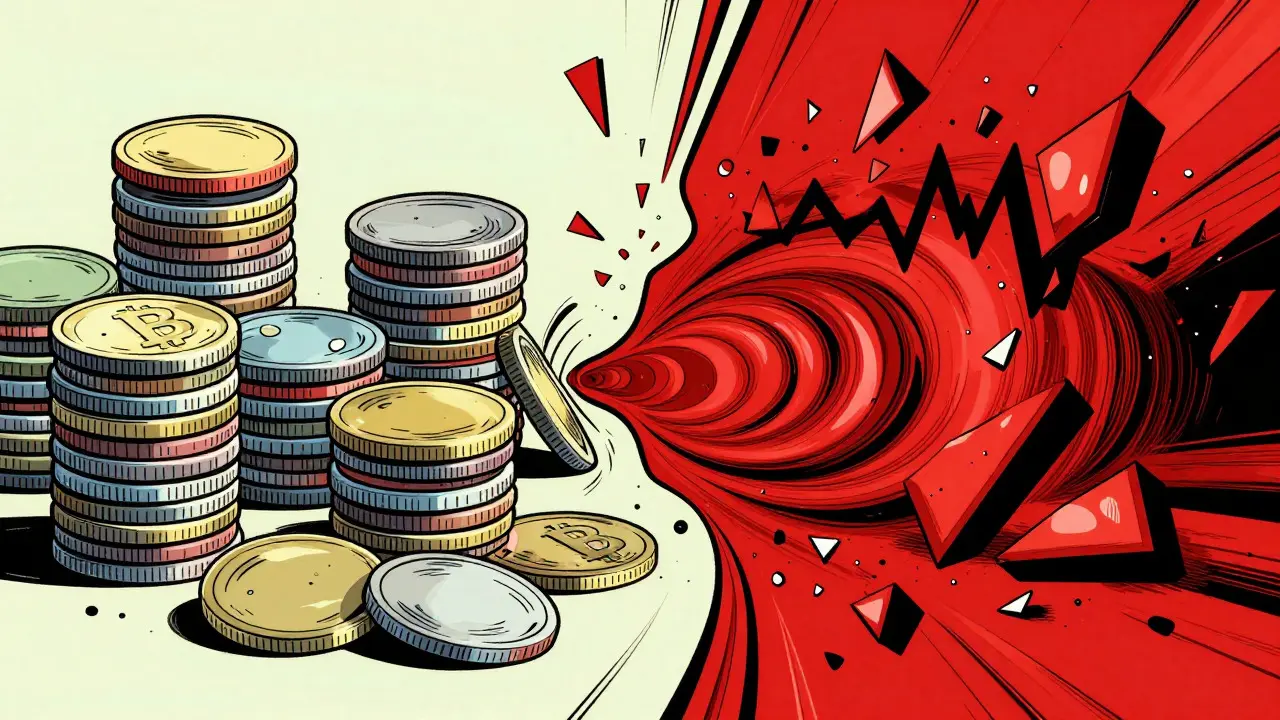
Risks and Considerations
Before you connect your wallet, consider the risks. First, there is the risk of low liquidity. If you want to sell a large amount of RZR, you might not find enough buyers at a fair price. Second, there is smart contract risk. Like any DeFi protocol, if there is a bug in the code, funds could be lost. While Rezerve claims to have open-source code and documentation, always verify audits yourself.
Third, there is the risk of model failure. The rebase mechanism relies on continuous inflow of new capital through bond purchases. If interest wanes, the yield drops, and the incentive to hold disappears. This is a common issue in algorithmic reserve currencies. Finally, regulatory uncertainty looms over all DeFi projects. While RZR is decentralized, regulators may still scrutinize protocols that resemble securities.
How to Get Started
If you decide to participate, here is the general process:
- Set up a Wallet: You will need an EVM-compatible wallet like MetaMask. Ensure you have some ETH or MATIC for gas fees, depending on which chain you use.
- Find a Liquidity Pool: Go to a decentralized exchange like Uniswap or Shadow Exchange. Connect your wallet and search for the RZR token. Double-check the contract address to avoid scams.
- Buy RZR: Swap your ETH or USDC for RZR. Be aware of slippage settings; you may need to adjust them for small-cap tokens.
- Stake Your Tokens: Navigate to the official Rezerve staking interface. Approve the transaction and deposit your RZR. Your balance will begin to rebase according to the protocol's current yield rate.
Always start with an amount you can afford to lose. The volatility of micro-cap DeFi tokens is extreme.
Is Rezerve Money (RZR) a safe investment?
No investment in DeFi is completely safe. RZR carries high risk due to its low market cap, potential smart contract vulnerabilities, and reliance on continuous user participation. It is considered speculative.
Why do RZR prices differ so much across websites?
Prices differ because RZR trades on multiple decentralized exchanges with varying liquidity levels. Aggregators may pull data from different pools or update at different times, leading to discrepancies.
What is the maximum supply of RZR?
RZR has no fixed maximum supply cap. The total supply expands through the rebase mechanism as new rewards are minted for stakers, similar to inflationary models in other reserve currencies.
Does Rezerve have venture capital backers?
No. Rezerve Money launched as a fair-launch project with no venture capital, no presales, and no insider allocations. All revenue is directed to stakers.
Which blockchain is RZR on?
RZR is primarily deployed on Ethereum and EVM-compatible chains like Sonic. You can trade it on decentralized exchanges such as Uniswap and Shadow Exchange.
Write a comment