
Imagine putting your money in a savings account and earning interest without doing any work. Now imagine that same concept, but instead of a bank, you are helping secure a global digital network. That is the core idea behind cryptocurrency staking. It has become one of the most popular ways for people to earn passive income in the digital asset world. But unlike traditional banking, this process involves locking up your coins to help validate transactions on a blockchain.
If you have heard terms like "Proof-of-Stake," "validators," or "slashing" and felt confused, you are not alone. The technology can seem complex at first glance. However, the basic principle is straightforward: you lock your tokens, the network uses them to stay secure, and you get paid for your contribution. This guide breaks down exactly how it works, the risks involved, and how you can start participating safely.
How Proof-of-Stake Works Compared to Mining
To understand staking, you first need to understand how blockchains agree on what is true. In the early days of Bitcoin, this was done through Mining, which is part of a system called Proof-of-Work (PoW). Miners used powerful computers to solve difficult math puzzles. The first one to solve it got to add the next block of transactions to the chain and earned a reward. This process consumed massive amounts of electricity.
Proof-of-Stake (PoS) changed this model entirely. Instead of competing with computing power, participants compete with their financial stake. Here is how it differs:
- No Energy Waste: PoS networks do not require energy-intensive mining rigs. They run on standard servers or even home computers.
- Financial Skin in the Game: To participate, you must lock up a certain amount of the network's native token. This acts as collateral.
- Random Selection: The network randomly selects validators to create new blocks. The more tokens you stake, the higher your chances of being selected, though many systems use randomness to keep smaller players competitive.
Think of it like a casino. In Proof-of-Work, everyone brings a hammer and tries to break a safe open. In Proof-of-Stake, everyone puts money on the table, and the house picks who gets to deal the cards next. If the dealer cheats, they lose their money. If they play fair, they keep their stake and earn a fee.
The Mechanics of Staking Rewards
When you stake your cryptocurrency, you are essentially lending your assets to the network to help it function. In return, the network pays you. These payments come from two main sources:
- Newly Minted Tokens: Most PoS blockchains create new tokens periodically to distribute to validators. This is similar to inflation, but it is controlled by code.
- Transaction Fees: Users pay small fees to send transactions on the network. Validators collect these fees as compensation for processing the data.
The amount you earn is usually expressed as an Annual Percentage Yield (APY). For example, if a network offers a 5% APY and you stake 100 tokens, you would theoretically earn 5 tokens over the course of a year. However, this rate fluctuates based on how many other people are staking. If more people join, the reward per person might decrease because the total pool of rewards is shared among more participants.
| Feature | Traditional Bank Savings | Cryptocurrency Staking |
|---|---|---|
| Risk Level | Low (Insured by government up to limits) | High (Market volatility + Smart contract risk) |
| Return Source | Bank loans to customers | Network protocol issuance & transaction fees |
| Liquidity | High (Usually instant access) | Variable (Some networks have lock-up periods) |
| Potential Return | Low (Often below inflation) | Higher (Can range from 3% to 20%+) |
Ways to Participate in Staking
You do not need to be a computer scientist to stake. There are three primary ways to get involved, ranging from easiest to most technical.
1. Centralized Exchange Staking
This is the simplest method. Platforms like Coinbase, Binance, or Kraken allow you to click a button to stake supported coins. You leave your tokens on the exchange, and they handle the validation process. You receive rewards automatically. The downside? You do not control your private keys. If the exchange goes bankrupt or gets hacked, your funds could be at risk.
2. Staking Pools
Many networks require a large minimum amount of tokens to become a validator. For instance, Ethereum requires 32 ETH to run a solo validator, which can cost thousands of dollars. Staking pools allow multiple users to combine their funds to meet this threshold. You contribute a smaller amount, and the rewards are split proportionally. This is a good middle ground between ease of use and decentralization.
3. Solo Validation
This is the most hands-on approach. You set up your own server, install the necessary software, and manage the node yourself. You need significant technical knowledge and capital. However, you keep all the rewards and contribute directly to the network's decentralization. This option carries the highest risk of human error leading to penalties.

Understanding the Risks: Slashing and Volatility
Staking is not free money. It comes with specific risks that you must understand before committing your funds.
Slashing is the most unique risk in PoS systems. If a validator acts maliciously-such as trying to double-spend or going offline for too long-the protocol punishes them by destroying a portion of their staked tokens. This is called "slashing." It serves as a deterrent against bad behavior. If you use a reputable pool or exchange, they usually absorb these penalties or have insurance, but if you solo validate, you bear the full brunt.
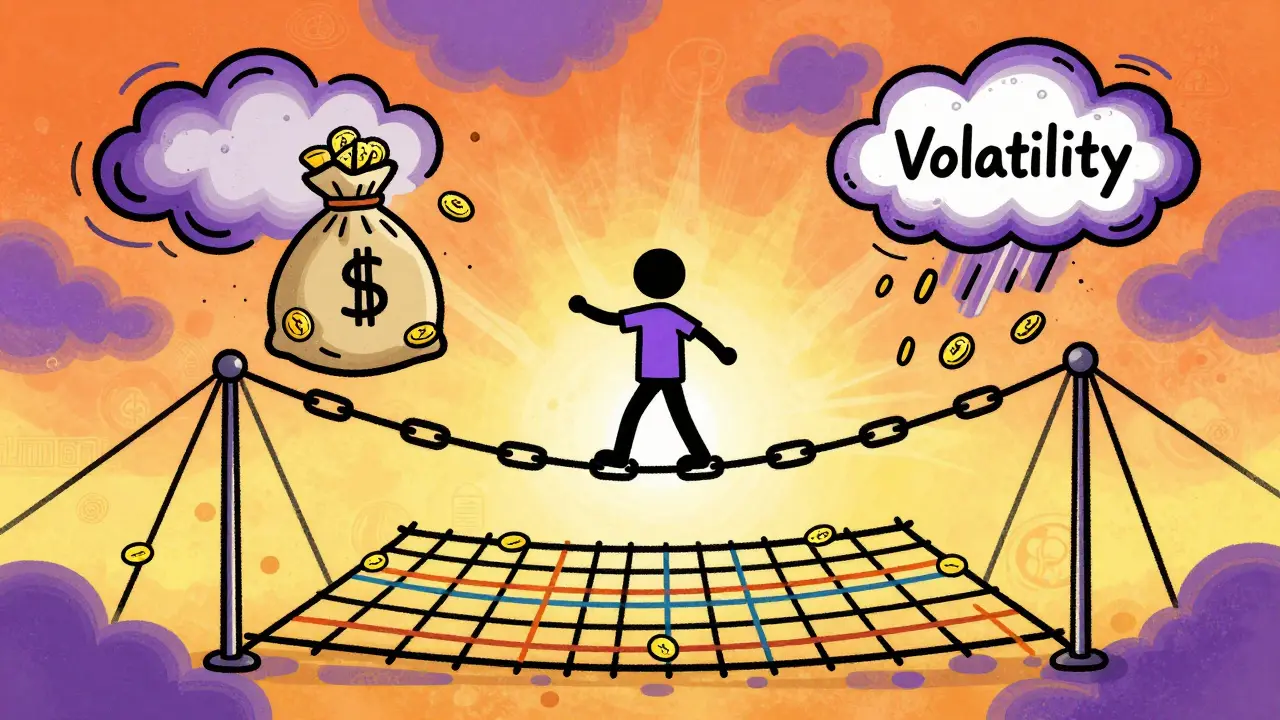
Market Volatility is another major factor. Let’s say you stake 100 tokens worth $1,000 each, totaling $100,000. You earn a 10% annual reward, so you gain 10 tokens. That sounds great. But if the price of the token drops to $500 during that year, your total portfolio value is now ($110 tokens * $500) = $55,000. You earned rewards, but you lost half your principal value. Always consider the potential price drop when calculating returns.
Liquidity Lock-ups vary by network. Some chains, like Solana, allow you to unstake quickly. Others, like Cardano or Polkadot, may have mandatory unbonding periods lasting several days or weeks. During this time, your funds are frozen, and you cannot sell them even if the market crashes.
Popular Networks for Staking
Not all cryptocurrencies can be staked. Only those using Proof-of-Stake or similar consensus mechanisms support it. Here are some of the most prominent networks as of 2026:
- Ethereum (ETH): After its transition to Proof-of-Stake (known as "The Merge"), Ethereum became the largest staking ecosystem. It is considered relatively stable due to its vast developer community and security.
- Solana (SOL): Known for high speed and low fees, Solana offers attractive staking yields. It is popular among traders who want quick entry and exit options.
- Cardano (ADA): Cardano uses a distinct Proof-of-Stake model called Ouroboros. It is known for its academic rigor and lower barrier to entry for delegators.
- Polkadot (DOT): Polkadot allows cross-chain communication. Staking here helps secure the entire relay chain and its connected parachains.
Each network has different rules, reward rates, and technical requirements. Always research the specific mechanics of the coin you intend to stake.
Tax Implications of Staking
In many jurisdictions, including the United States and parts of Europe, staking rewards are treated as taxable income. When you receive new tokens as a reward, that event is often considered a taxable moment. You may owe income tax on the fair market value of the tokens at the time you received them. Later, if you sell those tokens, you may also owe capital gains tax.
Keep detailed records of every reward payout, including the date, amount, and USD value at that time. Using specialized crypto tax software can help automate this process, but consulting with a tax professional who understands digital assets is highly recommended.
Is Staking Right for You?
Cryptocurrency staking is a powerful tool for growing your portfolio, but it is not suitable for everyone. It works best for investors who:
- Believe in the long-term value of the specific cryptocurrency.
- Are comfortable with market volatility and potential price drops.
- Understand the technical risks, such as slashing and smart contract bugs.
- Do not need immediate access to their funds.
If you are looking for guaranteed, risk-free returns, traditional savings accounts or bonds are safer choices. But if you want to participate in the decentralized economy and potentially earn higher yields while supporting network security, staking is a compelling option.
Can I lose my money by staking?
Yes, you can lose money in two main ways. First, through "slashing," where the network penalizes validators for bad behavior by burning part of their stake. Second, through market volatility; if the price of the cryptocurrency drops significantly while your funds are locked, the total dollar value of your investment will decrease, potentially outweighing the staking rewards.
What is the difference between staking and lending?
In staking, you lock your tokens to help secure the blockchain network itself. Your rewards come from the protocol creating new tokens or collecting transaction fees. In lending, you lend your tokens to other users or platforms, and your interest comes from the borrowers paying you back. Staking is generally considered more secure because it does not rely on a third-party borrower defaulting on a loan.
How much crypto do I need to start staking?
It depends on the method. On centralized exchanges, you can often start with just a few dollars worth of tokens. For solo validation, you typically need a large amount, such as 32 ETH for Ethereum. Staking pools offer a middle ground, allowing you to participate with smaller amounts by pooling resources with other users.
Are staking rewards taxed?
In many countries, yes. Staking rewards are often treated as ordinary income at the time you receive them. You should track the value of the rewards when they are credited to your wallet. Consult a local tax expert for advice specific to your jurisdiction.
Can I unstake my crypto anytime?
Not always. Different networks have different "unbonding" or "cool-down" periods. Some, like Solana, allow relatively quick unstaking. Others, like Cardano or Tezos, may take several days to weeks for your tokens to become liquid again. Always check the specific rules of the network before committing your funds.
Write a comment