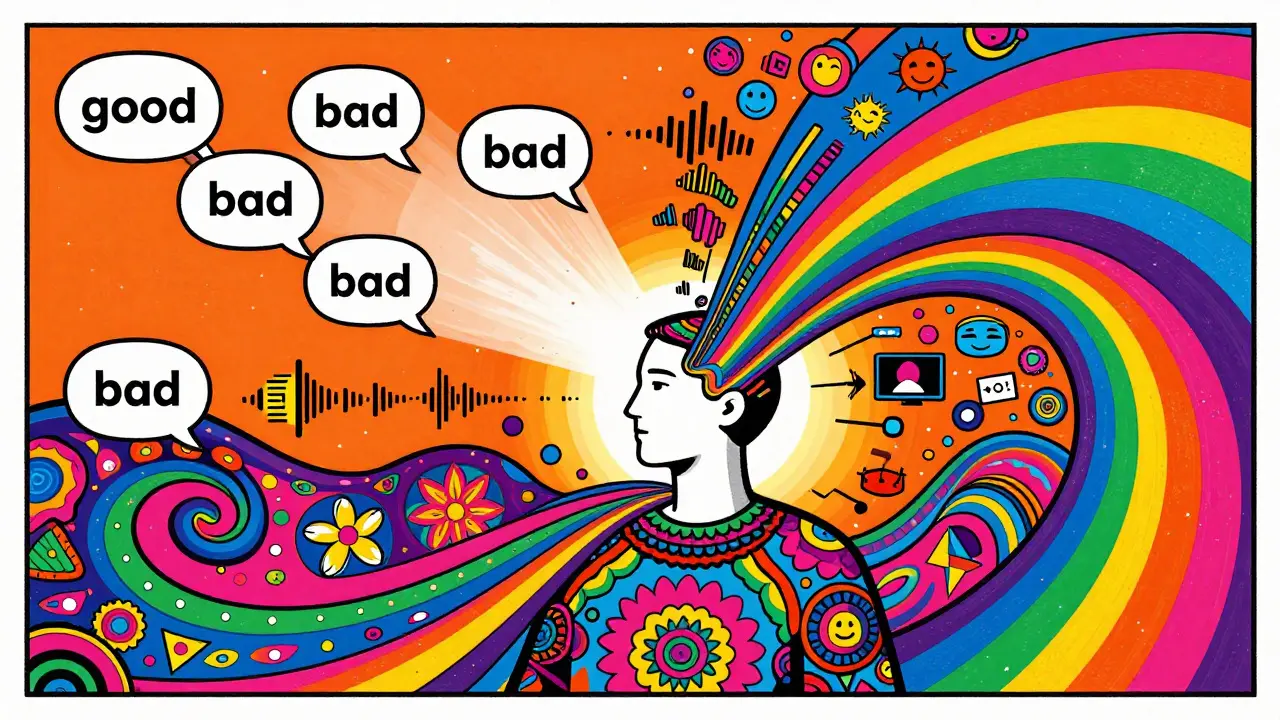
Imagine reading a customer’s email and instantly knowing they are angry-not just because of the words they used, but because you can hear the tension in their voice and see the frustration on their face. That is no longer science fiction. The future of AI sentiment analysis is moving fast away from simple text processing toward complex, multimodal systems that understand human emotion with startling accuracy. By 2033, this technology will likely be as standard as email itself, fundamentally changing how businesses interact with people.
We are standing at a turning point. For years, companies relied on basic keyword scanning or low-response-rate surveys to gauge customer satisfaction. Those methods are dying. In their place, sophisticated artificial intelligence models are emerging that process text, audio, video, and even physiological data simultaneously. This shift isn't just about better software; it is about a deeper, more empathetic understanding of human behavior in digital spaces.
From Keywords to Context: The Evolution of Understanding
To understand where we are going, we have to look at where we started. Early sentiment analysis tools were rudimentary. They looked for positive words like "great" or negative ones like "terrible." If you wrote, "This service was not bad," older systems might flag that as neutral or even negative because of the word "bad," missing the sarcasm or the double negative entirely.
Today, large language models (LLMs) like GPT-4 and its successors have changed the game. These models don't just count words; they understand context, idioms, and cultural nuances. They can detect when a customer is being sarcastic or when a subtle phrase indicates deep dissatisfaction. But even these advanced text-based systems have limits. Text alone strips away half the communication signal-tone and body language.
The next leap is multimodal sentiment analysis. This approach combines natural language processing (NLP) with computer vision and audio analysis. It looks at what you say, how you say it, and what you look like while saying it. A system might analyze a support call transcript, listen to the pitch and speed of the speaker's voice, and monitor facial expressions via webcam. When all three signals align-angry words, sharp tone, furrowed brows-the AI knows the situation is critical. This holistic view reduces errors and provides a much clearer picture of true customer sentiment.
The Rise of Agentic AI in Customer Service
One of the most significant trends shaping the future of sentiment analysis is the rise of agentic AI. Unlike traditional chatbots that follow rigid scripts, agentic AI systems can take autonomous action based on emotional cues. As of 2025, nearly 29% of companies are already using these agents for customer support, with another 44% planning to adopt them within the year.
Here is how it works in practice. A customer calls a telecom provider because their internet is down. The AI agent analyzes the conversation in real-time. It detects rising frustration in the customer's voice. Instead of continuing to ask routine troubleshooting questions, the agent recognizes the emotional state and escalates the issue immediately to a human specialist or offers a proactive compensation package, such as a credit to their account. This happens without human intervention, saving time and preventing churn.
This capability transforms customer service from a reactive cost center into a proactive relationship builder. Companies like those using platforms similar to Crescendo.ai are now calculating Customer Satisfaction (CSAT) scores for 100% of interactions, not just the tiny fraction of customers who fill out post-call surveys. This means businesses get a complete, unbiased view of their performance, allowing them to identify training needs for staff or flaws in product design instantly.
| Feature | Traditional Methods | Modern AI Sentiment Analysis |
|---|---|---|
| Data Source | Surveys, focus groups | All interactions (chat, email, voice, video) |
| Coverage | Low (often <5% response rate) | High (100% of available data) |
| Speed | Days to weeks for analysis | Real-time processing |
| Emotional Depth | Basic (positive/negative) | Complex (sarcasm, urgency, joy, anger) |
| Actionability | Manual review required | Automated routing and responses |

Multimodal Systems: Seeing and Hearing Emotion
The integration of computer vision and audio analysis is perhaps the most exciting frontier. While text analysis has matured, analyzing visual and auditory cues presents unique challenges and opportunities. Facial expression recognition technology can detect micro-expressions-fleeting changes in facial muscles that reveal true emotions before a person can mask them. Audio prosody analysis evaluates tone, pitch, volume, and speech rate to determine stress levels or enthusiasm.
Consider a retail environment. Smart cameras equipped with sentiment analysis could monitor shopper reactions to new product displays. If shoppers consistently frown or look confused near a specific shelf, the store manager receives an alert to adjust signage or layout. In remote work settings, video conferencing tools could provide real-time feedback to speakers, suggesting they slow down if audience engagement drops or summarizing key points if confusion is detected.
However, this level of surveillance raises serious ethical questions. Privacy concerns are paramount. Users must consent to having their biometric data analyzed. Regulations like GDPR in Europe and emerging AI laws globally will play a crucial role in defining acceptable boundaries. Companies must balance the desire for deep insights with the need to respect user privacy and autonomy. Transparent policies and opt-in mechanisms will be essential for building trust.
Challenges: Bias, Accuracy, and Complexity
Despite the hype, implementing advanced sentiment analysis is not plug-and-play. Several significant hurdles remain. First, there is the issue of bias. AI models are trained on historical data, which often contains societal biases. If a model is primarily trained on data from one demographic group, it may struggle to accurately interpret emotions expressed by other groups. For example, cultural differences in facial expressions or vocal tones can lead to misinterpretations. An expression considered neutral in one culture might be seen as aggressive in another.
Second, accuracy in nuanced contexts remains a challenge. Sarcasm, irony, and humor are notoriously difficult for AI to parse, even with multimodal inputs. A joke told with a straight face and a monotone voice might confuse the system. Human oversight is still necessary for complex emotional situations, particularly in high-stakes industries like healthcare or finance.
Third, implementation complexity varies widely. Basic text-based solutions can be deployed quickly using cloud APIs. However, comprehensive multimodal systems require substantial technical expertise. Organizations need data scientists, machine learning engineers, and integration specialists to build and maintain these systems. Deployment timelines can range from a few months for basic setups to over a year for enterprise-wide multimodal implementations. The cost reflects this complexity, ranging from thousands to millions of dollars depending on scale.

Market Growth and Future Predictions
The market for AI sentiment analysis is booming. Projections indicate a Compound Annual Growth Rate (CAGR) of 18.9% from 2026 to 2033. This growth is driven by the increasing demand for data-driven insights across various sectors. Marketing teams use it to refine campaigns based on real-time audience reaction. Product development teams analyze user feedback to prioritize features. Customer service departments use it to improve retention and satisfaction.
By 2030, sentiment analysis will likely be embedded in everyday devices. Your smartphone might adjust its interface based on your mood. Your car might change music or lighting if it detects driver stress. Wearable technology could monitor physiological signals like heart rate variability to provide personalized wellness recommendations. The line between human and machine interaction will blur further, creating more intuitive and responsive digital experiences.
Edge computing will also play a vital role. Processing sentiment data locally on devices rather than sending it to the cloud reduces latency and enhances privacy. This allows for immediate responses in critical situations, such as detecting distress in elderly patients through smart home sensors or identifying unsafe conditions in industrial environments.
Ethical Considerations and Trust
As AI becomes more capable of reading our emotions, ethical considerations become increasingly important. Who owns the data about your emotional state? How is it stored and protected? Can it be used against you in insurance or employment decisions? These questions need clear answers.
Transparency is key. Companies should clearly communicate when and how sentiment analysis is being used. Users should have control over their data, including the ability to opt out of emotional tracking. Building trust requires demonstrating that the technology is used to enhance, not exploit, human experiences. Ethical guidelines and regulatory frameworks will evolve to address these concerns, ensuring that the benefits of AI sentiment analysis are realized without compromising individual rights.
In conclusion, the future of AI sentiment analysis is bright but complex. It promises a world where machines understand us better, leading to more personalized and efficient services. However, realizing this potential requires careful attention to accuracy, bias, privacy, and ethics. Businesses that navigate these challenges successfully will gain a significant competitive advantage, fostering deeper connections with their customers and employees.
What is multimodal sentiment analysis?
Multimodal sentiment analysis is an advanced form of AI that analyzes multiple types of data simultaneously to determine emotion. Instead of just looking at text, it combines natural language processing with computer vision (facial expressions) and audio analysis (tone of voice) to create a more accurate and comprehensive understanding of human sentiment.
How accurate is AI sentiment analysis today?
Accuracy has improved significantly with large language models and multimodal inputs. Modern systems can achieve high accuracy in straightforward contexts. However, challenges remain with sarcasm, cultural nuances, and complex emotional states. Continuous training with diverse datasets is essential to improve accuracy and reduce bias.
What are agentic AI systems in customer service?
Agentic AI systems are autonomous AI agents that can take action based on sentiment analysis. Unlike simple chatbots, they can escalate issues, offer compensation, or route conversations to human agents without manual intervention, providing faster and more personalized support.
Is AI sentiment analysis expensive to implement?
Costs vary widely. Basic text-based solutions using cloud APIs can be relatively affordable and quick to deploy. Comprehensive multimodal systems requiring custom development, integration, and specialized personnel can cost millions of dollars and take over a year to implement fully.
What are the main ethical concerns with sentiment analysis?
Key ethical concerns include privacy violations, data security, algorithmic bias, and lack of transparency. Users may feel uncomfortable being monitored for emotional states. Ensuring consent, protecting data, and mitigating bias are critical for responsible implementation.
Write a comment