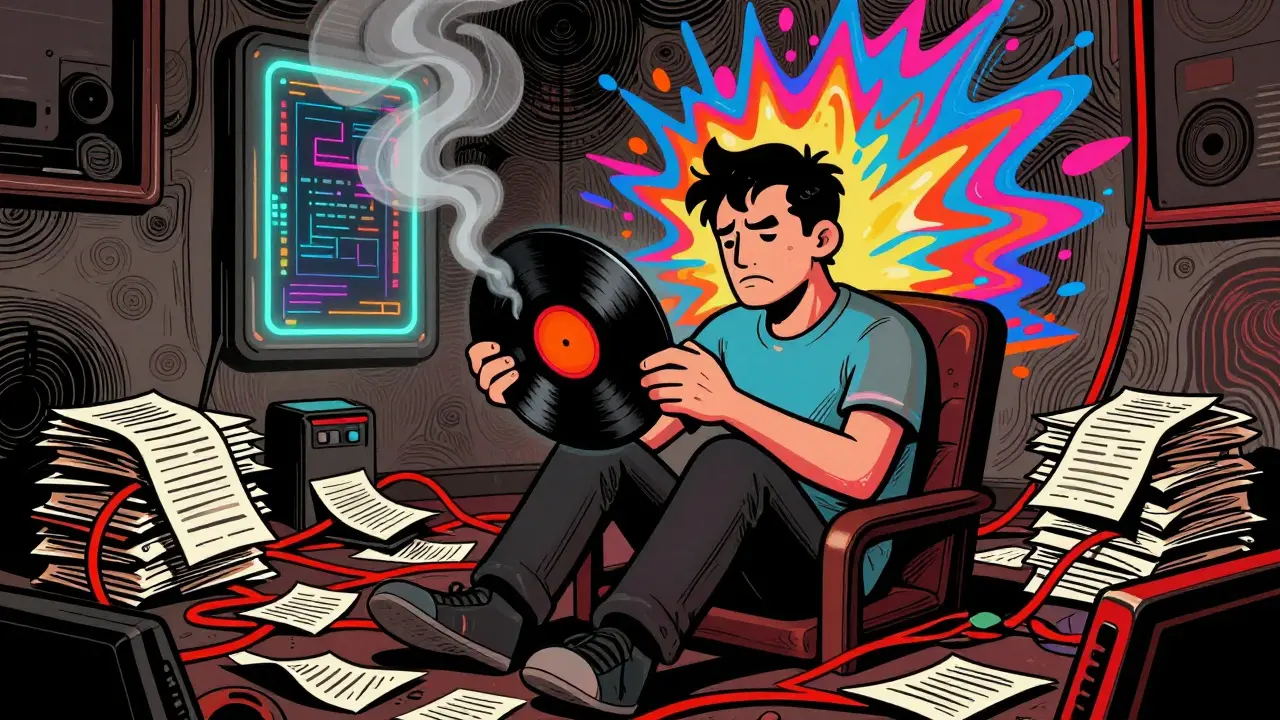
Imagine you release a song that goes viral. Millions of streams pour in. You check your dashboard, expecting a payout. Instead, you get silence. Or worse, a payment six months late for a fraction of what it should be. This is the daily reality for most musicians today. The system is broken. It’s slow, opaque, and stacked against creators.
Enter blockchain technology, which is a decentralized digital ledger that records transactions across many computers so that any involved record cannot be altered retroactively. In the context of music, this isn't just about buying coins. It’s about rewriting the rules of ownership and payment. By using distributed ledgers and automated code, we can finally track who owns what and pay them instantly. No more black boxes. No more waiting two years for a check that never arrives.
The Broken System: Why We Need Change
To understand why blockchain matters, you have to look at how messy the current setup is. A single song usually has multiple rights holders. There’s the songwriter, the composer, the performer, the producer, and maybe even the sample creator. Each of them needs a cut. Traditionally, these payments flow through a tangled web of intermediaries: record labels, publishing companies, performance rights organizations (PROs), and collection societies.
Each step adds delay and cost. Data gets lost in translation between different databases that don’t talk to each other. If a song plays on Spotify in Brazil, the metadata might not match the registry in France. The result? Unclaimed royalties pile up in "black box" accounts, sitting there for years because no one can figure out who to pay. Artists often wait up to two years to collect their due. That’s not efficiency; that’s theft by bureaucracy.
How Blockchain Fixes Ownership Tracking
Smart contracts are self-executing contracts with the terms of the agreement directly written into lines of code. They live on the blockchain. When specific conditions are met-like a song being streamed-the contract executes automatically. No human intervention needed.
Here is how it works for rights management:
- Immutable Ledger: When a song is registered on a blockchain platform, its metadata-who wrote it, who produced it, who owns the master-is recorded. Once written, this data cannot be changed or deleted. This creates a permanent, unalterable history of ownership.
- Tokenization of Rights: Rights can be represented as tokens. For example, 100 tokens could represent 100% of the publishing rights. If a co-writer sells their share, they transfer the tokens. The ledger updates instantly, showing the new owner. This solves the "endless divisibility" problem where shares become too small to track manually.
- Chain of Title: Every transaction is linked to the previous one via cryptographic hashes. You can trace the entire history of a song’s ownership back to its creation. This makes resolving disputes much easier because the proof is public and verifiable.
This transparency means that when a license is requested, anyone can verify exactly who holds the rights. No more guessing games or legal fees spent proving ownership.
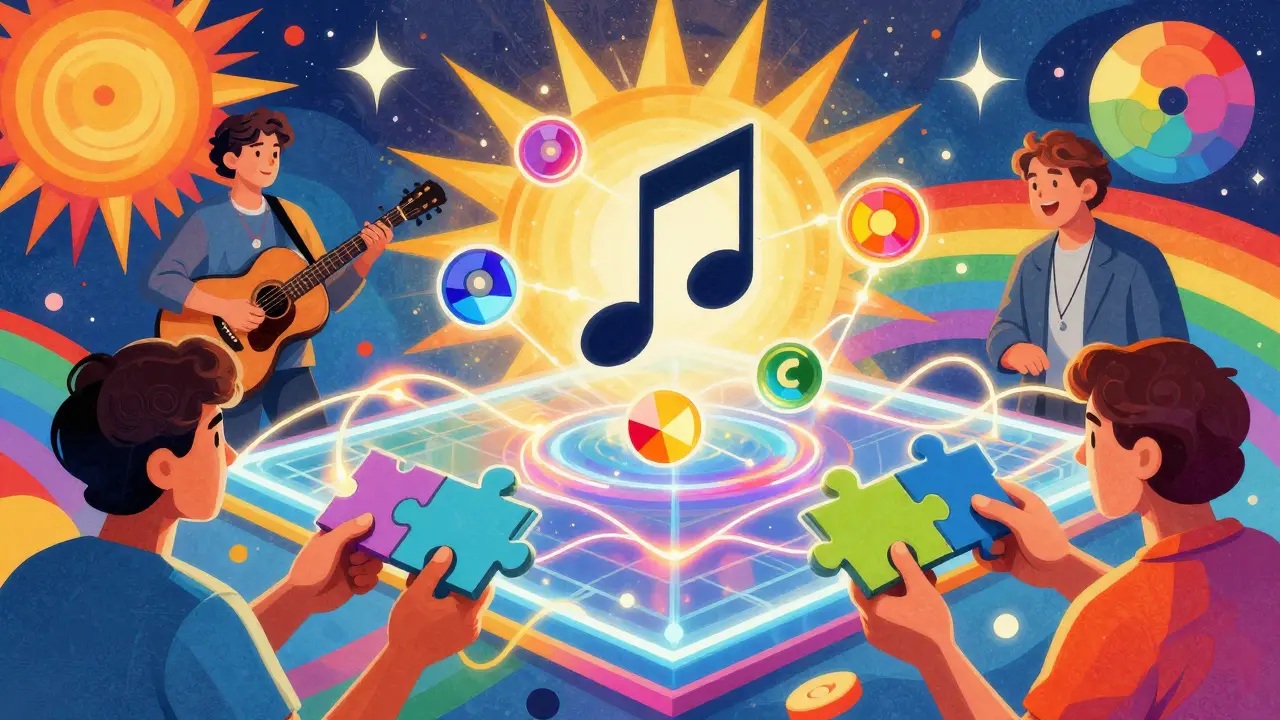
Automated Licensing and Real-Time Payments
The biggest game-changer is how money moves. In the traditional model, streaming services aggregate usage data, send reports to PROs, who then calculate payouts, deduct fees, and distribute funds. This cycle takes months. With blockchain, the process happens in real-time.
When a user streams a track, the smart contract detects the event. It calculates the royalty based on pre-agreed rates and splits the payment among all rights holders according to their token holdings. The funds are transferred instantly to their digital wallets. This eliminates the need for large intermediaries that take a significant cut without adding proportional value.
Consider the case of NFTs (Non-Fungible Tokens), which are unique digital certificates of ownership stored on a blockchain. Artists can sell exclusive tracks, albums, or even fractional ownership stakes as NFTs. Buyers get a piece of the asset, and if the song generates revenue, the smart contract can automatically route a percentage of those earnings back to the NFT holders. This creates a direct financial link between fans and artists, fostering deeper engagement.
Companies like Dot Blockchain have already implemented systems that automate usage-based licensing. Record labels and independent artists alike can track how their music is used in videos, ads, or broadcasts. The system verifies usage and triggers payments immediately. This level of accountability was impossible before.
| Feature | Traditional System | Blockchain System |
|---|---|---|
| Payout Speed | 6-24 months | Real-time / Instant |
| Transparency | Low (Opaque ledgers) | High (Public, immutable ledger) |
| Intermediaries | Many (Labels, PROs, Collectors) | Few or None (Peer-to-Peer) |
| Data Accuracy | Prone to errors and loss | Cryptographically secured |
| Licensing Process | Manual, slow negotiations | Automated via Smart Contracts |
Challenges and Limitations
It sounds perfect, right? So why isn’t everyone doing it yet? Because technology alone doesn’t solve human problems. There are significant hurdles to overcome.
The Garbage In, Garbage Out Problem: Blockchain ensures data cannot be changed *after* it’s entered. But it doesn’t guarantee the data is correct *when* it’s entered. If someone uploads a song and claims they own 100% of the rights when they actually only own 50%, the blockchain will faithfully record that lie. Verification mechanisms are still developing. We need robust identity verification and initial auditing processes to prevent fraud at the source.
Legal Recognition: Courts and governments operate under existing laws. Does a smart contract hold up in court? What jurisdiction applies if the artist is in New Zealand, the listener is in Germany, and the server is in Singapore? Legal frameworks lag behind technology. Until copyright laws explicitly recognize blockchain records as valid proof of ownership, adoption will remain cautious.
Scalability and Cost: While some blockchains handle thousands of transactions per second, others struggle. High gas fees (transaction costs) on networks like Ethereum can eat into tiny micro-payments from individual streams. Layer-2 solutions and alternative chains are helping, but the infrastructure is still maturing.
The Future Landscape
We are in the early stages of adoption. Major players are watching closely. Some startups are building platforms specifically for independent artists, allowing them to bypass labels entirely. Others are partnering with major labels to digitize their back catalogs.
The trend is moving toward disintermediation. Artists want control. Fans want connection. Blockchain offers a technical foundation for both. As standards emerge and legal clarity improves, we’ll likely see a hybrid model. Traditional PROs may evolve into blockchain validators, ensuring data integrity while maintaining regulatory compliance.
For now, the potential is clear. Imagine a world where a bedroom producer in Wellington can collaborate with a vocalist in Tokyo, register their work instantly, and receive fair payment within seconds of every stream. That future is being built, one block at a time.
Is blockchain legally binding for music rights?
Currently, it depends on the jurisdiction. While smart contracts are executable code, their legal status varies. Many countries are updating copyright laws to recognize digital ledgers as evidence, but universal acceptance is not yet achieved. Always consult legal experts when transferring significant rights on-chain.
How do smart contracts pay royalties automatically?
Smart contracts contain predefined rules. For example, "If Song X is streamed, pay 50% to Artist A and 50% to Producer B." When a streaming service integrates with the blockchain and reports a play, the contract triggers, splitting the cryptocurrency or stablecoin payment instantly to the designated wallets.
Can I use blockchain if I’m signed to a major label?
Yes, but it requires cooperation. Some labels are experimenting with blockchain to improve their own accounting. However, if your contract mandates traditional reporting methods, you may need to negotiate changes. Independent artists face fewer barriers to entry.
What happens if wrong information is uploaded to the blockchain?
This is a major risk. Since blockchain is immutable, incorrect data stays forever unless a corrective transaction is made. This highlights the need for trusted third-party verification or reputation systems to validate metadata before it’s permanently recorded.
Are NFTs the same as music rights management?
Not exactly. NFTs are a tool that can be used within rights management. An NFT can represent ownership of a physical album, a unique digital collectible, or a fraction of royalty rights. They facilitate the transfer and trading of these assets securely on the blockchain.
Write a comment