Imagine your paycheck getting cut in half overnight. No warning, no negotiation, just a hard-coded rule that slashes your income by 50%. That is exactly what happens to cryptocurrency miners every few years during a halving. While it sounds like a disaster for the workers digging up digital gold, it is actually the engine driving scarcity and long-term value for coins like LTC.
If you are holding Litecoin or watching the broader market, understanding this mechanism isn't optional-it's essential. The next major event for Litecoin is projected around 2027, but the ripple effects of the last one (August 2023) are still shaping miner behavior and price action today. Let's break down how this works, why it matters more than most people realize, and how other cryptocurrencies handle the same problem.
The Core Mechanism: Why Halvings Exist
At its heart, a halving is a deflationary control system. Unlike fiat currencies where central banks can print money at will, cryptocurrencies use code to limit supply. For Litecoin, this means the reward miners get for validating transactions drops by 50% after every 840,000 blocks mined. Since Litecoin generates a block every 2.5 minutes, this cycle takes roughly four years.
This isn't arbitrary. It’s math. The total supply of Litecoin is capped at 84 million coins. Without halvings, we would hit that cap much faster, potentially crashing the incentive structure before the network matured. By slowing down issuance, the protocol ensures that new coins enter circulation gradually, mimicking the scarcity of precious metals like gold.
Bitcoin uses a similar logic but with different parameters. Its halving occurs every 210,000 blocks, also taking about four years due to its 10-minute block time. The result? Both networks become progressively harder to mine as rewards shrink, forcing efficiency and consolidation among miners.
Litecoin’s Unique Path: Speed and Scrypt
While the concept mirrors Bitcoin, Litecoin’s execution differs significantly. It runs on the Scrypt algorithm, which is memory-hard rather than compute-heavy like Bitcoin’s SHA-256. This design choice was intentional when Charlie Lee launched Litecoin in 2011. He wanted a "silver to Bitcoin's gold"-faster, cheaper, and more accessible for everyday transactions.
The faster block time (2.5 minutes vs. 10 minutes) means Litecoin processes transactions quicker. But here is the catch: because blocks come faster, the number of blocks per year is higher. To keep the four-year halving cycle consistent, Litecoin set its halving interval at 840,000 blocks instead of Bitcoin’s 210,000. This mathematical balance keeps the inflation rate predictable over decades.
| Feature | Litecoin (LTC) | Bitcoin (BTC) |
|---|---|---|
| Algorithm | Scrypt | SHA-256 |
| Block Time | 2.5 minutes | 10 minutes |
| Halving Interval | Every 840,000 blocks | Every 210,000 blocks |
| Approximate Cycle | ~4 years | ~4 years |
| Max Supply | 84 Million | 21 Million |
| Last Halving Date | August 2, 2023 | April 2024 |
What Happens When Rewards Drop?
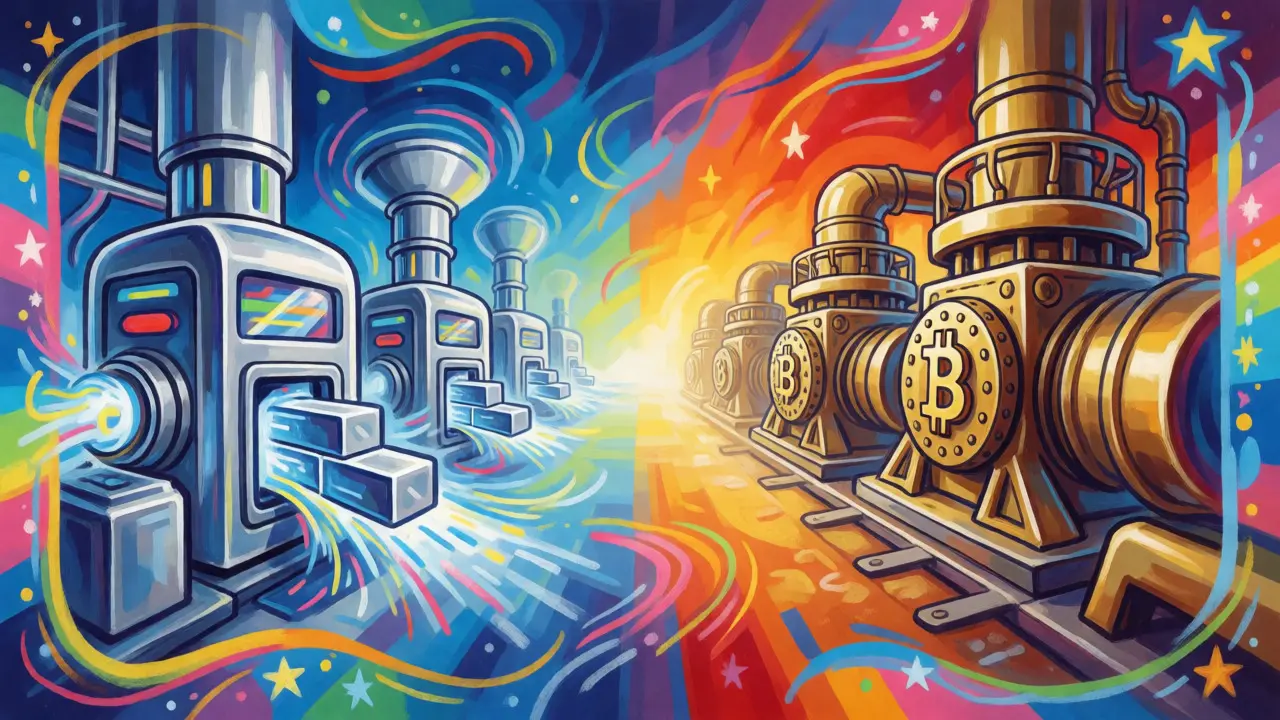
When the third Litecoin halving occurred in August 2023, the block reward dropped from 12.5 LTC to 6.25 LTC. For a miner, this felt like a sudden pay cut. If electricity costs stayed the same, their profit margins vanished unless the price of Litecoin rose to compensate.
This pressure creates a natural selection process within the mining network. Inefficient miners-those with older hardware or expensive power contracts-often drop out. They can’t afford to run machines that now earn half as much. The remaining miners tend to be those with better infrastructure, lower energy costs, or larger economies of scale. Paradoxically, this makes the network more secure because only serious, well-capitalized operators remain.
Historical data supports this trend. After previous halvings, the hash rate (total computing power securing the network) often dips initially as weak miners switch off. Then, it recovers as efficient players expand capacity. This resilience is crucial for maintaining trust in the blockchain’s security model.
Beyond Litecoin: Other Coins with Halvings
Not all cryptocurrencies follow the Bitcoin/Litecoin model. Some have fixed supplies without halvings, while others use different emission schedules. Understanding these variations helps you assess risk and potential upside.
- Zcash (ZEC): Uses a Proof-of-Work consensus with a halving schedule similar to Bitcoin but with a max supply of 21 million ZEC. Its privacy features make its economic model distinct, though the supply shock mechanics are comparable.
- Dash: Originally used a halving-like reduction in masternode rewards, but shifted to a decreasing emission curve that doesn’t strictly halve in discrete steps. Instead, it reduces rewards by 7.14% every 210,880 blocks.
- Ethereum (ETH): Does not have a traditional halving. Since switching to Proof-of-Stake, Ethereum issues new ETH through staking rewards, which are adjusted dynamically based on network participation rather than a fixed block count.
- Monero (XMR): Has a tail emission-a small, constant block reward forever after the initial supply is reached. This prevents the "security budget collapse" some fear in pure halving models, ensuring miners always have an incentive even when new coin issuance becomes negligible.
Each approach trades off predictability for flexibility. Litecoin’s rigid halving offers certainty; Monero’s tail emission offers perpetual security funding. Neither is inherently "better," but they serve different philosophical goals.

Price Impact: Myth vs. Reality
Here is the question everyone asks: "Does the price go up after a halving?" The short answer is: usually, but not immediately, and not guaranteed.
Basic economics suggests that if supply growth slows while demand stays constant, prices should rise. And historically, both Bitcoin and Litecoin have seen significant bull runs following halvings. However, correlation isn't causation. Market sentiment, macroeconomic trends, regulatory news, and technological updates play huge roles.
For instance, after the 2023 Litecoin halving, the price didn’t spike instantly. Miners sold some reserves to cover operational costs, creating temporary selling pressure. Meanwhile, investors waited for clearer signs of adoption or broader crypto market recovery. Patience is key. The real impact often unfolds over 12-18 months post-halving, as the reduced supply finally tightens the market.
Don’t fall for the trap of assuming instant riches. Smart traders watch the hash rate, difficulty adjustments, and exchange inflows/outflows to gauge whether the supply squeeze is actually happening.
How to Prepare for the Next Cycle
If you’re investing in Litecoin or planning to mine, timing matters. The next halving is expected around 2027. Here’s how to position yourself:
- Track the Block Height: Use blockchain explorers to monitor progress toward the 840,000-block milestone. Knowing the exact date helps you anticipate volatility.
- Analyze Mining Profitability: Calculate your break-even point using current electricity rates and hardware efficiency. Tools like WhatToMine provide real-time estimates.
- Diversify Your Strategy: Don’t rely solely on price appreciation. Consider staking alternatives or lending platforms that offer yield while you wait for the supply shock to materialize.
- Watch Miner Behavior: Follow community forums and hash rate charts. A sudden drop in hash rate might signal miner capitulation, which could precede a price bottom-or a network health issue.
Remember, halvings are milestones, not magic buttons. They reduce friction in the supply side, but demand must do the heavy lifting. Keep an eye on Litecoin’s utility-its fast settlement times make it attractive for payments, which could drive organic demand independent of speculative trading.
When is the next Litecoin halving scheduled?
The next Litecoin halving is projected to occur around 2027. This follows the pattern of occurring approximately every four years, specifically after every 840,000 blocks are mined. The exact date depends on the network's hashrate and block generation speed, so it may shift slightly.
Why does Litecoin halve every 840,000 blocks instead of 210,000?
Litecoin generates blocks much faster than Bitcoin, with a target block time of 2.5 minutes compared to Bitcoin's 10 minutes. To maintain a similar four-year halving cycle despite the faster block production, the protocol sets the halving interval at 840,000 blocks. This ensures the supply schedule remains predictable and aligned with Bitcoin's timeline.
Do halvings guarantee a price increase?
No, halvings do not guarantee a price increase. While they reduce the supply of new coins entering the market, price movements depend heavily on demand, market sentiment, regulatory changes, and broader economic conditions. Historical trends show positive price action following halvings, but past performance is not indicative of future results.
How does the Scrypt algorithm affect Litecoin mining?
The Scrypt algorithm is memory-intensive rather than purely computational. This makes it less susceptible to ASIC dominance compared to Bitcoin's SHA-256, although specialized Scrypt ASICs exist. It allows for more decentralized mining options and generally results in lower energy consumption per transaction processed compared to heavier algorithms.
What happens to miners who cannot sustain reduced rewards?
Miners with high operational costs or outdated hardware often cease operations after a halving because their profits disappear. This leads to a temporary decrease in the network's total hash rate. Over time, more efficient miners absorb the lost capacity, stabilizing the network and potentially increasing the security concentration among professional operators.
Write a comment