
On paper, cryptocurrency is illegal in Nepal. The Nepal Rastra Bank (NRB) banned all crypto activities in 2021 - no trading, no mining, no sending or receiving Bitcoin or Ethereum. The law is clear: break it, and you could face three years in jail, fines up to three times the value of your crypto, or even have your phone and laptop seized. Police have made arrests. Banks have frozen accounts. Yet, across Kathmandu, Pokhara, and rural towns, Nepalis are still using crypto - quietly, carefully, and more than ever before.
Why Crypto? The Remittance Problem
Nearly 30% of Nepal’s GDP comes from money sent home by workers abroad. Over 3 million Nepalis work overseas - mostly in Malaysia, Qatar, Saudi Arabia, and South Korea. Every month, they send billions in rupees back home through traditional channels like Western Union, MoneyGram, or local agents. But these systems are slow, expensive, and unreliable. Fees can hit 10% or more. Transfers take days. Sometimes, the money doesn’t arrive at all. That’s where crypto steps in. A 28-year-old Nepali construction worker in Dubai doesn’t have a bank account back home. His sister in Birgunj doesn’t have a debit card. He can’t use a traditional remittance service because his employer doesn’t pay into a local bank. So he buys $500 worth of USDT (Tether) on a Telegram group, sends it to her phone number, and she cashes it out through a local crypto dealer in a corner shop. No paperwork. No bank. No 10% fee. Just $485 in cash, delivered in 15 minutes. This isn’t rare. It’s routine.How It Works: The Underground Network
There’s no official data on how many Nepalis use crypto. But if you talk to tech students in Kathmandu University, street vendors in Boudha, or delivery riders in Lalitpur - they’ll tell you the same thing: everyone knows someone who uses it. Here’s how it works in practice:- Telegram and WhatsApp groups are the main hubs. Traders post rates for buying and selling Bitcoin, USDT, or Ethereum. Rates are often better than official exchange offices.
- Face-to-face meetups happen in cafes, parking lots, or even temples. One person gives cash. The other sends crypto to a wallet address. No ID. No receipt. Just trust - and sometimes a middleman.
- Mobile wallet apps like Trust Wallet or MetaMask are installed on cheap Android phones. Many users never connect them to a bank. They keep funds in crypto until they need cash.
- Local dealers - often young entrepreneurs - act as human ATMs. They buy crypto from users and sell it to others. They make money on the spread. Some even offer loans against crypto holdings.
The Risk: No Safety Net
There’s no regulation. No insurance. No recourse. A 22-year-old student in Butwal sent 1.2 million NPR (about $9,000) in USDT to a dealer who promised to deliver cash. The dealer vanished. No police report. No bank to call. Just silence. Or take the case of a man in Dharan who lost his phone - and with it, his private key. He had $15,000 in Bitcoin. He couldn’t recover it. He couldn’t prove ownership. The law doesn’t recognize crypto as property. So he lost everything. Even if you’re not scammed, you’re still breaking the law. If the police raid your home and find crypto wallets on your phone, you’re guilty. No matter how much you used it to support your family.
Who’s Doing It? The Young and the Desperate
It’s not the elderly. It’s not the rural poor without phones. It’s the tech-savvy youth - students, freelancers, migrant workers’ families. They’re the ones who’ve seen how crypto works in India, the Philippines, or even Kenya. They know how fast and cheap it can be. They’ve watched their parents pay $200 in fees to send $2,000 home. They’ve seen delays that cost jobs. Many of them don’t even think of it as breaking the law. To them, it’s just using a better tool. One college student in Pokhara told me: “I don’t use crypto to gamble. I use it because my dad’s salary in Oman comes faster and cheaper this way. If the government banned the internet, we’d still use it. Crypto is just the next step.”Why the Government Won’t Back Down
The NRB isn’t just being stubborn. They’re protecting something: the banking system. Nepal’s economy runs on remittances. Banks rely on that cash flow. If people start using crypto, banks lose control. No one pays fees. No one deposits. No one borrows. The whole model cracks. That’s why the government is pushing its own digital currency - a Central Bank Digital Currency (CBDC) - set to launch in 2027. It will look like crypto. It will be fast. It will be digital. But it will be fully tracked. Fully controlled. Fully theirs. For now, though, the CBDC doesn’t exist. And the people are already using something better.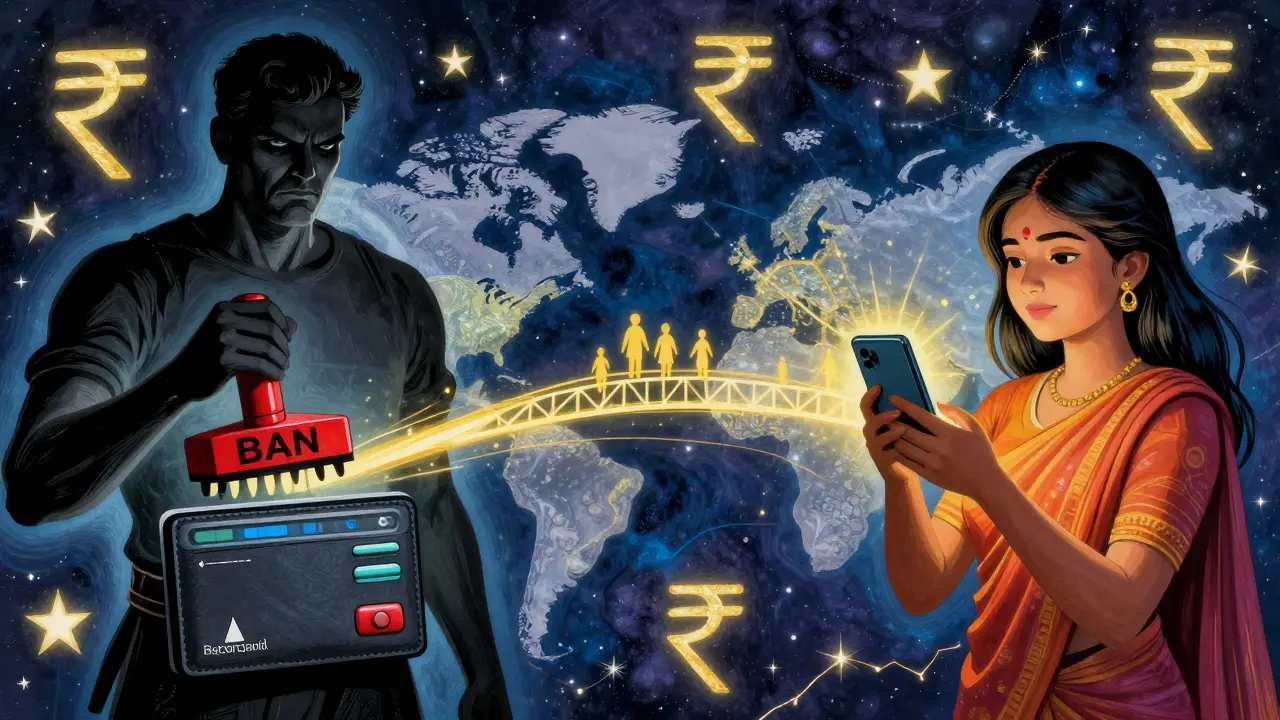
The Future: A Ticking Time Bomb?
As of 2025, Nepal is one of only a handful of countries with a total crypto ban. South Korea, China, and Russia have restrictions - but not outright bans. Nepal’s is absolute. But bans don’t stop demand. They just drive it underground. Every time police arrest someone for crypto trading, two more people sign up. Every time a dealer gets caught, three new ones appear. The system adapts. It always does. The real question isn’t whether Nepalis will keep using crypto. They already are. The question is: when will the government realize that trying to stop it is costing them more than letting it in? Because right now, the underground crypto economy is doing what the banks can’t - connecting families, saving money, and keeping the economy moving. And it’s doing it without permission.What Happens If You Get Caught?
If you’re caught using crypto in Nepal, here’s what you can expect:- Your phone or laptop may be seized for forensic analysis.
- You’ll be summoned by the police’s Cyber Crime Unit under the Electronic Transaction Act.
- You’ll be fined up to three times the value of your crypto transactions.
- If you’re found to be running a crypto business, you could face up to three years in prison.
- Your bank account may be frozen if they link it to crypto activity.
- There’s no appeal process. No legal protection. No court-appointed lawyer for crypto cases.
Is cryptocurrency completely illegal in Nepal in 2026?
Yes. As of 2026, all cryptocurrency activities - including buying, selling, trading, mining, and using crypto for payments - remain illegal under Nepal’s Foreign Exchange Regulation Act (2019) and the Electronic Transaction Act (2063). The Nepal Rastra Bank has not changed its stance. Any involvement can lead to criminal charges, fines, or imprisonment.
Why do Nepalis still use crypto if it’s banned?
Nepalis use crypto mainly to send and receive remittances. Traditional services like Western Union charge up to 10% in fees and take days to process. Crypto transfers can happen in minutes for under 1% in fees. For families relying on money from abroad, the savings are life-changing. Many see crypto not as rebellion, but as necessity.
Can the government track crypto transactions in Nepal?
The government cannot track blockchain transactions directly - Bitcoin and Ethereum are public but pseudonymous. However, they can trace users by seizing phones, checking wallet addresses linked to bank accounts, or monitoring crypto dealers through informants. Most arrests happen because of human error - meeting in person, using the same phone, or talking about it online.
What’s the penalty for using crypto in Nepal?
Penalties include fines up to three times the value of the crypto transaction, confiscation of devices used in the transaction, and imprisonment of up to three years under the Electronic Transaction Act. First-time offenders often get fines and warnings, but repeat offenders or those running businesses face jail time.
Will Nepal ever legalize cryptocurrency?
Not anytime soon. The Nepal Rastra Bank is focused on launching its own Central Bank Digital Currency (CBDC) by 2027, which will replace crypto rather than coexist with it. The government sees crypto as a threat to financial control. Until that changes, the ban will stay - even if people keep using it anyway.
Write a comment