You might be searching for the next big GZONE airdrop to boost your wallet, but here is the reality check: unlike the frenzied points systems of 2024, GameZone’s distribution strategy has always been tied directly to its launchpad mechanics rather than open-ended farming. If you are looking to participate in the ecosystem or understand the value behind the GZONE token, you need to look past the hype and focus on how the platform actually distributes rewards through staking and tiered access.
GameZone is not just a random token; it is the utility engine of a specific infrastructure project. Launched in 2021 as part of the BlueZilla ecosystem, this platform focuses exclusively on GameFi and NFT projects. It operates as an incubator and launchpad, helping new blockchain games raise funds through Initial Game Offerings (IGO) and Initial NFT Offerings (INO). The core promise is simple: hold the native token, stake it, and gain priority access to these high-potential game launches.
What Actually Is GameZone?
To understand the token, you have to understand the product. GameZone is a specialized launchpad platform designed for GameFi and NFT projects, operating within the BlueZilla ecosystem since 2021. It supports developers building on major networks like Polygon, Binance Smart Chain, Solana, and Ethereum. Unlike general-purpose launchpads that list any kind of DeFi protocol, GameZone curates specifically for gaming. This niche focus means the projects listed there-such as Katana Inu, Galactic Quadrant, and Velhalla-are inherently tied to the metaverse and play-to-earn trends.
The platform works by offering a tier-based system. When you stake GZONE tokens, your staking amount determines your "tier." Higher tiers give you larger allocations when new games launch. This creates a direct link between holding the token and getting access to early-stage gaming projects. It is less about passive income from yield alone and more about securing entry tickets to potentially lucrative new games before they hit the mainstream market.
Understanding the GZONE Token Structure
The GZONE token is the central utility asset of the GameZone ecosystem, featuring a deflationary model with specific burn mechanisms. As of mid-2026, the token trades at a low price point, reflecting the broader cooling off period in the crypto gaming sector. However, the structural design remains distinct from standard memecoins.
- Total Supply: Capped at 1,000,000,000 GZONE.
- Circulating Supply: Approximately 419.6 million GZONE.
- Burn Mechanism: A 7% fee is applied to sell orders. Of this, 2% is burned (removed from circulation), and 5% goes into staking rewards.
- Unstaking Fee: Early unstaking can incur fees up to 25%, which discourages short-term speculation and encourages long-term holding.
This deflationary approach aims to reduce supply over time, theoretically supporting price if demand holds steady. The 25% unstaking penalty is a significant barrier to exit liquidity, meaning once you decide to stake, you are likely committing for a medium-to-long term horizon. This structure favors those who believe in the long-term viability of the BlueZilla ecosystem over quick flip traders.
The IDO History and Funding Context
When people ask about the "IDO launch," they are often referring to the initial funding events that established the project's credibility. GameZone executed a dual-phase distribution in September 2021. First, a private sale raised $110,000. Immediately after, an Initial DEX Offering (IDO) generated another $112,500. Following this, the project secured a strategic capital injection of $1 million, bringing total raised funds to approximately $1.22 million.
While these numbers might seem modest compared to today's mega-rounds, they provided the necessary runway for GameZone to build its marketplace and incubation services. The partnership with BlueZilla, a well-known incubator, gave the project access to legal support, marketing expertise, and development resources. This backing was crucial for attracting serious gaming projects rather than just speculative tokens. Understanding this history helps explain why the platform focuses on quality curation rather than quantity.
How the Tier System Works for Users
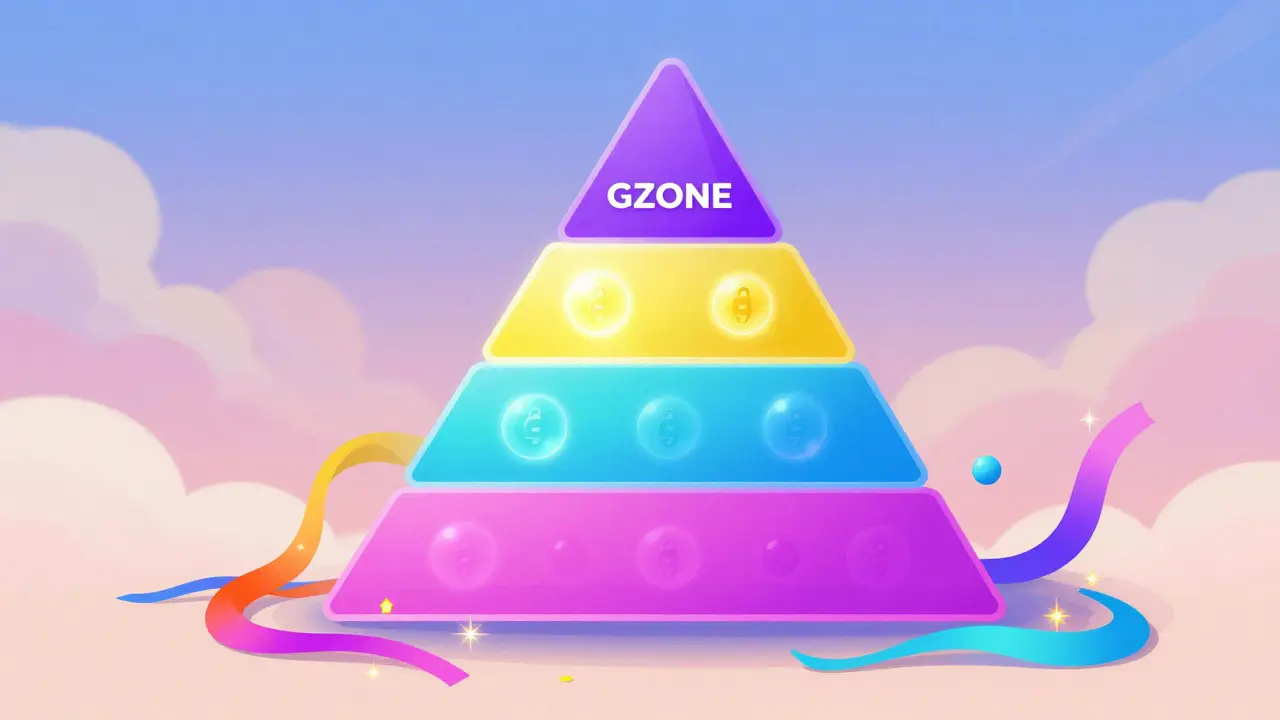
This is where most users get confused. There isn't a single "airdrop button" you click. Instead, benefits are distributed based on your staking weight. Here is how the logic flows:
- Acquire GZONE: Buy the token on supported exchanges or via peer-to-peer transfers.
- Stake Tokens: Lock your GZONE in the platform's staking contract.
- Assign Tier: Your staked amount places you in one of four distinct tiers.
- Access Allocations: When a new IGO or INO opens, your tier determines your maximum allocation size.
Higher tiers mean bigger slices of the pie. For example, a user in the top tier might get access to 5% of a new game's token supply, while a lower-tier user gets only 0.5%. This system ensures that loyal holders who commit capital earlier get better odds. It effectively turns the token into a membership pass for the gaming launchpad.
Is There a Current Airdrop Campaign?
Here is the direct answer: there is no standalone, public-facing airdrop campaign currently running for GZONE in the traditional sense. The "airdrop" aspect is embedded in the platform's operational rewards. You earn access to new projects by participating in the existing ecosystem. Any claims of a massive, free token drop usually stem from outdated news from the 2021 launch or community rumors that haven't been officially confirmed by the team.
However, indirect rewards do exist. The 5% portion of the sell fee that goes to staking rewards acts as a continuous drip-feed of value to holders. Additionally, successful projects launched through GameZone often provide their own token distributions to early backers. So, while you aren't getting GZONE tokens for free, you are getting exposure to new gaming assets that may appreciate significantly. This is a more sustainable model than pure airdrop farming, which often leads to immediate sell-offs.

Market Reality and Price Predictions
Let's talk numbers, because expectations need to be grounded. GZONE hit an all-time high of $1.18 in November 2021. By June 2025, it had dropped to an all-time low of $0.002148. As of August 2026, it trades around $0.0028-$0.008 depending on the exchange and volatility. The technical indicators show a bearish sentiment, with the Fear & Greed Index sitting in the "Fear" zone. The 14-day RSI is often in oversold territory, suggesting potential for a bounce, but the trend remains downward from its peak.
| Metric | Value/Data | Context |
|---|---|---|
| All-Time High | $1.18 (Nov 2021) | Peak during NFT mania |
| All-Time Low | $0.002148 (Jun 2025) | Post-bear market bottom |
| Current Price Range | $0.0028 - $0.008 | High volatility zone |
| 2026 Optimistic Forecast | $2.50 Average | Based on adoption growth |
| 2026 Conservative Forecast | $0.0020 - $0.0028 | Based on current volume |
Price predictions vary wildly. Optimistic models suggest an average of $2.50 in 2026 if blockchain gaming adoption surges and regulations become friendlier. Conservative analysts, however, predict the token will remain in the sub-cent range unless major partnerships drive volume. The truth likely lies somewhere in between, driven heavily by the success rate of the games launched through the platform. If the next batch of IGOs performs well, GZONE could see a significant re-rating. If they flop, the token may continue to trade at lows.
Risks and Things to Watch Out For
Before you dive in, consider the risks. The gaming sector is notoriously volatile. Many GameFi projects fail to sustain player bases after the initial hype. Since GZONE's value is tied to the success of these projects, a string of failed launches could hurt the token's perception. Additionally, the low trading volume (often under $20,000 daily) means slippage can be an issue for large trades. You might find it hard to exit a position quickly without moving the price against yourself.
Also, keep an eye on the unstaking fee. If you need to liquidate your position urgently, that 25% fee can eat into your profits significantly. This makes GZONE a poor choice for short-term day trading. It is a tool for patient investors who want exposure to the gaming sector through a curated lens.
Frequently Asked Questions
How do I get GZONE tokens?
You can purchase GZONE on decentralized exchanges that support the network it is deployed on, or through peer-to-peer transactions. Once acquired, you should stake them on the GameZone platform to activate your tier status and start earning access to new project allocations.
Is the GZONE airdrop still active?
There is no separate public airdrop campaign currently running. The distribution benefits are integrated into the staking mechanism. You earn access to new games and receive a share of the burn/reward pool by staking existing GZONE tokens.
What happens if I unstake too early?
If you unstake before the minimum lock-up period ends, you may incur a penalty fee of up to 25% of your staked amount. This fee is deducted from your withdrawal to discourage short-term speculation and ensure stability in the staking pool.
Which blockchains does GameZone support?
The platform is multi-chain, supporting projects built on Polygon, Binance Smart Chain, Solana, and Ethereum. This interoperability allows users to access a wider variety of gaming projects without needing to switch ecosystems constantly.
Who is behind the GameZone project?
GameZone operates as part of the BlueZilla ecosystem. BlueZilla is a known incubator and accelerator in the crypto space, providing legal, marketing, and development support to the projects launched through GameZone. This partnership adds a layer of due diligence to the listed projects.
Write a comment