
Remember when sending a simple token swap on Ethereum cost more than the coffee you were drinking? That pain point defined crypto for years. But if you look at the landscape today, in September 2026, that era feels like ancient history. The Layer 2 scaling solutions have quietly become the engine room of the entire blockchain ecosystem. They aren't just experimental side-chains anymore; they are where most of the action happens. If you're still interacting primarily with the Ethereum mainnet for daily transactions, you're likely paying ten times what you need to and waiting longer than necessary.
The shift isn't magic. It's engineering. By building secondary protocols on top of the primary blockchain, developers solved the "trilemma" problem-at least partially-by moving heavy lifting off-chain while keeping security anchored to the main chain. This article breaks down exactly how these systems work, which ones are winning, and why this technology is the backbone of the next billion users entering Web3.
Key Takeaways
- Cost Efficiency: Layer 2 networks reduce transaction fees by up to 90%, making micro-transactions viable.
- Speed Matters: Throughput has jumped from ~15 TPS on mainnet to over 4,000-65,000 TPS on L2s.
- Two Main Techs: Optimistic Rollups (Arbitrum, Base) favor compatibility; ZK-Rollups (zkSync, StarkNet) favor privacy and finality.
- Institutional Adoption: Major financial players are using L2s for tokenized assets due to predictable costs.
- Interoperability is Next: The current focus is shifting to seamless bridging between different L2 networks.
Why We Needed Layer 2 Scaling Solutions
Ethereum was designed to be secure and decentralized. Those are hard constraints. When you prioritize those two things, speed usually takes a hit. For years, the network capped out around 15 transactions per second (TPS). Compare that to Visa, which handles thousands per second during peak hours, and the gap becomes obvious. During bull markets, gas fees skyrocketed because everyone was bidding against each other for block space. A simple NFT mint could cost $50 or more. This excluded average users and made complex DeFi strategies prohibitively expensive for retail investors.
Vitalik Buterin, Ethereum’s co-founder, championed the idea of rollups as the primary path forward. The logic was simple: don’t change the base layer too much. Instead, build layers on top that bundle hundreds of transactions into one, process them efficiently, and then submit a single proof back to Ethereum. This approach allowed the network to scale without sacrificing the security guarantees that make it valuable in the first place.
Optimistic vs. Zero-Knowledge Rollups: What’s the Difference?
Not all Layer 2s are built the same. Understanding the distinction between the two dominant architectures helps you decide which one fits your needs. Think of them as two different ways to prove you did your homework.
Optimistic Rollups operate on trust but verify principles. They assume transactions are valid unless someone proves otherwise within a specific challenge period (usually seven days). Networks like Arbitrum, Optimism, and Coinbase’s Base use this method. Their biggest advantage is high compatibility with existing Ethereum smart contracts. Developers can often deploy their code without major changes. However, the withdrawal time to the mainnet can be slow due to that challenge period.
Zero-Knowledge Rollups (ZK-Rollups) take a mathematical approach. They generate cryptographic proofs that verify the validity of transactions instantly. You don’t have to wait for a challenge window. Networks like zkSync and StarkNet lead this category. They offer faster finality and better privacy features because the proof confirms the state change without revealing every detail of the underlying transactions. The trade-off? They are harder to build and require more specialized development knowledge.
| Network | Type | Throughput (TPS) | Best For | Withdrawal Time |
|---|---|---|---|---|
| Polygon | Sidechain/L2 Hybrid | ~65,000 | Gaming, High-Freq Trading | Minutes |
| Arbitrum | Optimistic Rollup | ~4,000 | DeFi, Complex dApps | ~7 Days |
| Base | Optimistic Rollup | ~4,000 | Social Apps, Retail Users | ~7 Days |
| zkSync Era | ZK-Rollup | ~2,000+ | Privacy, Fast Finality | Minutes |
| StarkNet | ZK-Rollup | ~2,000+ | Enterprise, Heavy Compute | Minutes |

The State of Play in 2026: Who Is Winning?
If you look at Total Value Locked (TVL), Arbitrum remains a heavyweight. With billions in locked assets, it hosts a massive ecosystem of decentralized applications. Why do people stick with it? Because it works. The developer experience is smooth, and the liquidity depth is unmatched among optimistic rollups. But competition is fierce. Base, backed by Coinbase, has seen explosive growth by integrating directly with exchange infrastructure. It’s easier for a regular person to bridge funds to Base from Coinbase than almost anywhere else. This convenience factor drives adoption more than technical specs alone.
On the performance end, Polygon continues to dominate raw throughput. While its architecture differs slightly from pure rollups, its ability to handle tens of thousands of transactions per second makes it the go-to for gaming and social platforms where users expect instant feedback. Meanwhile, ZK-Rollups are gaining ground in enterprise sectors. Financial institutions prefer the instant finality and auditability that zero-knowledge proofs provide. If you’re tokenizing real-world assets, you don’t want to wait seven days to confirm a settlement.
How This Changes Your Wallet Experience
You might not care about TPS metrics, but you definitely care about your bank balance. The impact of Layer 2 scaling on user experience has been profound. In 2021, swapping tokens might cost $20 in gas. Today, that same swap costs pennies. This shift has democratized access to DeFi. You no longer need a large capital base to participate in yield farming or lending protocols. Micro-transactions are now feasible. Imagine buying a digital collectible for $2 without worrying that the fee will eat half your purchase price. That’s the reality now.
For gamers, the difference is night and day. Blockchain games require frequent asset transfers-buying a sword, selling loot, crafting items. On mainnet, these actions would grind gameplay to a halt due to fees and latency. On Layer 2s, these interactions happen seamlessly, often indistinguishable from traditional mobile games. The friction is gone.
What’s Next? Interoperability and Abstraction
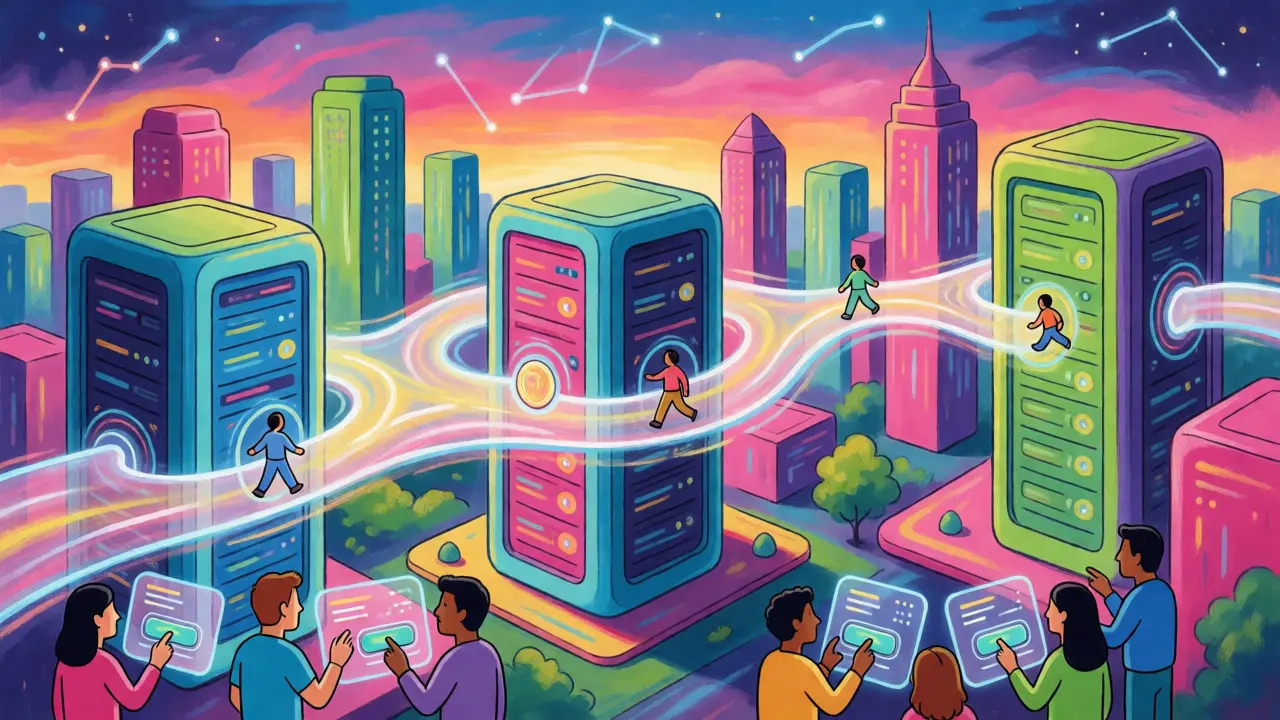
We’ve solved the scaling problem for individual chains. Now we face the fragmentation problem. There are dozens of Layer 2 networks. Moving assets from Arbitrum to zkSync used to be a nightmare of bridges and wrapped tokens. The next phase of evolution focuses on interoperability protocols that allow seamless movement of data and value between these silos. Projects are working on intent-based routing, where you tell the network what you want to achieve, and it figures out the best path across multiple L2s automatically.
Another trend is account abstraction. This tech allows wallets to behave more like traditional apps. You can pay gas fees in any token, recover your wallet via email instead of a seed phrase, and batch multiple transactions into one click. These UX improvements, powered by Layer 2 infrastructure, are critical for onboarding the next wave of non-crypto-native users.
Frequently Asked Questions
Is Layer 2 safer than Ethereum mainnet?
Layer 2 networks inherit security from Ethereum. They post data back to the mainnet, so if an L2 fails, you can always reclaim your funds on the main chain. However, they introduce new risks related to the specific smart contracts of the L2 operator. Generally, established L2s like Arbitrum and Optimism are considered very safe, but they are not identical to mainnet security.
Do I need a new wallet for Layer 2?
No. Most modern wallets like MetaMask or Rabby support Layer 2 networks natively. You just add the network to your wallet settings. Your private key remains the same, but you manage balances separately for each network.
Why are withdrawals from Optimistic Rollups slow?
Optimistic Rollups have a challenge period (typically 7 days) to allow anyone to dispute invalid transactions. This ensures security but delays final withdrawal to the mainnet. ZK-Rollups do not have this delay because they use mathematical proofs for immediate verification.
Which Layer 2 is best for beginners?
Base is often recommended for beginners due to its integration with Coinbase. Arbitrum is great for DeFi enthusiasts who want deep liquidity. Polygon is ideal for gamers and casual users who prioritize speed and low costs above all else.
Will Layer 2 replace Ethereum?
No. Layer 2s rely on Ethereum for security and consensus. They are complementary layers, not replacements. Ethereum acts as the settlement layer, while Layer 2s act as execution layers for high-volume activity.
Next Steps for Users and Developers
If you’re a user, start experimenting. Bridge small amounts to a Layer 2 network. Try a swap on Uniswap on Arbitrum or buy an NFT on Base. Feel the difference in speed and cost. Keep an eye on interoperability tools that let you move assets easily between chains.
For developers, the barrier to entry has lowered significantly. Tools for deploying on ZK-Rollups are maturing, and documentation for Optimistic Rollups is robust. Consider building on an L2 rather than mainnet unless you specifically need mainnet visibility. The user base is there, and the costs are manageable.
Write a comment