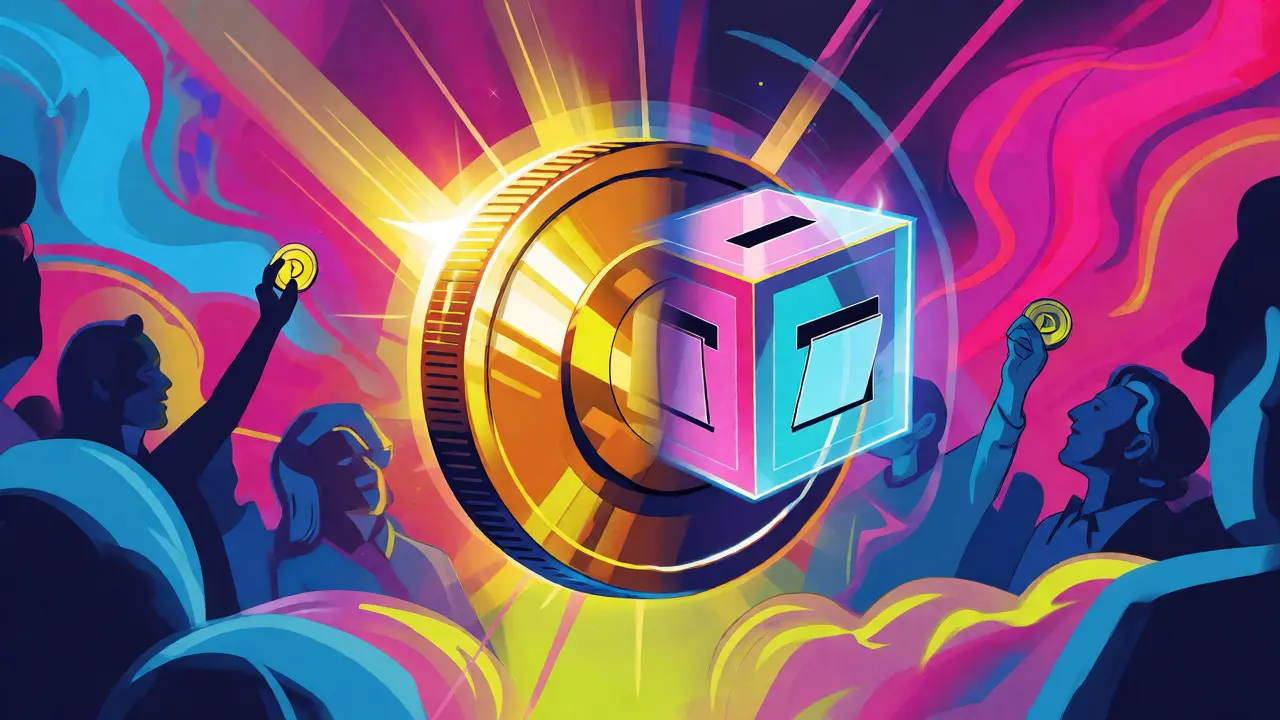
Imagine holding a token that doesn't just sit in your wallet collecting dust or waiting for the next bull run to pump. Instead, it gives you a direct say in how a multi-billion dollar protocol operates. That is the promise of decentralized governance tokens. Unlike Bitcoin, which functions primarily as digital gold, or Ethereum, which powers smart contracts, governance tokens are designed specifically to grant holders voting rights and influence over protocol development.
But here is the catch: having a vote is one thing; actually using it effectively is another. As we move through 2026, the narrative around these tokens has shifted from "who owns the most coins" to "how do we make decisions without chaos?" The future isn't just about more tokens; it's about smarter voting mechanisms, AI integration, and solving the apathy problem that plagues many DAOs today.
The Dual Nature of Governance Tokens
To understand where we are going, you need to grasp what these tokens actually are. They aren't just financial assets. They are instruments of power. When you hold a governance token like MakerDAO’s MKR or Uniswap’s UNI, you are buying into a stakeholder role. You get to vote on stability fees, collateral types, liquidity pool incentives, and even treasury allocations.
This dual role-part asset, part ballot-is unique to the crypto space. In traditional corporate structures, shareholders have limited influence unless they own a massive chunk of equity. In decentralized finance (DeFi), a small holder can theoretically impact protocol direction if they align with a larger movement. However, this ideal often clashes with reality. Most users treat these tokens purely as speculative vehicles, ignoring their governance utility until a crisis hits.
| Protocol | Token | Primary Governance Function | Voting Mechanism |
|---|---|---|---|
| MakerDAO | MKR | Sets monetary policy for DAI stablecoin | Direct token-weighted voting |
| Uniswap | UNI | Controls fee switches and treasury grants | Delegated voting via Tally |
| Compound | COMP | Manages lending markets and risk parameters | Proposal-based voting |
The Crisis of Voter Apathy
Let’s be honest: most people don’t want to read 50-page technical proposals every week. This is the biggest hurdle facing decentralized governance today. Low voter participation undermines the legitimacy of any decision. If only 5% of token holders vote, does the outcome truly represent the community?
Research highlights that this apathy stems from information overload. Evaluating complex code changes or economic adjustments requires expertise that the average holder lacks. Consequently, whales (large holders) often dominate outcomes because they have the resources to analyze proposals deeply. This creates a plutocracy rather than a democracy, where wealth dictates influence regardless of merit.
To combat this, the ecosystem is shifting toward delegation. Platforms like Tally and Agora allow users to entrust their voting power to trusted delegates. These delegates are often active community members, developers, or researchers who commit to transparency and regular reporting. It’s a practical compromise: you keep your tokens, but you hire someone else to do the heavy lifting of governance.
Beyond Simple Majority: New Voting Models
One token, one vote is too blunt an instrument for nuanced decisions. Smart contracts now enable sophisticated voting models that aim to balance fairness with efficiency.
- Quadratic Voting: This model limits the influence of large stakeholders by making each additional vote more expensive. If you want five votes, you pay significantly more than for four. It prevents whales from steamrolling community consensus.
- Conviction Voting: Used by projects like DAOstack, this allows voters to signal support over time rather than casting a single binary vote. Support accumulates gradually, allowing ideas to gain traction organically without requiring immediate majority approval.
- Holographic Consensus: This system uses prediction markets to gauge the likelihood of a proposal passing before the actual vote occurs. It helps filter out noise and focuses attention on viable initiatives.
These mechanisms aren't just theoretical experiments anymore. They are being deployed in live protocols to manage treasuries worth hundreds of millions of dollars. The goal is to create systems that are resistant to manipulation while remaining accessible to non-experts.
AI Enters the Governance Chat
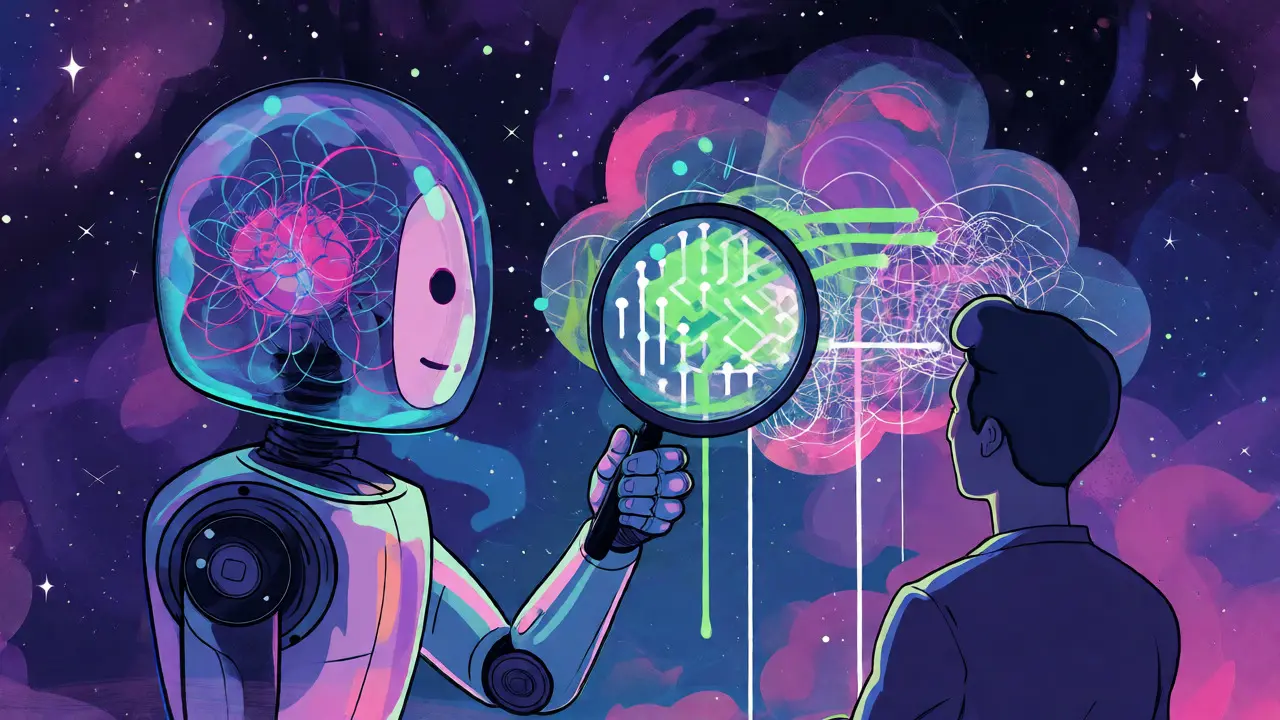
If there is one trend defining the future of governance tokens, it is the integration of Artificial Intelligence. We aren't talking about robots taking over yet, but AI is already acting as a powerful assistant for human decision-makers.
Consider the sheer volume of data involved in governing a major DeFi protocol. Proposals, forum discussions, GitHub commits, and on-chain metrics flood the channels daily. AI agents can summarize these documents, highlight risks, and even predict potential outcomes based on historical data. For a delegate trying to decide whether to approve a new collateral type, an AI summary could save hours of research.
More radically, some projects are exploring AI delegates. Imagine an AI agent trained on your specific values and past voting history. It reviews every proposal, checks it against your preferences, and casts a vote automatically. While fully autonomous AI delegates are still in early stages, hybrid models-where AI suggests and humans confirm-are gaining traction rapidly. This addresses the apathy problem by lowering the barrier to participation. You don't need to be an expert; you just need to train your AI proxy.
Legal and Security Risks Remain
Despite the technological advancements, significant risks linger. Smart contract bugs remain a primary concern. A flaw in a governance module can lead to catastrophic financial losses, as seen in several high-profile hacks over the past few years. Code is law, but only if the code is perfect.
Then there is the legal gray area. In many jurisdictions, the status of governance tokens is unclear. Are they securities? Commodities? Utility tools? Regulatory uncertainty creates hesitation among institutional investors who might otherwise bring substantial capital and stability to these ecosystems. Until clear frameworks emerge, governance will likely remain dominated by crypto-natives rather than traditional finance players.
What’s Next for Token Holders?
The trajectory is clear: governance tokens are evolving from novelty features to essential infrastructure for decentralized collaboration. We are moving away from simple airdrops meant to distribute ownership, toward sustainable incentive structures that reward active participation.
If you hold governance tokens today, consider your role. Are you passive or active? The market rewards those who engage. Protocols with high engagement rates tend to innovate faster and adapt better to market changes. For developers and project founders, the challenge lies in designing interfaces that make governance intuitive. If voting feels like filing taxes, people won't do it. If it feels like participating in a game or a social network, adoption will skyrocket.
The future belongs to protocols that solve the coordination problem. By combining robust voting mechanisms, AI assistance, and clear legal standing, decentralized governance can scale beyond niche communities to become a mainstream alternative to traditional organizational structures.
What is the main difference between a governance token and a regular cryptocurrency?
While regular cryptocurrencies like Bitcoin focus on store of value or medium of exchange, governance tokens grant holders voting rights. They allow users to participate in decision-making processes such as protocol upgrades, fee adjustments, and treasury management, effectively giving them a stake in the project's strategic direction.
Why is voter apathy a problem for DAOs?
Low voter turnout reduces the legitimacy of governance decisions. If only a small percentage of token holders vote, the outcome may not reflect the broader community's interests. This also makes protocols vulnerable to manipulation by large holders (whales) who can sway votes with minimal effort compared to the dispersed minority.
How does quadratic voting work in blockchain governance?
Quadratic voting restricts the influence of wealthy participants by increasing the cost of each additional vote. For example, casting two votes costs four times as much as one vote. This ensures that a broad base of supporters carries more weight than a few individuals with massive holdings, promoting fairer representation.
Can AI replace human voters in decentralized governance?
Currently, AI acts as an assistant rather than a replacement. It helps summarize proposals, analyze data, and suggest votes based on user preferences. Fully autonomous AI delegates are emerging but are not yet standard. Human oversight remains crucial to handle nuance, ethics, and unexpected scenarios that algorithms might miss.
What are the risks associated with holding governance tokens?
Key risks include smart contract vulnerabilities that could lead to fund loss, regulatory uncertainty regarding their classification as securities, and the potential for governance attacks where malicious actors acquire enough tokens to pass harmful proposals. Additionally, low liquidity in some governance tokens can make exiting positions difficult during market downturns.
Write a comment