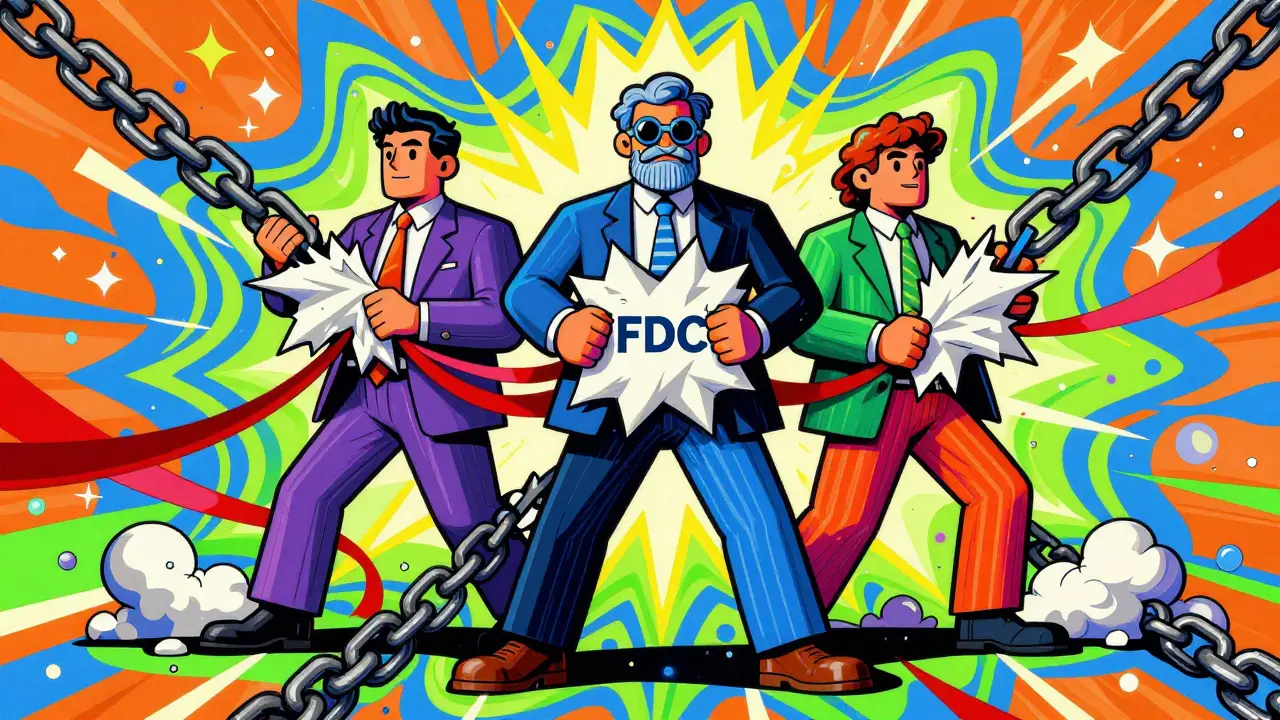
For years, traditional banks in the United States walked on eggshells when it came to cryptocurrency. They wanted to serve customers interested in digital assets, but federal regulators made it nearly impossible without jumping through endless hoops of prior notification and special approvals. That era officially ended in 2025. In a coordinated move that shook the financial sector, the three main federal banking regulators-the Federal Reserve, the Office of the Comptroller of the Currency (OCC), and the Federal Deposit Insurance Corporation (FDIC)-rescinded the restrictive guidance that had stifled bank involvement in crypto since 2021.
If you are wondering whether your bank will now let you buy Bitcoin or hold stablecoins directly in your checking account, the answer is nuanced. The barriers are gone, but the rules of safety remain. Here is exactly what changed, who pulled the trigger, and what this means for the future of digital asset banking.
The Big Three Pull Back the Curtains
The shift didn't happen overnight, nor did it come from just one agency. It was a synchronized retreat from the "careful and cautious" approach that defined the previous administration's stance on digital assets. The process began with the OCC and culminated with the Federal Reserve, creating a unified front that removed the most significant procedural hurdles for banks.
Office of the Comptroller of the Currency (OCC) The OCC is the primary regulator for national banks and federal savings associations. On March 7, 2025, it issued Interpretive Letter 1183, rescinding the restrictive Interpretive Letter 1179 from November 2021. This move reaffirmed that national banks can participate in cryptocurrency custody services, certain stablecoin activities, and independent node verification networks without needing a supervisory non-objection. Essentially, the OCC said its staff now knows enough about crypto to supervise it normally, rather than treating every crypto activity as a potential crisis waiting to happen.
Next up was the Federal Deposit Insurance Corporation (FDIC) The FDIC insures deposits at commercial banks and thrift institutions. On March 28, 2025, it rescinded Financial Institution Letter FIL-16-2022, which had required prior notification for crypto-related activities. The new guidance clarifies that supervised institutions may engage in permissible crypto-related activities without prior FDIC approval, provided they manage risks adequately. This removed a major bottleneck for state-chartered banks that rely on FDIC insurance.
Finally, the Federal Reserve Board The central bank of the United States. On April 24, 2025, it announced the withdrawal of SR 22-6 and SR 23-8, two key supervisory letters that imposed strict notification and approval requirements on state member banks and holding companies. This action completed the trifecta. By rescinding these letters, the Fed signaled that it would monitor banks' crypto activities through normal supervisory processes rather than requiring special advance notice for every planned transaction or service launch.
What Exactly Was Rescinded?
To understand the impact, you need to know what chains were broken. Under the old regime, banks faced a maze of specific documents that acted as roadblocks. Let's look at the key pieces of guidance that were tossed out.
| Regulator | Document ID / Name | Original Date | What It Required |
|---|---|---|---|
| Federal Reserve | SR 22-6 | 2022 | State member banks had to provide advance notice of any planned or current crypto-asset activities. |
| Federal Reserve | SR 23-8 | 2023 | Banks needed formal supervisory non-objection before engaging in dollar-denominated token activities. |
| OCC | Interpretive Letter 1179 | Nov 18, 2021 | Required national banks to seek supervisory non-objection for crypto custody and other digital asset services. |
| FDIC | FIL-16-2022 | 2022 | Mandated prior notification for FDIC-supervised institutions wishing to engage in crypto-related activities. |
These documents created a chilling effect. Many banks simply chose not to enter the crypto space because the compliance burden was too high and the timeline for approval was uncertain. With these rescissions, the "permission slip" requirement is gone. Banks can now act more like they do with any other emerging technology-assessing risk internally and proceeding if their controls are adequate.
Why Did Regulators Change Their Minds?
You might ask why the regulators shifted from restriction to permission. The answer lies in maturity and expertise. When the initial restrictions were put in place around 2021, the crypto market was volatile, and high-profile collapses raised serious concerns about contagion risk to the traditional banking system. Regulators lacked deep internal knowledge about how digital assets worked, so they opted for a defensive posture.
By 2025, the landscape had changed. The OCC explicitly stated that its supervisory non-objection process "is no longer necessary" due to increased staff knowledge and supervisory expertise regarding crypto-asset activities. The agencies realized that micromanaging every crypto interaction was inefficient and hindered innovation without necessarily improving safety. Instead of blocking access, they decided to rely on existing safety and soundness standards. If a bank wants to offer crypto services, it must still meet capital requirements, anti-money laundering (AML) rules, and consumer protection laws. The difference is that they don't need a special permit to start trying.

What Can Banks Do Now?
With the red tape cut, what are banks actually allowed to do? The scope is broader than many expected, though it still has limits.
- Custody Services: National banks and federal savings associations can now offer custody services for cryptocurrencies. This means they can hold digital assets on behalf of clients, similar to how they hold stocks or bonds today.
- Stablecoin Activities: Banks can engage in certain stablecoin activities, including holding reserves for stablecoin issuers. This opens the door for deeper integration between fiat currency systems and digital dollars.
- Node Verification: Institutions can participate in independent node verification networks. This allows banks to help secure blockchain networks by validating transactions, potentially earning rewards while contributing to network integrity.
- Payment Processing: While not explicitly detailed in every single letter, the removal of barriers facilitates smoother payment processing involving digital assets, provided AML/KYC (Know Your Customer) protocols are followed.
However, there are still gaps. Legal experts note that significant questions remain about banks' ability to hold crypto-assets other than stablecoins on their own balance sheets for trading purposes, or to engage in direct crypto-asset lending. These areas likely require further clarification or new guidance, which the regulators have promised to develop in coordination with the President's Working Group on Digital Asset Markets.
Impact on State-Chartered Banks
A crucial detail often overlooked is the distinction between national banks and state-chartered banks. State-chartered banks are generally prohibited from engaging in activities not permissible for national banks. Because the OCC leads the charge on defining permissible activities for national banks, its actions set the tone for the entire industry.
When the OCC rescinded Interpretive Letter 1179, it effectively cleared the path for state-chartered banks as well. Previously, even if a state bank wanted to offer crypto services, it had to wait for the OCC to give the green light to national banks first. Now that the OCC has adopted a permissive stance, state banks face significantly fewer regulatory barriers. This levels the playing field and encourages a wider range of financial institutions to explore digital asset offerings.

What Does This Mean for You?
If you are a retail customer, the immediate change might be subtle. You won't wake up tomorrow to find a "Buy Bitcoin" button on your Chase or Bank of America app. Banks move slowly, and implementing new infrastructure takes time. However, the regulatory fog has lifted, which means we should see a gradual increase in crypto-friendly features over the coming months and years.
Expect to see more partnerships between traditional banks and regulated crypto exchanges. You might also see banks offering insured custody solutions for institutional clients, which could trickle down to wealth management services for high-net-worth individuals. For small business owners, this could mean easier ways to accept crypto payments with less friction and lower fees compared to third-party processors.
From a security perspective, having your assets held by a federally regulated bank offers peace of mind. Unlike unregulated exchanges that have collapsed in the past, banks are subject to strict auditing, capital requirements, and deposit insurance (for fiat portions). This brings a layer of trust to the crypto ecosystem that has been missing for years.
Risks and Remaining Uncertainties
Despite the positive news, don't assume everything is now safe and sound. The regulators removed the *procedural* barriers, not the *market* risks. Crypto assets remain volatile. Hacking threats persist. And the legal framework for digital assets is still evolving.
Banks will still be held accountable for managing these risks. If a bank fails to implement adequate cybersecurity measures or falls behind on AML compliance, regulators will step in. The shift is from "pre-approval" to "post-monitoring." This means banks must be proactive in building robust internal controls. For consumers, it reinforces the importance of choosing reputable institutions. Just because a bank *can* offer crypto services doesn't mean every bank *will* do it well.
Furthermore, the political landscape can shift again. While the 2025 changes represent a clear departure from the Biden-era restrictions, future administrations could reintroduce stricter guidelines if market conditions deteriorate. Investors and users should stay informed about ongoing developments from the Federal Reserve, OCC, and FDIC.
Looking Ahead: The Next Steps
The 2025 regulatory changes are a milestone, not the finish line. The Federal Reserve, OCC, and FDIC have committed to working together to address remaining uncertainties. We can expect additional guidance on topics like:
- Balance sheet treatment of non-stablecoin crypto assets.
- Lending against crypto collateral.
- Cross-border crypto payment regulations.
- Consumer protection standards for digital asset products.
Industry observers predict that these changes will accelerate mainstream adoption. As traditional banks enter the space, competition will increase, driving down costs and improving user experience. Specialized crypto-only providers will need to differentiate themselves beyond just offering access to assets-they'll need to provide superior technology, education, and support.
For now, the message from Washington is clear: the era of suspicion is over. The era of integration has begun. Whether you are a banker, a developer, or a regular person looking to diversify your portfolio, keep an eye on how your financial institution adapts to this new reality. The bridge between Wall Street and Web3 is finally being built, and the foundations are solid.
Did the Federal Reserve ban crypto for banks?
No, the opposite happened. In April 2025, the Federal Reserve rescinded previous guidance (SR 22-6 and SR 23-8) that had restricted banks from engaging in crypto activities without prior approval. This removes significant barriers for banks wanting to offer crypto services.
Can my local bank now hold my Bitcoin?
Potentially, yes. The OCC and FDIC have clarified that banks can offer custody services for cryptocurrencies. However, implementation varies by institution. Check with your specific bank to see if they offer crypto custody or partnership programs with regulated exchanges.
What is Interpretive Letter 1183?
Interpretive Letter 1183 is a document issued by the OCC on March 7, 2025. It rescinds the earlier Interpretive Letter 1179, removing the requirement for national banks to get supervisory non-objection before participating in crypto custody, stablecoin activities, and node verification.
Are all crypto activities now allowed for banks?
Not all. While custody and stablecoin activities are clearly permitted, there are still uncertainties around banks holding non-stablecoin crypto on their balance sheets for trading or engaging in direct crypto lending. Regulators plan to issue further guidance on these areas.
How does this affect state-chartered banks?
State-chartered banks benefit indirectly. Since they are generally limited to activities permissible for national banks, the OCC's liberalization of rules for national banks effectively clears the path for state banks to offer similar crypto services without facing unique regulatory blocks.
Is my money safer in a bank than on a crypto exchange?
Generally, yes. Banks are subject to strict federal oversight, capital requirements, and audit standards. While crypto assets themselves are volatile, holding them through a regulated bank adds layers of security and accountability that many standalone exchanges lack. Note that FDIC insurance typically covers fiat deposits, not the value of the crypto assets themselves.
When will I see crypto features in my banking app?
There is no fixed date. Banks move cautiously. While the regulatory barriers are gone, banks need time to build infrastructure, train staff, and ensure compliance. Expect gradual rollouts starting with institutional clients and wealth management, eventually trickling down to retail users over the next few years.
Write a comment