
Running a cryptocurrency exchange in Canada isn't just about building a slick app and connecting to the blockchain. It’s about navigating one of the most structured regulatory environments in the world. If you’re planning to serve Canadian clients, whether your company is based in Toronto or Tokyo, you are stepping into a system governed by strict anti-money laundering laws and securities regulations.
The core problem for many founders is confusion over which regulator they answer to. Do you need a license from the federal government? What about provincial securities commissions? The short answer is: likely both. In 2026, the landscape has solidified around two main pillars: FINTRAC, which handles money services business (MSB) registration, and the Canadian Securities Administrators (CSA), which oversees platforms dealing with digital assets classified as securities.
Understanding the Two Main Regulatory Pillars
To get licensed, you first need to understand that Canada doesn’t have a single "crypto license." Instead, you fit into existing financial frameworks. Your obligations depend on what you sell and how you handle customer funds.
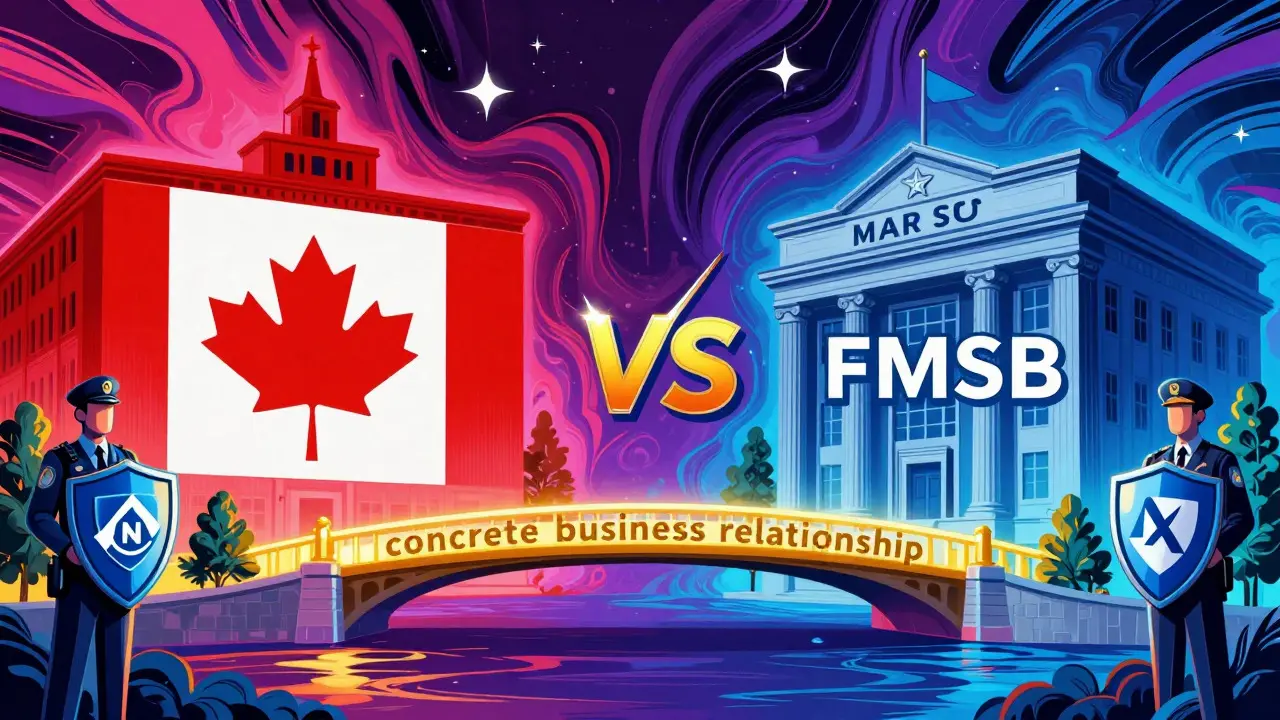
FINTRAC (Financial Transactions and Reports Analysis Centre of Canada) is the federal agency responsible for combating money laundering and terrorist financing. Under their framework, any entity exchanging virtual currency for fiat money (like CAD or USD) must register as a Money Services Business (MSB). This applies if you are a domestic Canadian company. If you are a foreign company serving Canadians, you register as a Foreign Money Services Business (FMSB).
However, FINTRAC registration only covers the "money service" aspect. If your platform allows users to trade tokens that the regulators consider "securities"-which includes many utility tokens, governance tokens, and stablecoins-you fall under the jurisdiction of the Canadian Securities Administrators (CSA). The CSA is not a single federal body but a coalition of provincial and territorial securities regulators. They enforce rules to protect investors from fraud and market manipulation.
MSB vs. FMSB: Which Registration Do You Need?
The distinction between an MSB and an FMSB is critical for your legal structure. Both require registration with FINTRAC, but the operational requirements differ slightly based on where your headquarters are located.
| Feature | MSB (Domestic) | FMSB (Foreign) |
|---|---|---|
| Legal Entity Location | Must be incorporated in Canada | Incorporated outside Canada |
| Target Audience | Canadian residents and businesses | Canadian residents with concrete business relationships |
| Compliance Officer | Required (can be remote) | Required (must have presence/accessibility in Canada) |
| Regulatory Body | FINTRAC | FINTRAC |
| Ongoing Reporting | Large Transaction Reports (LTR), Suspicious Transaction Reports (STR) | Same as MSB |
For an FMSB, you don’t necessarily need a physical office in Canada, but you must demonstrate a "concrete business relationship" with Canadian clients. This means you can’t just leave a website up globally; you must actively target or accept Canadian customers with intent. Both types face identical AML/CFT (Anti-Money Laundering/Counter-Terrorist Financing) standards.
The CSA Factor: Pre-Registration Undertakings (PRU)
This is where things get tough. Even if you have your FINTRAC MSB/FMSB registration, you might still be blocked from operating if you list tokens deemed to be securities. Since the enhanced regulatory framework rolled out in 2023, the CSA has required most exchanges to sign Pre-Registration Undertakings (PRU). These are legally binding commitments that impose stricter rules than standard securities law.
Under the PRU framework, exchanges must:
- Segregate Customer Assets: You cannot commingle client funds with corporate operating accounts. This prevents the "exchange bankruptcy" scenario seen in other jurisdictions.
- No Pledging of Assets: Exchanges are prohibited from using customer deposits as collateral for loans or trading against them.
- Enhanced Compliance Officers: The Chief Compliance Officer (CCO) must have significant experience and authority within the firm.
- Stablecoin Restrictions: Trading value-referenced cryptoassets (stablecoins) requires specific written consent from the CSA and adherence to strict reserve transparency rules.
If your platform lists Bitcoin or Ethereum, you generally avoid the CSA’s securities net because these are often treated as commodities. But the moment you add a token like UNI, AAVE, or a new project launchpad token, you trigger securities laws. As of 2026, only about 15-20 major exchanges maintain active, compliant operations in Canada due to these high barriers.
Step-by-Step Licensing Process
Getting approved isn’t instant. You should budget 6 to 12 months for the entire process. Here is how it typically unfolds:
- Entity Formation: Incorporate your company in Canada (for MSB) or ensure your foreign entity meets FMSB criteria. You’ll need clear ownership structures showing who the beneficial owners are.
- Policy Development: Draft comprehensive AML/CFT policies. This includes Know Your Customer (KYC) procedures, transaction monitoring protocols, and record-keeping systems. FINTRAC will scrutinize these documents.
- Appoint Key Personnel: Designate a Compliance Officer. This person needs a clean background check and proven expertise in financial regulation.
- Submit FINTRAC Application: Fill out the detailed online registration form. Include business plans, risk assessments, and proof of cybersecurity measures.
- CSA Engagement (If Applicable): If you plan to list securities-like tokens, engage with provincial securities regulators early. Prepare to sign the PRU agreement. This step often requires separate legal counsel specializing in securities law.
- Audit and Review: Regulators may request additional information. Respond quickly. Delays here are common.
- Approval and Onboarding: Once registered, you must maintain ongoing reporting. Submit Large Transaction Reports (for cash/virtual currency transactions over $10,000 CAD) and Suspicious Transaction Reports immediately upon detection.
Costs and Resource Requirements
Don’t underestimate the price of compliance. The upfront cost to prepare and submit a complete license application ranges from CAD 50,000 to CAD 200,000. This covers legal fees, consulting, and technology setup. Why the variance? A simple spot-trading platform for BTC/ETH is cheaper to set up than a complex derivatives exchange with custodial services.
Ongoing annual costs are even higher. Expect to spend between CAD 100,000 and CAD 500,000 per year on compliance staff, software licenses for transaction monitoring, and regular audits. Smaller startups often struggle with this burn rate, which explains why the market has consolidated around larger, well-capitalized players.
You also need robust cybersecurity infrastructure. FINTRAC expects disaster recovery plans and incident response protocols. A breach isn’t just a tech issue; it’s a regulatory violation that can lead to deregistration.

Common Pitfalls to Avoid
Many applications fail not because the business idea is bad, but because the documentation is weak. Here are three frequent mistakes:
- Vague Risk Assessments: Saying "we monitor for fraud" isn’t enough. You need to detail exactly how your algorithms flag suspicious patterns, such as structuring transactions to stay under the $10,000 reportable threshold.
- Inadequate KYC: Your identity verification process must be rigorous. Relying solely on self-reported data without third-party verification tools will raise red flags.
- Ignoring Stablecoin Rules: Assuming you can list USDT or USDC without checking current CSA guidelines is dangerous. The interim framework for stablecoins requires explicit terms regarding reserves and redemption rights.
Future Outlook: DeFi and NFTs
The regulatory conversation is expanding beyond centralized exchanges. In 2026, FINTRAC and the CSA are collaborating on guidance for decentralized finance (DeFi) protocols and non-fungible token (NFT) marketplaces. While DeFi currently operates in a gray area, expect clearer rules soon. If your protocol involves a central point of control or marketing directed at Canadians, you may eventually need to register.
Additionally, cross-border transaction reporting requirements are tightening. Following trends in the EU and US, Canada is likely to implement stricter rules on stablecoin reserves by late 2026. Early adopters who build transparent reserve auditing into their systems now will have a competitive advantage.
How long does it take to get a crypto exchange license in Canada?
The process typically takes 6 to 12 months from initial submission to final approval. This timeline assumes you have complete documentation and respond promptly to regulator inquiries. Complex applications involving securities tokens may take longer due to CSA review processes.
Do I need a physical office in Canada to operate a crypto exchange?
Not necessarily. If you register as a Foreign Money Services Business (FMSB), you can be incorporated abroad. However, you must demonstrate a concrete business relationship with Canadian clients and appoint a Compliance Officer accessible to Canadian regulators. An MSB (domestic) requires incorporation in Canada.
What is the difference between FINTRAC and CSA regulation?
FINTRAC focuses on anti-money laundering (AML) and counter-terrorist financing (CFT). All exchanges handling fiat-to-crypto conversions must register with FINTRAC. The CSA regulates securities. If your exchange lists tokens considered investments (securities), you must comply with CSA rules, including signing Pre-Registration Undertakings (PRU).
Can I list stablecoins on my Canadian exchange?
Yes, but with restrictions. Under CSA Staff Notice 21-333, trading value-referenced cryptoassets (stablecoins) requires prior written consent from the CSA. You must adhere to strict terms regarding customer deposits, reserve transparency, and redemption mechanisms.
How much does it cost to maintain compliance annually?
Annual compliance costs range from CAD 100,000 to CAD 500,000. This includes salaries for compliance officers, software for transaction monitoring and KYC, legal retainers, and audit fees. Costs scale with transaction volume and the complexity of your service offerings.
Write a comment