
You hold the keys. That is the promise of cryptocurrency. But when you start selling products or services, handing those keys over to a payment processor feels like a betrayal of that promise. You want customers to pay in Ethereum is a decentralized blockchain platform that supports smart contracts and tokens, widely used for digital transactions. or stablecoins, but you don't want a third party freezing your account or charging hidden withdrawal fees. This guide explains how to accept Ethereum and ERC-20 tokens while keeping full control of your funds through a self-custody setup.
What Is a Self-Custody Payment Setup?
In a traditional credit card system, money flows from the customer to a processor, then to your bank. In a custodial crypto model, the money goes to the processor's wallet first. They hold it, convert it if needed, and eventually send it to you. If they get hacked, shut down, or decide to freeze your account, your money is stuck with them.
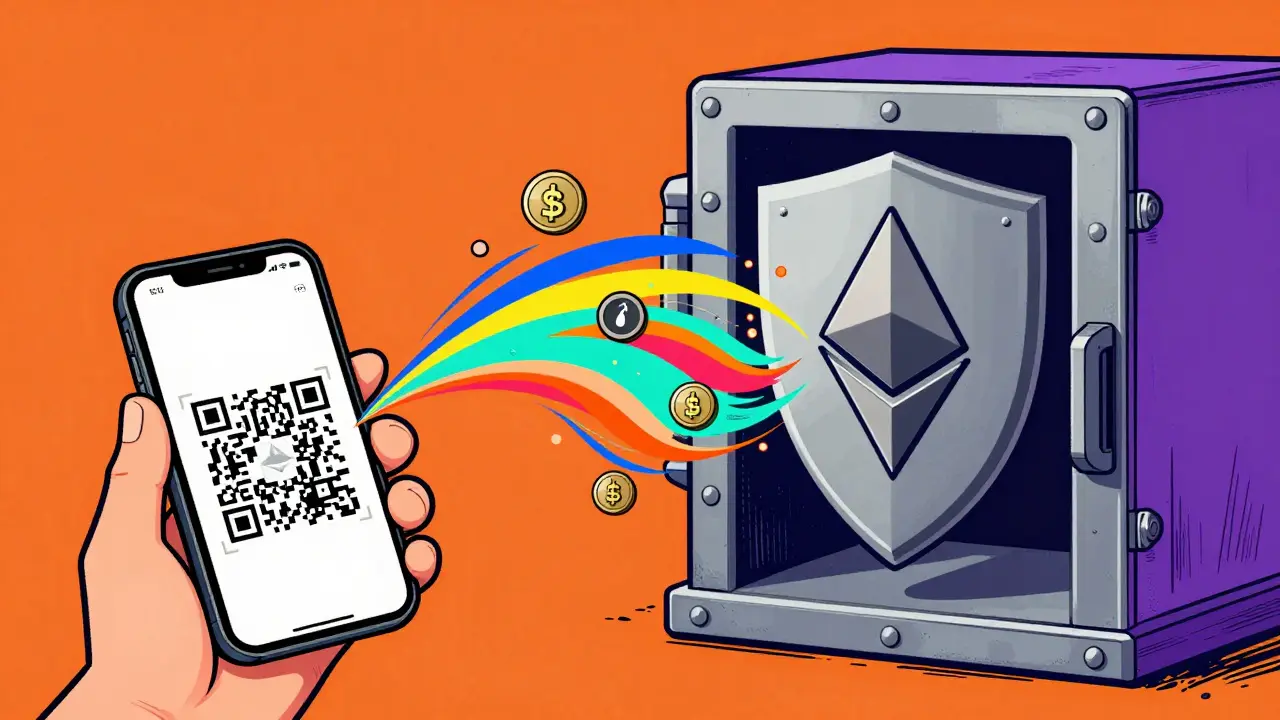
A Self-custody wallet is a digital wallet where the user holds the private keys and has full control over their assets without intermediary involvement. setup changes this dynamic entirely. In this model, you are the bank. When a customer pays, the funds go directly from their wallet to yours on the blockchain. The payment gateway acts only as a messenger-it generates an invoice, tells the customer where to send the money, and notifies your website when the transaction confirms. It never touches the funds.
This approach eliminates counterparty risk. No one can freeze your received payments because they never held them in the first place. However, it shifts the responsibility of security entirely onto you. If you lose your private keys, there is no "forgot password" link to click.
Why Accept Ethereum and ERC-20 Tokens?
Bitcoin is great, but Ethereum offers flexibility that many merchants prefer. The network supports not just native ETH but also thousands of tokens built on its infrastructure using the ERC-20 standard is a technical standard for creating fungible tokens on the Ethereum blockchain, enabling interoperability between different applications.. This means you can accept:
- ETH: The native currency, useful for high-value transactions or speculative buyers.
- USDC and USDT (ERC-20): Stablecoins pegged to the US dollar. These are essential for commerce because they eliminate price volatility. You can sell a $50 item and receive exactly $50 worth of value, regardless of market swings.
- Other Assets: Depending on your audience, you might accept governance tokens or other utility coins.
For most businesses, focusing on ERC-20 stablecoins like USDC is the smartest move. It gives you the benefits of crypto speed and low fees without the headache of managing exchange rate fluctuations.
The Role of XPUB in Non-Custodial Gateways
How does a payment gateway know which address to give your customer if it doesn't have your private keys? The answer lies in XPUB (Extended Public Key) is a public key derived from a seed phrase that allows generating unlimited receiving addresses without exposing private keys. technology.
Your hardware wallet (like a Ledger or Trezor) contains a master seed phrase. From this seed, it generates a hierarchy of keys. The XPUB is a public representation of this hierarchy. It can generate an infinite number of unique receiving addresses, but it cannot spend the funds sent to them. Only your private keys can do that.
When you connect a non-custodial gateway to your wallet, you share the XPUB, not the private keys. The gateway uses this XPUB to derive a fresh, unique Ethereum address for every single order. This provides two major benefits:
- Privacy: Customers see a different address each time, making it harder to link all your sales together on-chain.
- Organization: Each address is tied to a specific invoice ID. When a payment hits that address, the gateway knows exactly which order to mark as paid.
Crucially, the gateway monitors the blockchain for activity at these derived addresses. Once it sees the transaction confirm, it sends a webhook to your server to update the order status. The money, however, sits in your wallet the entire time.
Step-by-Step: Setting Up Your Wallet
To start accepting payments, you need a wallet that supports Ethereum and allows you to export or use your XPUB securely. Hardware wallets are the gold standard here.
| Wallet Model | Connection Type | Ethereum Support | XPUB Export Capability |
|---|---|---|---|
| Ledger Nano X / S Plus | Bluetooth / USB | Native via Ledger Live | Yes (via App Interface) |
| Trezor Safe 3 / Model T | USB / WebUSB | Native via Trezor Suite | Yes (via Bridge/Suite) |
| Rapido | WebHID | Native | Yes (Browser-based) |
Here is how to prepare your device:
- Initialize Your Wallet: Set up your new hardware wallet. Write down your recovery phrase on paper and store it in a safe place. Never digitize this phrase.
- Install the Ethereum App: Ensure the Ethereum application is installed on your device. This allows the wallet to interact with the ETH network and ERC-20 tokens.
- Verify Address Generation: Open your wallet software (Ledger Live or Trezor Suite). Navigate to the Ethereum account. You should see your primary receiving address. Understand that this is just the first of many addresses your XPUB can generate.
- Test with Small Amounts: Before connecting to any payment gateway, send a tiny amount of testnet ETH or real ETH to your wallet to ensure you can view and manage the assets correctly.
Choosing a Non-Custodial Payment Gateway
Not all gateways are created equal. Some claim to be non-custodial but actually route funds through their own hot wallets before forwarding them to you. To maintain true sovereignty, you need a gateway that integrates directly with your XPUB.
Several options exist in the market today. BTCPay Server is an open-source, self-hosted Bitcoin and altcoin payment processor that requires no third-party custody. remains the pioneer in this space, offering zero fees but requiring you to host your own server. For those who prefer managed solutions, platforms like Paymento is a non-custodial payment gateway that connects merchant wallets directly to invoices via XPUB. and Coinbase Commerce (in non-custodial mode) provide easier integration paths.
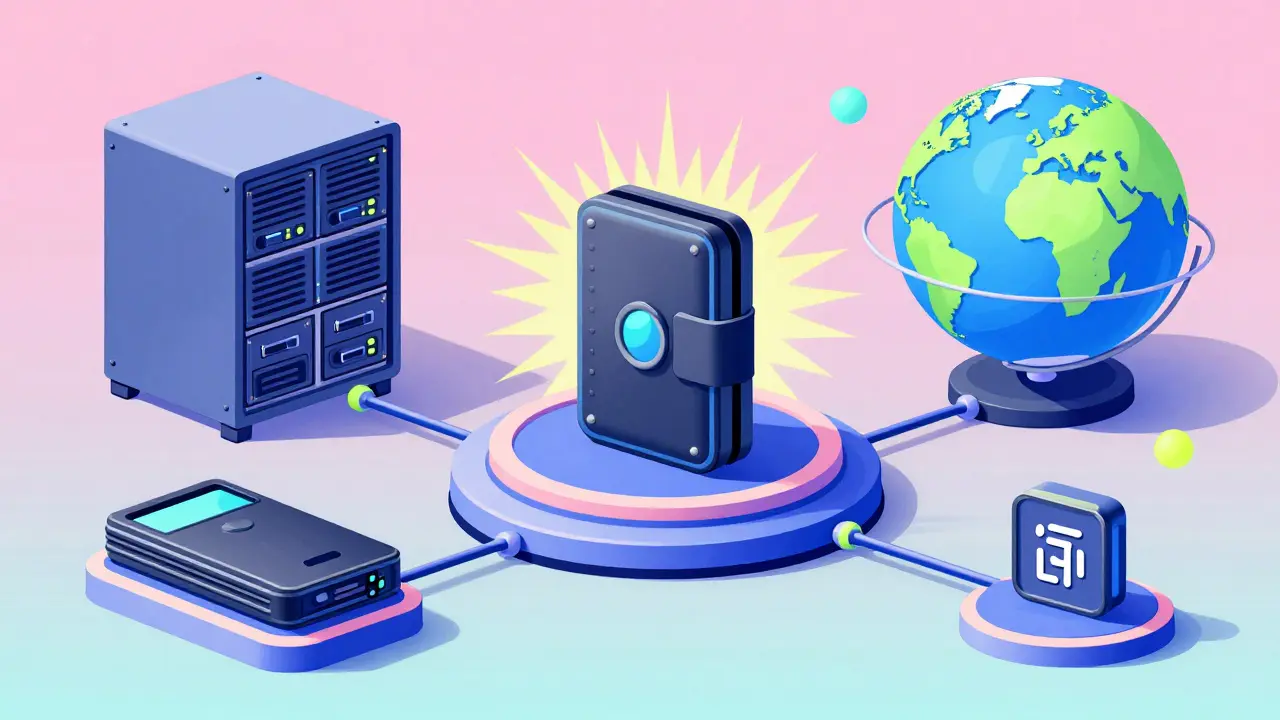
If you are a solo founder or indie hacker looking for a modern, developer-friendly experience, TxNod is a non-custodial multi-chain payment gateway designed for developers, supporting direct hardware wallet integration. stands out. It allows you to connect your Ledger or Trezor directly through the dashboard using WebHID or WebUSB. The gateway derives addresses locally from your public keys, ensuring that funds settle straight to your wallet. There are no chargebacks, no payout holds, and no account freezes because the platform never takes custody of your assets. It supports Ethereum mainnet, including ETH and ERC-20 stablecoins like USDC and USDT, alongside several other chains.
Integrating Payments Into Your Website
Once your wallet is ready and your gateway is chosen, you need to connect it to your storefront. Most non-custodial gateways offer APIs, webhooks, and plugins for popular ecommerce platforms like Shopify, WooCommerce, or custom builds.
The typical flow looks like this:
- Checkout Initiation: A customer selects "Pay with Crypto" at checkout. Your site sends an API request to the gateway with the order details (amount, currency, order ID).
- Invoice Creation: The gateway uses your XPUB to derive a unique Ethereum address for this specific order. It returns the address, the exact amount due, and a QR code to your frontend.
- Customer Payment: The customer scans the QR code or copies the address into their wallet (e.g., MetaMask, Trust Wallet) and sends the ETH or ERC-20 token.
- Blockchain Confirmation: The transaction is broadcast to the Ethereum network. The gateway monitors the mempool and the chain for incoming transactions matching the derived address.
- Webhook Notification: Once the required number of block confirmations is reached (usually 1-3 for ETH), the gateway sends a signed webhook payload to your server. Your server verifies the signature and marks the order as complete.
This process happens in seconds to minutes, depending on network congestion. Because the gateway only handles data, not funds, the latency is minimal.
Security Best Practices for Merchants
With self-custody comes significant responsibility. Here are critical rules to follow:
- Never Share Private Keys: Legitimate non-custodial gateways will never ask for your seed phrase or private keys. If a service asks for these, it is a scam or a custodial service disguised as non-custodial.
- Use Separate Accounts: Consider using a dedicated Ethereum account on your hardware wallet specifically for business receipts. This keeps your personal savings separate from operational cash flow.
- Verify Webhook Signatures: Always validate the HMAC signature of incoming webhooks on your server. This ensures the notification actually came from the gateway and wasn't spoofed by an attacker trying to fake a payment.
- Monitor Gas Fees: Ethereum gas fees can fluctuate. While the customer pays the gas fee, high fees might discourage small purchases. Encourage the use of Layer 2 networks if your gateway supports them, or stick to stablecoins which often have lower relative value risks.
- Backup Regularly: Ensure your hardware wallet's recovery phrase is backed up securely. If your device is lost or broken, this phrase is the only way to recover your business funds.
Managing Volatility and Settlement
Even with stablecoins, some merchants prefer to convert crypto to fiat immediately to avoid any residual risk. In a self-custody setup, you have full freedom to choose how you handle settlement.
You can:
- Hold the Assets: Keep the ETH or USDC in your wallet for long-term investment or future expenses.
- Auto-Convert: Use a decentralized exchange (DEX) aggregator or a fiat off-ramp service to automatically swap incoming crypto for bank deposits. Since the funds are in your wallet, you can automate this via smart contracts or bot scripts.
- Manual Conversion: Periodically withdraw funds to a centralized exchange for conversion. This gives you manual control over timing and rates.
The key advantage of self-custody is that you are not locked into a specific settlement path dictated by a processor. You own the asset until you decide to move it.
Common Pitfalls to Avoid
Mistakes in crypto payments are irreversible. Be aware of these common errors:
Wrong Network Selection: Sending ERC-20 tokens on the wrong network (e.g., sending ETH to a Bitcoin address) results in permanent loss. Always double-check that the customer is using the Ethereum network for ETH and ERC-20 tokens.
Ignoring Confirmations: Do not fulfill orders based on zero-confirmation transactions alone, especially for high-value items. Transactions can be dropped or replaced. Wait for at least one to three block confirmations before shipping goods or delivering digital products.
Poor UX Design: Crypto checkout can be confusing for beginners. Provide clear instructions, show the exact amount in both crypto and fiat terms, and display a QR code prominently. Reduce friction by supporting popular wallets like MetaMask directly in the browser.
Future-Proofing Your Setup
The landscape of Ethereum payments is evolving. Layer 2 solutions like Arbitrum and Optimism are reducing costs and increasing speed. Account abstraction is emerging, allowing for smoother user experiences like gasless transactions and social recovery. By choosing a modular, non-custody gateway, you position yourself to adopt these advancements without migrating away from your core infrastructure.
As more consumers become comfortable with self-custody wallets, the demand for direct-to-wallet commerce will grow. Setting up your store to accept Ethereum and ERC-20 tokens today prepares you for this shift, giving you control, lower fees, and access to a global customer base unbound by traditional banking hours or restrictions.
Is it safe to use a non-custodial payment gateway?
Yes, provided you choose a reputable provider that strictly adheres to non-custodial principles. Safety depends on your ability to secure your private keys. The gateway itself poses no risk to your funds because it never holds them. However, you must verify that the gateway uses XPUB technology and does not require private key uploads.
Can I accept USDT and USDC with a self-custody setup?
Absolutely. Both USDT and USDC are ERC-20 tokens on the Ethereum network. As long as your wallet and payment gateway support Ethereum and ERC-20 standards, you can accept these stablecoins directly into your self-custody wallet. This is highly recommended for merchants wanting to avoid price volatility.
Do I need to run my own node to accept payments?
No. Most modern non-custodial gateways handle blockchain monitoring for you. They use established node providers to watch for transactions on your derived addresses and send webhooks to your server. This saves you from the technical overhead of running and maintaining a full Ethereum node.
What happens if I lose my hardware wallet?
If you have securely backed up your recovery phrase (seed phrase), you can restore your wallet on a new device and regain access to all your funds. Without the recovery phrase, the funds are permanently inaccessible. This is why physical backups stored in secure locations are critical for self-custody setups.
Are there fees associated with self-custody payment gateways?
Fees vary by provider. Some self-hosted solutions like BTCPay Server charge zero transaction fees. Managed services may charge a monthly subscription or a small percentage per transaction. Unlike custodial processors, self-custody gateways typically do not charge withdrawal fees since you already control the funds. Always check the pricing model of your chosen gateway.
Write a comment