You bought the dip. You watched the chart crash. And then you did what every crypto forum told you to do: you HODLed-held on for dear life. It’s the golden rule of cryptocurrency investing, born from a typo in 2013 that turned into a religion. But here is the hard truth most influencers won’t tell you: blind HODLing is one of the fastest ways to destroy your portfolio if you don’t know what you’re holding.
The term HODL originated when a user named GameKyuubi posted "I AM HODLING" during a market panic, admitting he was a bad trader. Today, it represents a philosophy of buying and holding assets regardless of volatility. While this strategy has created millionaires, it has also left countless investors sitting on bags of worthless tokens, paralyzed by fear or false hope. The mistake isn't the act of holding; it's the lack of strategy behind it.
Buying Trash and Praying for a Moonshot
The biggest HODL mistake is assuming that time in the market fixes a bad asset selection. In traditional finance, if you buy a stock from a company with no revenue and terrible management, holding it for ten years doesn’t make it valuable. The same applies to crypto, but the stakes are higher because there are tens of thousands of projects competing for attention.
Many investors treat every new token launch as a potential Bitcoin killer. They buy low-cap altcoins based on hype, influencer shilling, or flashy whitepapers. Then, when the price drops 80%, they switch to HODL mode. This is not investing; it’s gambling with a longer timeline. A true HODL strategy requires rigorous due diligence before you ever click 'buy.'
- Check the Team: Are the developers anonymous? Do they have a track record in blockchain?
- Verify Utility: Does the token solve a real problem, or is it just a meme?
- Analyze Tokenomics: Is there a massive unlock schedule waiting to dump on retail investors?
If you can’t answer these questions confidently, you aren’t HODLing an investment; you’re holding a lottery ticket. Don’t confuse patience with stubbornness. If the fundamentals were weak at the start, time won’t fix them.
Ignoring Portfolio Rebalancing
Another common error is treating HODL as a "set it and forget it" strategy without monitoring your portfolio’s composition. Imagine you start with a balanced portfolio: 50% Bitcoin, 30% Ethereum, and 20% smaller altcoins. After a bull run, one small altcoin pumps 1,000%, while Bitcoin only goes up 50%. Suddenly, that risky altcoin makes up 40% of your total net worth.
This concentration risk is dangerous. If that specific project fails, gets hacked, or loses its narrative, your entire wealth takes a massive hit. Successful long-term investors rebalance their portfolios periodically. They take profits from winners and rotate them back into stable assets or undervalued holdings. This locks in gains and reduces exposure to single-asset volatility.
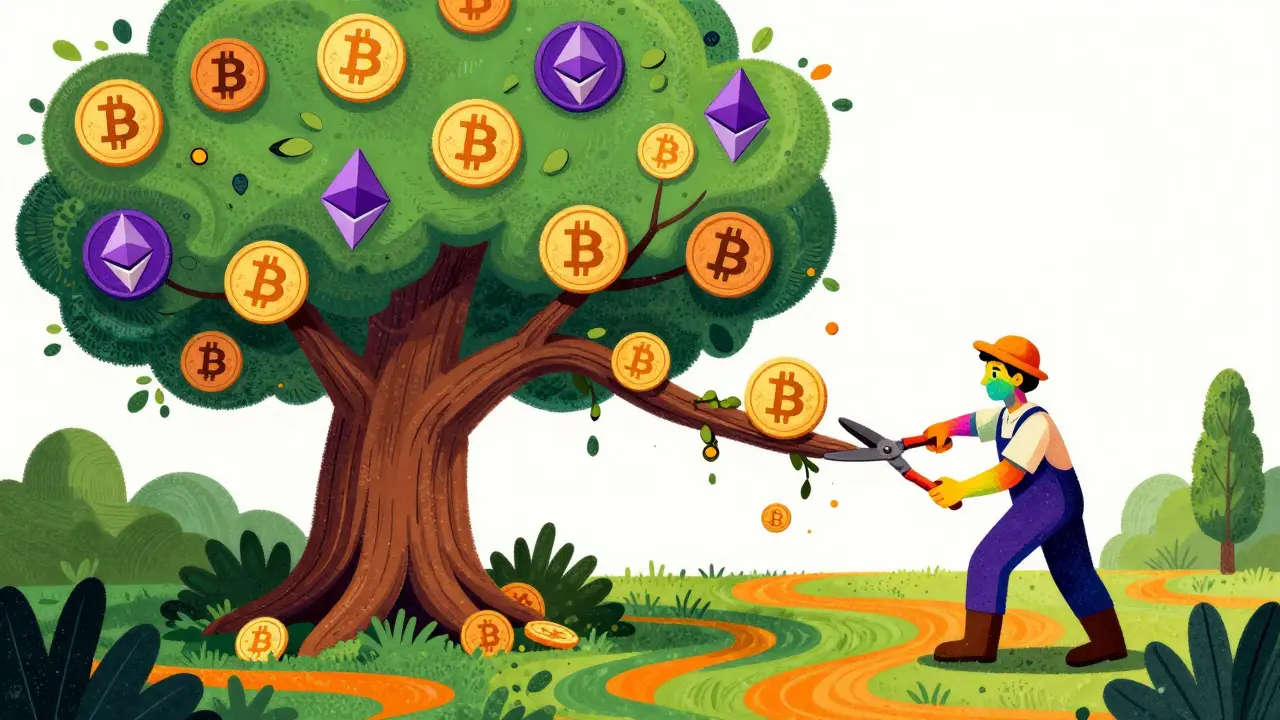
Rebalancing doesn’t mean selling everything. It means managing risk. If you never trim the branches of your investment tree, one storm could topple the whole thing. Set quarterly reviews to check your allocation percentages. If any single asset exceeds your target risk threshold, sell a portion to restore balance.
Falling for the Sunk Cost Fallacy
Psychology plays a huge role in crypto trading, and the sunk cost fallacy is the enemy of smart HODLing. This happens when you hold onto a losing position simply because you’ve already lost money on it, hoping to "break even." You might think, "I’ll sell when it gets back to my entry price."
But the market doesn’t care about your entry price. It cares about supply, demand, and utility. If a project’s technology becomes obsolete or its community abandons it, waiting for a break-even point is futile. You might wait years for a recovery that never comes, while tying up capital that could be working for you elsewhere.
Ask yourself this question: "If I had cash today instead of this coin, would I buy it right now?" If the answer is no, you should probably sell. Holding out of spite or regret is not a strategy; it’s an emotional trap. Cut your losses early and redeploy that capital into stronger opportunities.
Neglecting Security and Custody Risks
You can have the best investment thesis in the world, but it means nothing if you lose access to your funds. One of the most overlooked HODL mistakes is poor security hygiene. Leaving large amounts of crypto on exchanges exposes you to counterparty risk. Exchanges can go bankrupt, get hacked, or freeze withdrawals.
For long-term holders, self-custody is non-negotiable. Using a hardware wallet like Ledger or Trezor ensures that only you control the private keys. However, even hardware wallets require proper setup. Many investors fail to write down their seed phrases correctly, store them digitally (which is risky), or share them with untrusted parties.
| Practice | Risk Level | Recommendation |
|---|---|---|
| Leaving funds on exchange | High | Only keep small amounts for active trading |
| Using software wallets | Medium | Good for moderate amounts, but vulnerable to malware |
| Hardware wallets | Low | Best for large, long-term holdings |
| Paper wallets | Low (if stored safely) | Ensure proper generation and physical storage |
Treat your seed phrase like the combination to a bank vault. Write it on metal, not paper, and store it in a fireproof safe. If you skip these steps, you’re not HODLing; you’re just hoping for the best.
Overlooking Tax Implications
Crypto taxation is complex, and many long-term investors ignore it until tax season arrives. In many jurisdictions, including New Zealand and the United States, how long you hold an asset affects your tax rate. Short-term capital gains (assets held less than a year) are often taxed at higher ordinary income rates, while long-term capital gains receive preferential treatment.
However, simply holding isn’t enough. You need to track every transaction. Swapping one crypto for another, staking rewards, and receiving airdrops are all taxable events in many regions. Failing to report these can lead to audits, penalties, and interest charges.
Use dedicated crypto tax software to track your cost basis and holding periods. Consult with a tax professional who understands digital assets. Ignoring taxes doesn’t make them go away; it just adds stress and financial risk to your HODL journey.
Letting Social Media Drive Your Decisions
Crypto culture is heavily influenced by social media. Twitter, Reddit, and Telegram groups are filled with narratives, fear, and greed. When prices drop, the chorus of "HODL!" grows louder. When prices rise, everyone claims they knew it would happen.
The mistake is letting this noise dictate your actions. Community sentiment can be powerful, but it’s often wrong. Projects can have strong communities yet fail technologically. Conversely, boring, fundamental projects might lack hype but deliver steady value.
Develop your own conviction. Read the documentation, understand the roadmap, and assess the competition. Don’t hold a coin because your favorite influencer says so. If you can’t explain why you own an asset to someone else, you probably shouldn’t own it.
Not Having an Exit Strategy
Finally, many HODLers make the mistake of having no exit plan. They buy and hold indefinitely, assuming prices will always go up. But markets cycle. Bull markets turn into bear markets. Narratives shift. What’s hot today might be irrelevant tomorrow.
A robust HODL strategy includes predefined exit points. Maybe you plan to sell 10% of your holdings every time the price doubles. Or perhaps you’ll take profits when a certain macroeconomic indicator changes. Having a plan removes emotion from the decision-making process.
Without an exit strategy, you’re at the mercy of the market. You might miss the chance to lock in life-changing gains because you’re waiting for "just a little more." Define your goals upfront. Are you saving for retirement? Buying a house? Paying off debt? Align your holding period with your financial objectives.
Is HODLing still a valid strategy in 2026?
Yes, but with caveats. HODLing works best for fundamentally strong assets like Bitcoin and Ethereum. For speculative altcoins, a more active management approach is recommended. Always conduct due diligence and avoid blind holding.
How often should I rebalance my crypto portfolio?
Quarterly rebalancing is a good starting point. Review your allocations every three months to ensure no single asset dominates your risk profile. Adjust based on market conditions and your personal risk tolerance.
What is the sunk cost fallacy in crypto?
The sunk cost fallacy occurs when you continue to hold a losing investment solely because you’ve already invested money in it. This prevents you from cutting losses and reallocating capital to better opportunities.
Should I use a hardware wallet for HODLing?
Absolutely. Hardware wallets provide the highest level of security for long-term holdings by keeping private keys offline. This protects your assets from online hacks and exchange failures.
How do taxes affect my HODL strategy?
Holding assets longer than a year can qualify for lower long-term capital gains tax rates in many jurisdictions. However, all transactions, including swaps and staking rewards, may be taxable events. Track everything meticulously.
Write a comment