Imagine proving you are over 21 without showing your driver’s license. Or verifying your university degree to an employer without calling the registrar’s office. This is the promise of Verifiable Credentials, a digital identity standard that lets you control your own data. Unlike traditional passwords or centralized databases, this system uses cryptography to prove who you are and what you have achieved, all while keeping your private information safe. It works hand-in-hand with Decentralized Identifiers (DIDs), unique codes that exist outside any single company’s control. Together, they form the backbone of self-sovereign identity in the web3 era.
The old way of handling identity is broken. You rely on Facebook, Google, or banks to verify who you are. If those systems go down, get hacked, or decide to change their terms, you lose access to parts of your digital life. Verifiable Credentials solve this by putting the power back in your hands. You hold your credentials in a digital wallet, and you share only what is necessary. No more sharing your full date of birth just to prove you are an adult. No more waiting days for background checks. Just instant, secure, and private verification.
What Are Verifiable Credentials?
A Verifiable Credential (VC) is a tamper-proof digital statement issued by a trusted authority. Think of it like a digital diploma, a passport, or a professional certification. But unlike a PDF file that can be edited with Photoshop, a VC is cryptographically signed. This means if anyone tries to alter even a single letter, the credential becomes invalid instantly.
The World Wide Web Consortium (W3C) created the Verifiable Credentials Data Model v2.0 to ensure these credentials work across different platforms. Whether you are using an iPhone, an Android device, or a desktop computer, the underlying structure remains the same. The model defines three key roles:
- Issuer: The entity that creates the credential, such as a university, government agency, or employer.
- Holder: You. The person or organization that owns and stores the credential in a digital wallet.
- Verifier: The party that checks the credential, like a bar bouncer, a hiring manager, or a banking app.
This separation of roles ensures that no single entity controls your entire identity. The issuer proves the data is true at the time of issuance, but you control when and where it is shared.
The Role of Decentralized Identifiers (DIDs)
For a Verifiable Credential to work, it needs a way to identify the issuer and the holder securely. This is where Decentralized Identifiers (DIDs) come in. A DID is a unique string of characters that points to a document stored on a decentralized network, often called a Verifiable Data Registry (VDR).
Unlike a username on Twitter or an email address, which requires a central server to manage, a DID does not depend on any one company. It might look something like `did:ion:EiB...` or `did:key:z6Mk...`. These identifiers allow machines to verify the authenticity of a credential without needing to call a human or query a central database.
DIDs support several methods, each suited for different needs:
- did:key: Simple, lightweight, and good for short-term interactions.
- did:web: Tied to a website domain, useful for organizations.
- did:ion: Built on the ION distributed ledger, offering robustness for long-term identity.
- KERI: An emerging alternative focused on key event logging.
When you receive a Verifiable Credential, it is linked to your DID. This link ensures that the credential belongs to you and has not been stolen or forged.
How the Technology Works Under the Hood
The architecture behind Verifiable Credentials and DIDs is built on five distinct layers. Understanding these layers helps clarify why the system is so secure.
- Data Model Layer: Defines the format using JSON-LD or JWT. This ensures that computers can read and understand the data.
- Identity Layer: Uses DIDs to create unique, decentralized identities.
- Credential Issuance Layer: Handles the creation of the credential, embedding metadata like issuance dates and expiry.
- Proof Layer: Applies cryptographic signatures, such as Linked Data Proofs or JWT Proofs, to prevent tampering.
- Revocation Layer: Manages whether a credential is still valid, using tools like Status Lists or Blockchain Anchoring.
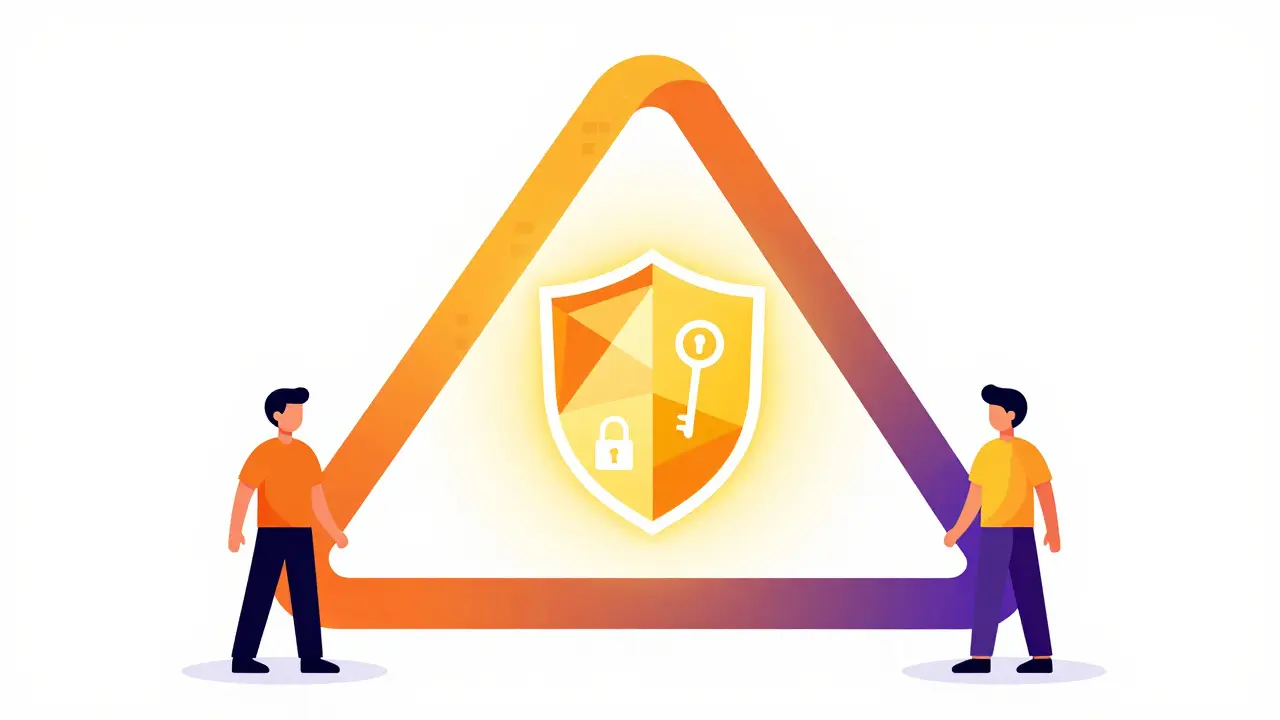
At the core is public-private key cryptography. When an issuer signs a credential, they use their private key. Anyone can then use the issuer’s public key (found via their DID) to verify the signature. This process happens instantly and securely, without revealing sensitive personal data unless you choose to share it.
Privacy Through Selective Disclosure
One of the biggest advantages of this system is privacy. In the past, if you needed to prove you were over 18, you had to show your ID card, which also revealed your name, address, and photo. With Verifiable Credentials, you can use Zero-Knowledge Proofs (ZKP).
ZKPs allow you to prove a statement is true without revealing the underlying data. For example, you can prove you are over 21 without disclosing your exact birth date. You can prove you have a valid driver’s license without showing your home address. This "selective disclosure" minimizes the risk of data breaches because verifiers never store your full personal details.
This approach aligns with modern privacy regulations like GDPR, which emphasize data minimization. By sharing only what is necessary, you reduce the attack surface for hackers and protect your personal information.
Real-World Use Cases
While the technology sounds complex, its applications are practical and already being tested in various industries.
| Industry | Use Case | Benefit |
|---|---|---|
| Education | Digital Diplomas | Instant verification by employers, no fraud |
| Finance | KYC (Know Your Customer) | Faster onboarding, reduced compliance costs |
| Healthcare | Patient Records | Secure sharing between providers, patient control |
| Gaming | In-Game Achievements | Portable reputation, anti-cheat measures |
| Events | Tickets & Access | No scalping, easy entry, revocable access |
In education, universities are issuing degrees as VCs. Students can store them in a wallet and share them with potential employers. The employer verifies the signature against the university’s DID, confirming the degree is real without ever contacting the school.
In finance, banks use VCs for KYC processes. Instead of uploading photos of your passport every time you open a new account, you present a verified KYC credential once. The bank trusts the issuer (like a government ID provider) and moves on quickly.

Verifiable Credentials vs. NFTs
You might hear comparisons between Verifiable Credentials and Non-Fungible Tokens (NFTs). While both involve digital ownership, they serve different purposes.
NFTs are always stored on a blockchain and are primarily used for collectibles, art, or gaming assets. They are fungible in the sense that each token is unique, but their value is often speculative. Verifiable Credentials, on the other hand, do not require blockchain storage for the credential itself. They are cryptographically self-proven. However, NFTs can sometimes include VCs in their metadata to add provenance or authenticity.
From a user perspective, both can trigger actions in apps. An NFT might grant you access to a exclusive community. A VC might grant you access to a secure building. The key difference is intent: NFTs are about asset ownership, while VCs are about identity and trust.
Challenges to Adoption
Despite the benefits, widespread adoption faces hurdles. The technology is complex. Developers need to understand DIDs, cryptographic proofs, and data models. Users need intuitive wallets that make managing credentials easy, not confusing.
Another challenge is interoperability. While W3C standards provide a foundation, different issuers and verifiers may implement them slightly differently. We need broader ecosystem support from major tech companies, governments, and institutions to create a seamless experience. Until then, users may find themselves juggling multiple wallets or dealing with incompatible systems.
Regulatory clarity is also needed. Laws around digital identity vary by country. Some regions embrace self-sovereign identity, while others prefer centralized control. As the technology matures, we expect more legal frameworks to emerge, providing clearer guidelines for issuers and holders.
Future Outlook
The future of digital identity looks promising. Enhancements in zero-knowledge proofs will further improve privacy. Better user interfaces will make wallets easier to use for non-technical people. And as more organizations adopt W3C standards, interoperability will improve.
We are moving toward a world where you own your identity. No more password resets. No more data breaches exposing your entire history. Just secure, private, and portable credentials that you control. Verifiable Credentials with DIDs are the first step in this journey, and they are already changing how we think about trust online.
What is the difference between a Verifiable Credential and a traditional certificate?
A traditional certificate is often a paper document or a static PDF that can be forged or lost. A Verifiable Credential is a digital object that is cryptographically signed and tamper-proof. It can be instantly verified by anyone without needing to contact the issuer, ensuring authenticity and reducing fraud.
Do Verifiable Credentials require blockchain?
Not necessarily. While DIDs can be anchored on blockchains, the credentials themselves are stored in digital wallets and do not reside on the blockchain. They are cryptographically self-proven. Blockchains are often used for the Verifiable Data Registry to store DID documents, but the credential data stays with the user.
How do Zero-Knowledge Proofs enhance privacy?
Zero-Knowledge Proofs allow you to prove a specific claim is true without revealing the underlying data. For example, you can prove you are over 18 without disclosing your exact birth date. This minimizes the amount of personal information shared, reducing privacy risks.
Who sets the standards for Verifiable Credentials?
The World Wide Web Consortium (W3C) establishes the standards for Verifiable Credentials and Decentralized Identifiers. Their specifications ensure that different systems and platforms can interoperate seamlessly, creating a unified global framework for digital identity.
Can I revoke a Verifiable Credential?
Yes. Issuers can revoke credentials using mechanisms like Status Lists or Blockchain Anchoring. When a credential is revoked, verifiers can check the status list and see that the credential is no longer valid, preventing its misuse.
Write a comment