e-Naira: What It Is, How It Works, and Why It Matters in Africa's Crypto Shift
When you hear e-Naira, Nigeria’s official digital version of the Nigerian naira, issued and backed by the Central Bank of Nigeria. It’s not crypto. It’s not a stablecoin. It’s a Central Bank Digital Currency — or CBDC — built to replace physical cash, not compete with Bitcoin or Ethereum. Launched in October 2021, the e-Naira was Nigeria’s answer to rising mobile payments, unbanked populations, and the growing use of decentralized finance. Unlike crypto, it doesn’t rely on blockchain mining or decentralization. It runs on a permissioned ledger controlled entirely by the Central Bank of Nigeria (CBN), meaning every transaction is traceable, and the government holds the keys.
What makes the e-Naira different from regular bank transfers? It works offline. You can send money using a simple app without needing internet — just a phone number and a PIN. That’s huge in rural areas where connectivity is spotty. It also cuts out middlemen. No more waiting days for bank transfers between states. No more high fees for sending money to family across borders. The CBN designed it to be fast, cheap, and accessible to anyone with a Nigerian phone number, even if they’ve never had a bank account.
But here’s the catch: the e-Naira isn’t meant to replace crypto. It’s meant to control it. While crypto traders in Lagos use Binance and P2P platforms to dodge currency controls, the government wants the e-Naira to bring those transactions back under its watch. Some users see it as a tool for financial inclusion. Others see it as surveillance. Either way, it’s reshaping how money moves in Africa’s largest economy. And it’s not alone — Ghana, South Africa, and Kenya are watching closely, testing their own digital currencies.
Behind the scenes, the e-Naira connects to wallets, merchants, and even government payouts. Farmers get subsidies directly. Teachers receive salaries without delays. Small businesses accept payments without card machines. It’s a quiet revolution — no hype, no airdrops, no memes. Just a government trying to digitize a $400 billion economy.
Below, you’ll find real posts that dig into how the e-Naira fits into Nigeria’s broader crypto scene — from regulatory clashes to P2P trading trends, and why some Nigerians still prefer Bitcoin over their own digital naira. No fluff. Just facts about what’s working, what’s failing, and who’s really using it.
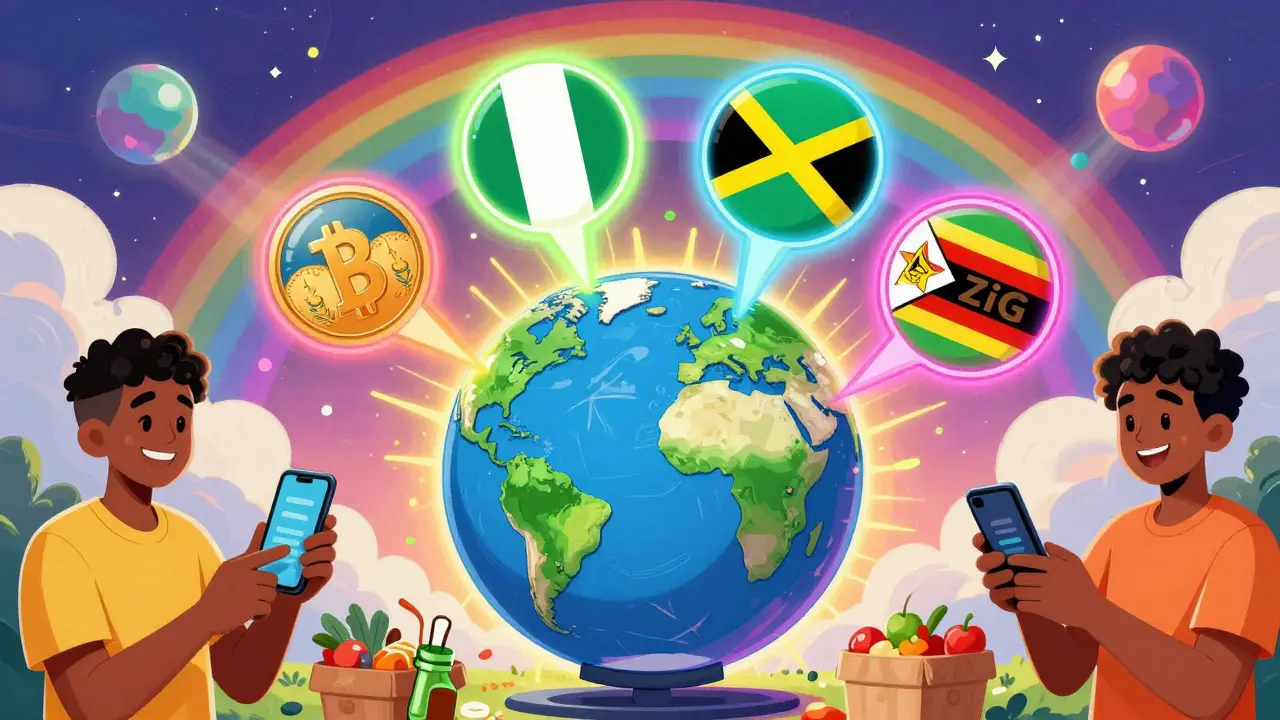
Countries Developing CBDCs in 2025: Global Progress and Key Players
In 2025, over 130 countries are developing central bank digital currencies. From Nigeria's e-Naira to China's Digital Yuan and the EU's Digital Euro, CBDCs are transforming how money moves. Here's who's leading, who's lagging, and what it means for you.