By 2025, CBDCs are no longer a theoretical idea-they’re a global reality. Over 130 countries are actively working on digital versions of their national currencies, and dozens have moved beyond pilot tests into real-world use. This isn’t just about technology. It’s about control, efficiency, financial inclusion, and power in a world where money moves faster than ever.
Who’s Actually Launched a CBDC?
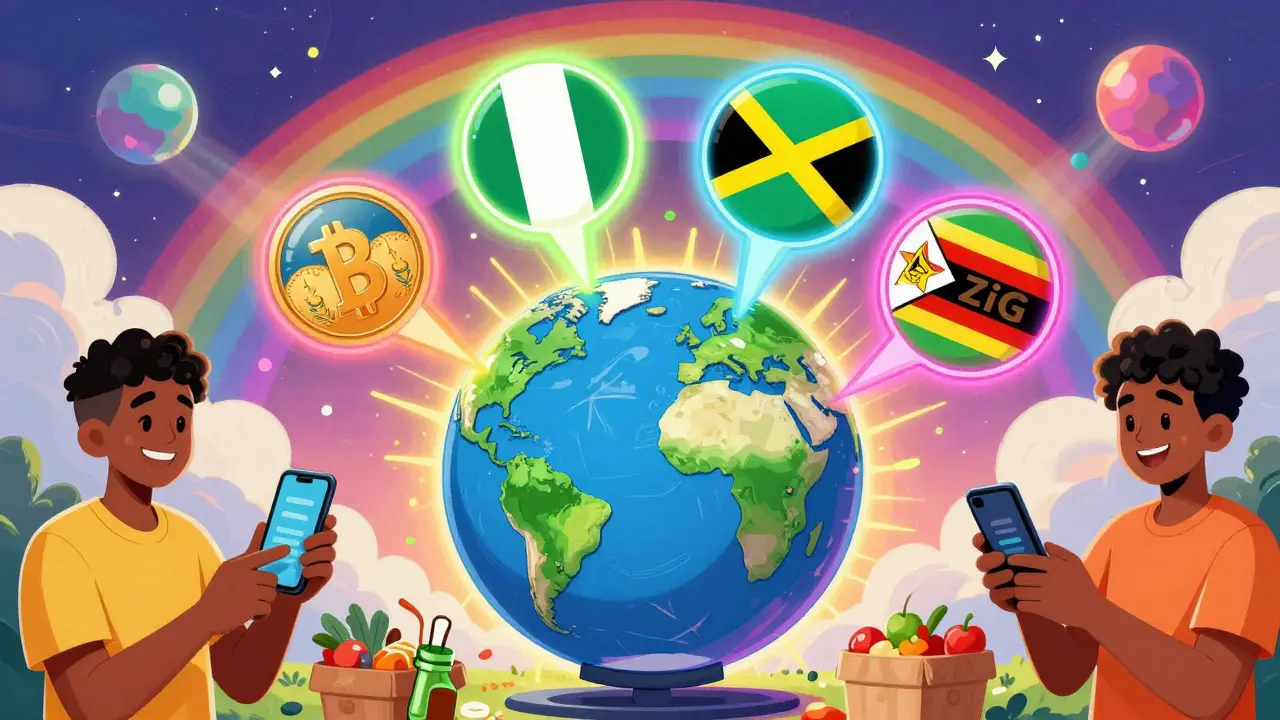
Only four countries have fully launched their CBDCs for public use as of 2025: the Bahamas with the Sand Dollar, Nigeria with the e-Naira, Jamaica with JAM-DEX, and Zimbabwe with ZiG. These are not experiments anymore. They’re working payment systems used by citizens daily. The Sand Dollar, launched in 2020, became the world’s first fully operational CBDC. It’s now used for everything from grocery purchases to government payments, even in remote islands with no bank branches. But here’s the catch: some sources say 11 countries have launched CBDCs. Why the difference? Because “launched” means different things. Some countries have rolled out limited pilots for businesses or government workers. Others have full public access. The Atlantic Council’s tracker lists only three-Bahamas, Nigeria, and Jamaica-as fully live. Zimbabwe’s ZiG is newer and less documented, which adds to the confusion. What matters is this: the era of CBDCs as theoretical projects is over.The Big Players: Europe, China, and the U.S.
In 2025, the most watched CBDC projects are in Europe, China, and the U.S.-each with very different goals. The European Central Bank (ECB) finalized its Digital Euro framework in March 2025. Pilots are now running in Germany, France, and Italy. Unlike cash, the Digital Euro won’t be anonymous. But the ECB is trying to balance privacy with fraud prevention. It’s designed to work alongside bank accounts, not replace them. The goal? To keep the euro relevant in a digital world dominated by U.S. dollars and Chinese tech. China’s Digital Yuan is the most advanced CBDC in the world. After four years of testing in cities like Beijing and Shanghai, it’s now integrated into everyday life. During the 2022 Winter Olympics, it handled over 1.5 million transactions. In 2025, China added programmable payments-meaning businesses can set rules like “this money can only be spent on groceries” or “paid out only after a delivery is confirmed.” This isn’t just digital cash. It’s smart money. The U.S. hasn’t launched anything yet. But the Federal Reserve released a major white paper in early 2025, asking the public for input on privacy, security, and how CBDCs might affect banks. The big question: if Americans can move money instantly via Zelle or Venmo, why do they need a Fed-backed digital dollar? The answer lies in global competition. If China and the EU set the standards, the U.S. risks falling behind.Emerging Markets: Inclusion Over Innovation
For many developing countries, CBDCs aren’t about tech-they’re about survival. India expanded its Digital Rupee pilot in 2025 to include offline payments. That’s huge. In rural villages where internet is spotty or nonexistent, people can now use NFC-enabled phones to pay for fuel, medicine, or school fees without needing a signal. This isn’t just convenience. It’s access. Brazil launched DREX in January 2025 with one goal: bring the unbanked into the financial system. Over 10 million Brazilians have no bank account. DREX lets them receive government aid, pay bills, and save money using only a phone number. No ID? No problem. The system uses biometric verification. Nigeria’s e-Naira has helped reduce cash theft and corruption in public payments. Before, salaries for teachers and nurses were often delayed or stolen. Now, they’re sent directly via the e-Naira app. No middlemen. No delays.
Cross-Border CBDCs: The New Frontier
The real game-changer in 2025? Cross-border payments. Australia and New Zealand teamed up with Singapore to test their CBDCs for international transfers. No more SWIFT delays. No more currency conversion fees. A Kiwi paying a freelancer in Singapore now does it in seconds, at near-zero cost. This isn’t science fiction-it’s happening now. The Bank for International Settlements is leading a project called mBridge, connecting central banks in China, Thailand, Hong Kong, and the UAE. In trials, a payment that used to take three days now takes 10 seconds. This could rewrite global finance.Why Privacy and Regulation Are the Real Hurdles
Technology isn’t the problem. Trust is. In the U.S., 62% of people say they’d avoid a CBDC if the government could track every purchase. The Bank of England responded by publishing a strict privacy framework for its Digital Pound. It promises data minimization: the central bank won’t see who you pay or what you buy. Only your bank will. The UAE introduced new licensing rules for digital wallet providers, making it easier for fintechs to build CBDC-compatible apps. That’s smart. You don’t need a government app to use a CBDC-you need good third-party tools. But risks remain. If people panic during a recession and suddenly move all their savings from banks into CBDCs, banks could collapse. That’s called a “bank run on steroids.” Central banks are designing safeguards, like limiting how much CBDC one person can hold.
What’s Next After 2025?
Sweden’s e-Krona is expected to go live in early 2026 after successful legal reviews. Nepal plans its first pilot in April 2025. Norway is testing technical infrastructure. Even Myanmar’s shadow government has launched DMMK, a digital currency tied to the local kyat. The trend is clear: CBDCs are becoming as essential as ATMs or credit cards. By 2030, most developed nations will have them. Emerging markets will use them to leapfrog traditional banking. The winners won’t be the countries with the fanciest tech. They’ll be the ones who build trust, protect privacy, and make the system work for everyone-not just the wealthy or tech-savvy.Is Your Country on the List?
Here’s who’s actively developing CBDCs in 2025:- Launched: Bahamas, Nigeria, Jamaica, Zimbabwe
- Live pilots: China (Digital Yuan), India (Digital Rupee), Brazil (DREX), European Union (Digital Euro pilots), Australia (eAUD), Singapore, Sweden (e-Krona testing)
- Planning or consulting: United States, United Kingdom, Canada, Japan (Digital Yen law passed), Norway, Nepal, New Zealand, Thailand, South Korea, Mexico, Egypt, Kenya
What is a CBDC?
A CBDC, or Central Bank Digital Currency, is a digital form of a country’s official currency, issued and backed by its central bank. Unlike Bitcoin or Ethereum, it’s not decentralized. It’s legal tender, just like cash or coins-but in digital form. You can use it to pay for goods, send money, or save it, and it’s as safe as the government that issues it.
How is a CBDC different from cryptocurrency?
Cryptocurrencies like Bitcoin are decentralized-no government controls them. CBDCs are the opposite: fully controlled by central banks. Cryptocurrencies use blockchain to verify transactions without a central authority. CBDCs often use private, permissioned ledgers for speed and security. CBDCs are stable because they’re tied to national currencies. Cryptocurrencies can swing wildly in value.
Will CBDCs replace cash?
Not right away. Most countries say CBDCs will coexist with cash. But over time, as digital payments become the norm, cash use will drop. In Sweden, less than 10% of transactions are cash. In China, digital payments make up over 80%. CBDCs will likely replace most bank deposits before they fully replace cash.
Can CBDCs be used offline?
Yes, and this is a big deal. India’s Digital Rupee now supports offline payments using NFC technology. You can tap your phone to another phone or a payment terminal even without internet. This is critical for rural areas, disaster zones, or places with poor connectivity. It’s one of the most important upgrades in 2025.
Are CBDCs safe from hackers?
They’re designed to be more secure than apps like PayPal or Venmo. Central banks use advanced encryption and multi-layered security. But no system is perfect. The biggest risk isn’t hacking-it’s people losing access. If you lose your phone and don’t have a backup, you could lose your CBDC balance. That’s why many countries are building recovery systems, like linking CBDCs to government ID or biometrics.
Why is the U.S. so slow on CBDCs?
The U.S. has a strong private payment system-Apple Pay, Zelle, Venmo, and credit cards work really well. There’s less urgency. But the bigger issue is privacy and political debate. Americans are wary of government surveillance. The Fed is taking its time to design a system that protects users’ data while still being useful. They’re also worried about how CBDCs might hurt banks and the economy if people suddenly move all their money out of banks.
What’s the biggest threat to CBDCs?
The biggest threat isn’t technology-it’s public distrust. If people think the government is spying on their spending, they won’t use it. That’s why privacy rules, transparency, and strong consumer protections are now the top priorities in every CBDC project. Without trust, even the best tech fails.
Will CBDCs affect my bank account?
Yes, eventually. Right now, CBDCs are meant to sit alongside bank accounts. But if people start moving large amounts of money from banks into CBDCs, banks will have less to lend. That could raise loan rates or make credit harder to get. To prevent this, some countries are thinking of limiting how much CBDC one person can hold-say, $10,000 max. That way, banks still have deposits to fund loans.
Write a comment