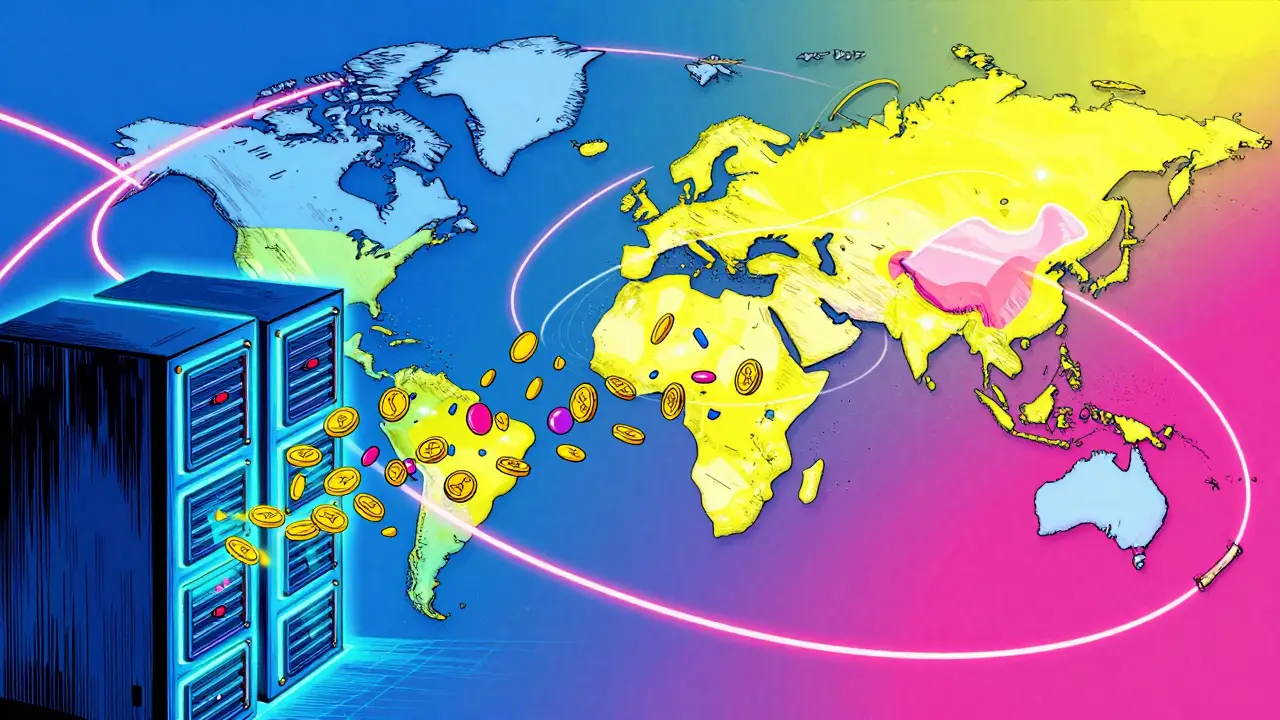
The Shift in Strategy
When most people think about cryptocurrency in 2026, they picture Bitcoin price swings or the latest NFT trends. But underneath those headlines, something far more consequential has been happening behind closed doors. By early 2026, Russia has fundamentally changed how it treats digital assets. It moved from a stance of caution to actively embracing crypto infrastructure as a tool for economic survival. The motivation isn't just about profit; it's about maintaining trade lines when traditional banking routes get cut off. This isn't a theoretical debate anymore. It's operational reality. Following the invasion of Ukraine in February 2022, Western nations imposed severe financial restrictions on Moscow. These sanctions blocked access to SWIFT, froze reserves, and limited dollar settlements. In response, the Kremlin looked for alternative rails. What emerged was a deliberate push toward legalizing crypto mining specifically designed to support cross-border payments outside the US-controlled system. This decision signals a clear war strategy where blockchain technology acts as both a weapon and a shield against international pressure.
The Rise of A7A5
To understand how this actually works, you have to look at the instruments being used. While Bitcoin often gets the attention, it's too volatile for state-level budgeting. Instead, the focus shifted to stablecoins. The standout example here is the A7A5 stablecoin, which has processed over $51 billion in transactions since its launch. This isn't a decentralized project built by anonymous developers. A7A5 is backed by the ruble and issued by Old Vector, a company based in Kyrgyzstan with strong ties to Russia's state-owned Promsvyazbank. The coin hit the market in February 2025 under the guidance of Ilan Shor, a pro-Russian Moldovan oligarch. It operates differently than standard crypto tokens. Transaction data shows distinct business-day patterns, indicating that commercial entities and likely government contractors are moving real value through this channel rather than retail speculators trading late at night.
| Entity | Role | Status (March 2026) |
|---|---|---|
| A7A5 Token | Ruble-backed stablecoin | Active / Tracked |
| Old Vector | Issuer (Kyrgyzstan) | Sanctioned by UK |
| Promsvyazbank | Primary Backer | State-Owned Bank |
| Ilan Shor | Oligarch/Launcher | Subject to Scrutiny |
Exchanges and Infrastructure
You can't have a payment network without places to swap currencies. The ecosystem relies on specific exchanges that act as bridges between crypto and fiat currency. One major player here was Garantex. Founded years ago, it became a primary hub for Russian traders looking to move funds without Western oversight. By 2026, however, the landscape has tightened. When the US Treasury sanctioned Garantex in 2022, operators didn't stop; they adapted. In 2024, former employees of Garantex launched Grinex specifically to fill the void left by sanctions. According to US intelligence reports, this platform was created purely to bypass restrictions. Grinex eventually fell under sanctions itself in August 2025. These platforms don't operate in isolation. They form a small, insular network. Instead of competing on the global stage like Binance or Coinbase, these Russian-linked exchanges rely on a "fairly small subset" of crypto platforms with notable Russian connections. This creates a closed loop that is harder for outsiders to penetrate, though not impossible to monitor. The reliance on such a tight network means they face significant risk if one link breaks, but so far, they've managed to keep the system running despite repeated designations from Western governments.

The Western Counterattack
The cat-and-mouse game escalated significantly in mid-2025. On August 20, 2025, the US Treasury's Office of Foreign Assets Control (OFAC) made a historic move. For the first time, they designated a virtual currency mining company as a facilitator of sanctions evasion. This wasn't a minor regulatory adjustment; it sent a shockwave through the sector. Brian E. Nelson, Under Secretary for Terrorism and Financial Intelligence, stated clearly that the Treasury would target anyone aiding Putin's "brutal war of choice." The message was blunt: if you mine or process crypto for sanctioned entities, you are part of the military effort. Simultaneously, the UK's Office of Financial Sanctions Implementation (OFSI) targeted the operational backbone of these networks. Their sanctions included Old Vector, Meer, and Grinex, along with individuals linked to banks in Kyrgyzstan. The goal was to disrupt the human element-the accountants, bank staff, and intermediaries who facilitate the actual movement of money. The designation also caught Transkapitalbank and a wider network led by Konstantin Malofeyev. This coordination between Washington and London highlights a growing consensus that crypto-facilitated evasion requires multilateral action.
Does It Actually Work?
Here is the critical question many analysts ask: Is crypto actually helping Russia escape sanctions effectively? The answer is complicated. On one hand, yes, they have established a parallel economy. Reports suggest Russia now operates the world's third-largest virtual currency mining industry. This hardware capacity provides the electricity and processing power needed to mint coins like A7A5 and maintain network security. However, experts from the Bitcoin Policy Institute argue there are hard limits. Bitcoin is simply too small to replace the dollar or euro as a trade currency. Before the conflict, Russia exported roughly $400 billion worth of goods annually. Replacing even a fraction of that volume with Bitcoin would spike prices wildly due to volatility concerns. Most commodity traders deal in billions, and the current liquidity available in non-state-controlled chains struggles to handle massive industrial procurement without moving the market itself.

The Transparency Paradox
One advantage the West holds is transparency. Chainalysis, a leading blockchain analytics firm, tracks these flows closely. Unlike physical cash or shell companies buried in offshore registries, blockchain transactions leave a permanent public record. While privacy tools exist, the sheer volume of transfers leaves a footprint. Chainalysis documents describe this as a "shadow crypto economy," involving everything from money laundering services to military procurement networks. But because the ledger is visible, authorities can map the connections between wallets, banks, and exchanges. They can see when a large transfer moves from a sanctioned wallet to a clean one, allowing them to freeze downstream accounts. This traceability is why entities constantly try to obfuscate their tracks, yet it remains the primary vulnerability of the entire operation. As long as the underlying protocol is transparent, total anonymity remains out of reach for state actors trying to move tens of billions.
Future Outlook for Crypto Payments
As we head deeper into 2026, the trend line is clear. Russia continues to operationalize alternative payment rails. There are signs of expansion beyond just institutional use. Retail offerings, such as buying A7A5 tokens using PSB bank cards advertised on official websites, suggest they are building a domestic consumer base alongside the state apparatus. Yet, the constraints remain real. Regulatory pressure is tightening globally. The G7 and EU are watching these developments closely to prevent similar tactics from spreading to other jurisdictions. While Russia has carved out a niche, replacing the full spectrum of international finance via crypto remains a massive logistical hurdle. For now, it serves as a specialized tool for specific transactions, not a total replacement for the global financial order.
Write a comment