
When you're trading cryptocurrency, every millisecond counts. A price drop of 2% in five seconds can mean the difference between a profit and a loss. That’s why so many traders turn to residential proxies-tools that make their automated trades look like they’re coming from real homes, not servers. But here’s the truth: these proxies aren’t magic bullets. They help some traders stay under the radar. They also help fraudsters launder money, manipulate markets, and steal identities. If you’re thinking about using them, you need to know exactly what you’re getting into.
How Residential Proxies Actually Work in Crypto Trading
Residential proxies route your internet traffic through real home internet connections-like someone’s Wi-Fi in Toronto or Sydney. Unlike datacenter proxies (which come from cloud servers and are easy to spot), residential IPs are assigned to actual devices by ISPs. That makes them nearly impossible for exchanges to flag as bots. When you use one, your trading bot appears to be a regular person checking prices on their phone or laptop.
Most residential proxy services offer two modes: sticky sessions and rotating IPs. Sticky sessions keep the same IP for up to 30 minutes, which is useful if you’re managing multiple wallets or running long-term bots. Rotating IPs change with every request-ideal for creating dozens of accounts without triggering bans. Some platforms like Binance and Kraken have systems that detect repeated login attempts from the same IP. Residential proxies bypass that by making each request look like it’s from a different household.
Traders who use them successfully report being able to run arbitrage bots across 10+ exchanges without a single account suspension. One trader in Melbourne told a crypto forum he increased his arbitrage profits by 40% after switching from datacenter proxies to residential ones. Why? Because his bots weren’t getting blocked. He wasn’t hiding anything illegal-he was just trying to compete fairly in a market where speed matters more than strategy.
Why Residential Proxies Beat Datacenter Proxies for Crypto
Datacenter proxies are cheaper and faster, but they’re also the first thing exchanges look for when hunting bots. These IPs come from known server farms-Amazon AWS, Google Cloud, DigitalOcean. They all have the same fingerprint: high traffic volume, no browsing history, no device cookies. Exchanges can block them with a single rule.
Residential proxies don’t have that problem. Their IPs are mixed in with real users. Even if an exchange flags an IP, it’s hard to prove it’s not a real person. A 2023 study by cybersecurity firm Recorded Future found that 87% of detected trading bots used datacenter IPs. Only 11% used residential ones-because they were too hard to catch. That’s not because residential proxies are rare. It’s because they work.
Think of it like this: if you’re trying to sneak into a concert, wearing a fake ticket made from printer paper (datacenter) is easy to spot. Wearing a real ticket from someone who actually bought it (residential) is nearly impossible to challenge.
The Dark Side: How Criminals Abuse Residential Proxies
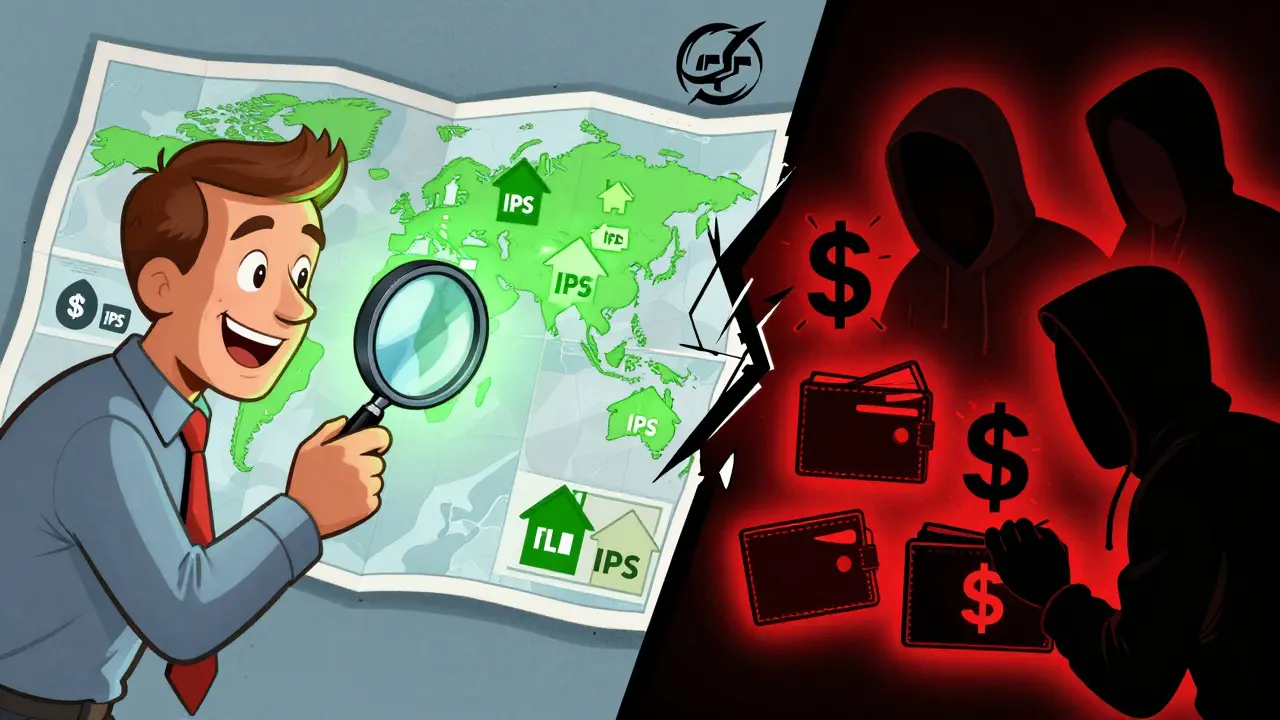
Here’s where it gets ugly. The same anonymity that helps legitimate traders also helps criminals. According to Trend Micro’s 2025 report, residential proxies are now the #1 tool used in crypto-related fraud. Why? Because they let bad actors bypass geoblocking, fake location data, and avoid KYC checks.
Criminals use them to:
- Create dozens of fake accounts to pump and dump coins
- Run wash trades-buying and selling to themselves to trick others into thinking a coin is popular
- Use stolen credit cards to buy crypto on exchanges that don’t require ID
- Hide the origin of illicit funds by routing transactions through multiple residential IPs across countries
A 2022 Forbes investigation found that over half of daily Bitcoin trading volume on smaller exchanges showed signs of manipulation-and residential proxies were a key enabler. In one case, a group based in Eastern Europe used over 2,000 residential IPs to simulate trading activity on a new altcoin. They drove the price up, then sold off. Hundreds of retail investors lost money. The group vanished. No one was caught.
And it’s not just fraud. Some traders use proxies to evade sanctions. In 2024, U.S. regulators froze accounts tied to a Russian-linked trading operation that used residential IPs from Brazil and Argentina to access U.S.-based exchanges. The IPs looked like local users. The activity didn’t.
Legitimate Use Cases: When It’s Okay to Use Them
Not everyone using residential proxies is breaking the law. There are real, legal reasons to use them:
- Running arbitrage bots across international exchanges without getting banned
- Testing trading strategies from different regions to see how price gaps form
- Managing multiple wallets for portfolio diversification without triggering login limits
- Protecting your real IP from hackers who monitor crypto traders for phishing attempts
Professional traders who use them responsibly treat them like a tool-not a loophole. They don’t create fake accounts. They don’t manipulate prices. They just make sure their automation doesn’t get blocked. One hedge fund in Wellington told a Bloomberg reporter they use residential proxies to monitor Asian markets during their local nighttime hours. They’ve been doing it for three years. No issues. No red flags.
The key difference? Intent. If you’re using proxies to level the playing field, you’re fine. If you’re using them to cheat the system, you’re playing with fire.
The Hidden Costs: What Most Traders Don’t Realize
Residential proxies aren’t plug-and-play. They require setup, monitoring, and constant tweaking. Most people underestimate how complex they are.
Here’s what you need to manage:
- Session timing: Too long, and you risk being flagged. Too short, and your bot loses connection. Most pros set sticky sessions to 15-20 minutes.
- IP rotation patterns: Rotating every 5 seconds looks robotic. Rotating once an hour looks human. The sweet spot? Every 8-12 minutes.
- Platform-specific rules: Binance blocks certain proxy providers. KuCoin detects session hijacking. You need to test each exchange separately.
- Cost: Entry-level plans start at $300/month. High-volume traders pay $800-$1,500. That’s more than most retail traders make in a month.
And don’t forget the learning curve. One Reddit user spent six weeks trying to get his bot working. He kept getting banned because his proxy provider used IPs from the same city. He didn’t realize that rotating within the same metro area looks suspicious. He switched providers, learned how to randomize locations, and finally got it working. It took him 117 failed attempts.
The Future: Are Residential Proxies Going Away?
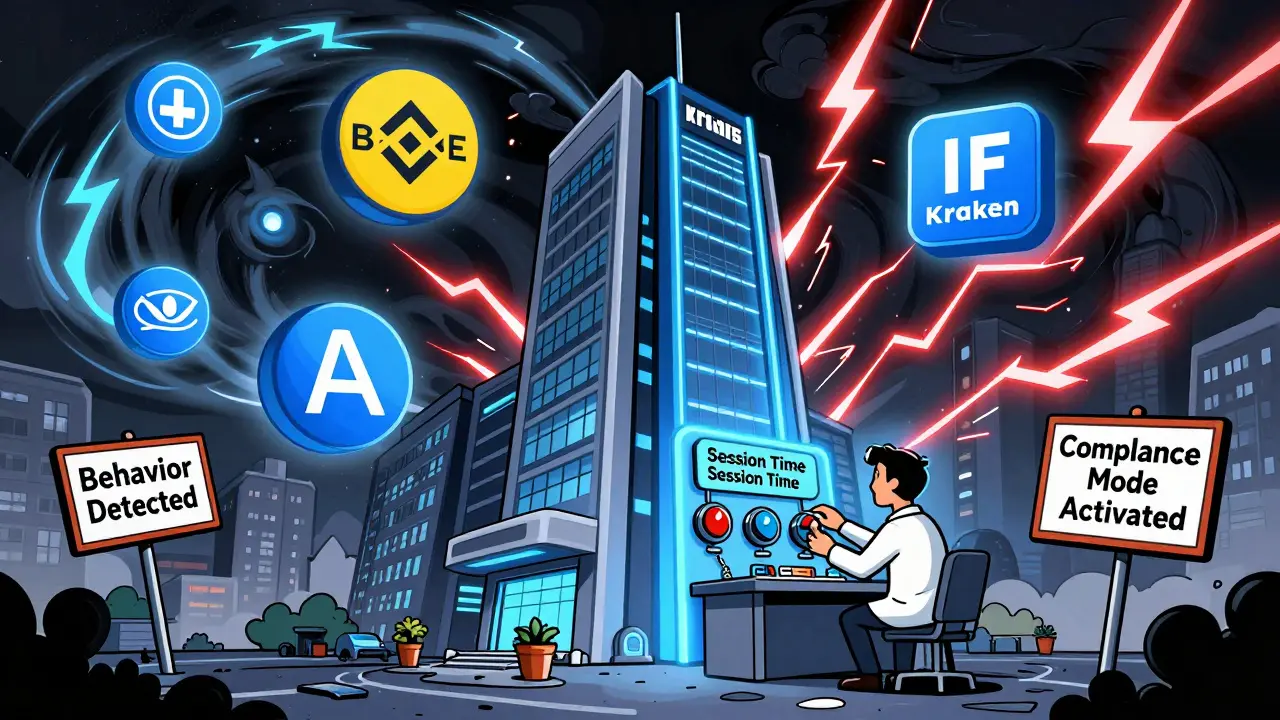
Regulators are watching. The Financial Action Task Force (FATF) issued new guidance in late 2025 urging exchanges to block proxy-assisted trading if it violates anti-money laundering rules. Some exchanges, like Coinbase and Gemini, now flag traffic from known proxy networks-even residential ones.
Meanwhile, proxy providers are adapting. Bright Data and Oxylabs now offer “compliance mode”-a setting that only allows IPs from countries with strict KYC laws. Smartproxy has started requiring users to verify their identity before accessing crypto-focused proxy pools.
That’s a sign things are changing. The wild west days of residential proxies in crypto are ending. The tools aren’t disappearing-they’re being regulated. Legitimate traders will still use them, but they’ll need to prove they’re not abusing them. The ones who don’t comply? They’ll get blocked, frozen, or worse.
Final Advice: Should You Use Them?
If you’re a retail trader trying to automate small trades? Skip it. The cost, complexity, and risk aren’t worth it. You’re better off using a simple limit order bot on a single exchange.
If you’re running a serious trading operation with multiple accounts, international exposure, and high-volume activity? Then residential proxies might be necessary. But only if you:
- Use a reputable provider (Bright Data, Oxylabs, Smartproxy)
- Never create fake accounts or manipulate markets
- Keep logs of your activity in case you’re audited
- Understand that your activity may still be flagged-even if you’re clean
There’s no such thing as a risk-free proxy. Even the best ones can be compromised. A single IP in your pool could be used by a scammer last week. If that IP gets blacklisted, your entire setup could be flagged.
Residential proxies are a double-edged sword. They give power to those who need it. They also empower those who want to break the rules. The line between them is thin. And it’s getting thinner every day.
Are residential proxies legal for crypto trading?
Yes-but only if you’re not breaking other laws. Using residential proxies to hide your identity, create fake accounts, or manipulate markets is illegal in most countries. Using them to avoid IP bans while trading legitimately is generally tolerated, but not officially endorsed. Exchanges can still ban you for using them, even if you’re not breaking the law.
Can exchanges detect residential proxies?
Yes, increasingly so. While residential IPs are harder to detect than datacenter ones, exchanges now use behavioral analysis. If your traffic patterns look like a bot (e.g., 50 trades per minute, no mouse movement, identical order sizes), they’ll flag you-even if the IP is residential. Some platforms now cross-check proxy IP lists with known fraud networks.
How much do residential proxies cost for crypto trading?
Entry-level plans start at $300/month for 500-1,000 IPs. High-volume traders pay $800-$1,500/month for unlimited rotating IPs, dedicated sessions, and compliance features. Some providers charge extra for geo-targeting (e.g., only U.S. or EU IPs). Don’t expect to run a serious bot for under $500/month.
Do I need technical skills to use residential proxies?
Absolutely. You need to understand HTTP headers, session management, IP rotation timing, and how to integrate proxies with your trading bot (via API or SOCKS5). Most beginners fail within days because they don’t configure timeouts correctly or use IPs from the same city. It’s not plug-and-play. Expect to spend weeks learning.
What’s the biggest risk of using residential proxies?
The biggest risk isn’t getting caught-it’s being associated with criminals. If even one IP in your proxy pool was used for fraud last week, exchanges may freeze your account. You didn’t do anything wrong, but your traffic looks suspicious. Your funds could be locked for weeks while they investigate. That’s the silent danger.
Write a comment