
Most countries tax you when you sell Bitcoin, Ethereum, or any other crypto for a profit. Not Singapore. If you're an individual investor living there, you can trade, swap, or cash out your digital assets - and pay zero capital gains tax. No matter how much you make. No matter how often you trade. It’s one of the cleanest, most straightforward crypto tax environments on the planet.
Why Singapore Doesn’t Tax Crypto Gains
Singapore doesn’t have a capital gains tax at all - not for crypto, not for stocks, not for real estate. That’s the big picture. The government doesn’t see profit from selling assets as taxable income unless it comes from a business. So if you bought Bitcoin five years ago, held it, and sold it last month for triple your money? You keep every cent. No forms to file. No IRS-style audits. No surprise tax bills. The Monetary Authority of Singapore (MAS) treats cryptocurrency as property, not currency. That’s key. It means when you trade BTC for ETH, or sell ETH for SGD, it’s not a taxable event like it is in the U.S., Canada, or Australia. The MAS doesn’t track your personal trades. They don’t ask you to report them. You’re not required to keep detailed logs of every transaction unless you’re running a business.Who Exactly Benefits?
This tax break applies to individuals. If you’re just buying, holding, and selling crypto on your own - whether you’re a student, a freelancer, or a retiree - you’re covered. You don’t need to be a Singapore citizen. You don’t even need to be a permanent resident. All you need is tax residency. That usually means spending at least 183 days a year in Singapore. Some people set up residency by renting an apartment, opening a local bank account, and using Singapore as their base. Others come on work passes or long-term visas. It’s not a loophole. It’s policy. Singapore has made it clear: they want to attract talent, capital, and innovation. Crypto traders, blockchain founders, and tech investors are exactly the kind of people they’re trying to lure. That’s why companies like Binance, Crypto.com, and Coinbase have major offices there. They’re not just setting up for the market - they’re setting up for the tax rules.Businesses Don’t Get the Same Deal
Here’s where it gets sharp: if you’re running a crypto business, you’re taxed like any other company. If you run an exchange, a trading firm, or a mining operation, you pay corporate income tax - but even that’s low. Singapore’s corporate tax rate is 17%, and there are incentives for startups and innovation. The real cost isn’t the tax rate - it’s the compliance. To operate legally, any crypto business in Singapore must get a license under the Payment Services Act. That means strict AML and KYC rules. You need to verify every customer. Monitor every transaction. Report anything suspicious. You need trained compliance officers, audit trails, and systems that can handle regulatory reporting. The process takes 6 to 12 months. Setup costs can hit $50,000 to $200,000 SGD. It’s not for hobbyists. It’s for serious players.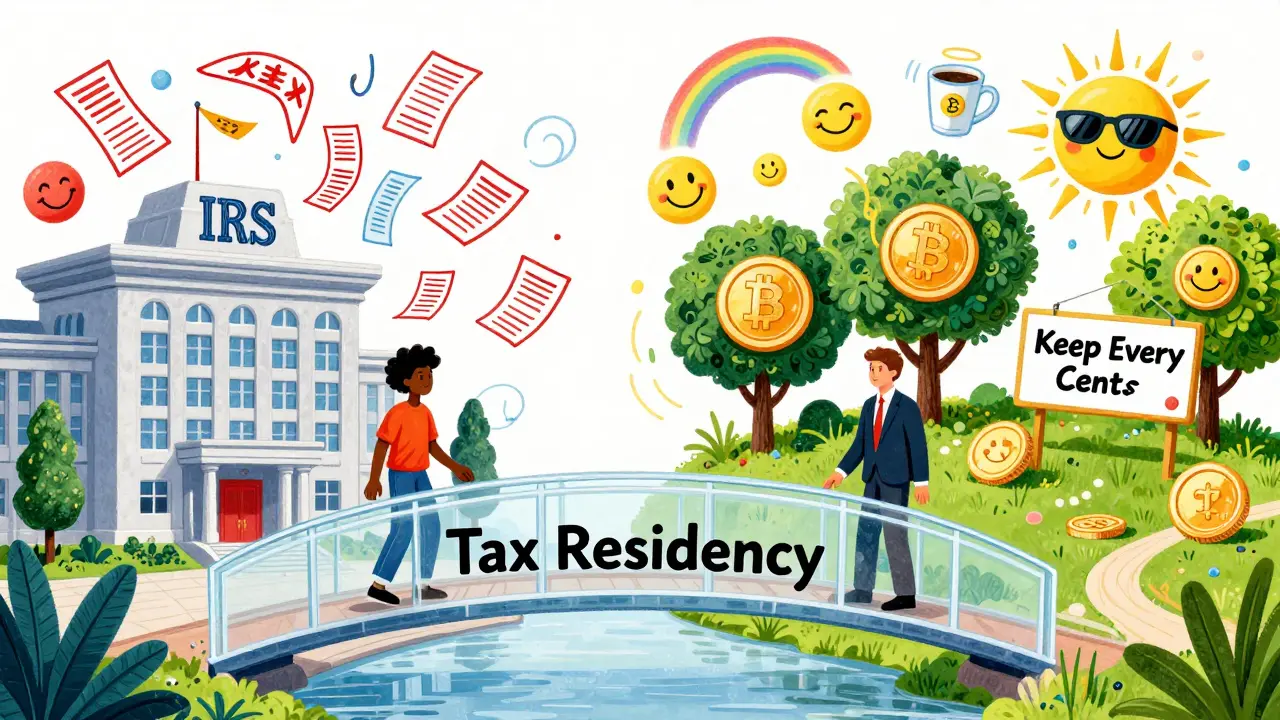
What About Spending Crypto?
When you use crypto to buy a coffee, a laptop, or rent an apartment in Singapore, the transaction itself isn’t taxed. But here’s the twist: the merchant you paid? They have to pay GST - that’s Singapore’s 8% sales tax - on the value of the goods or services they sold. So if you paid $1,000 in ETH for a laptop, the store has to declare $1,000 in revenue and pay GST on it. You? You don’t pay anything extra. No capital gains. No reporting. Just spend and go. This is why some people call it a barter system. The crypto isn’t taxed when you spend it. The item or service you buy is taxed at the point of sale. It’s a clever, low-friction design that keeps individuals free while ensuring businesses still contribute.How Singapore Compares to Other Crypto Havens
Portugal? Tax-free if you hold crypto over a year. But short-term trades? 28% tax. Germany? Tax-free after one year. But you have to track every trade. Thailand? Just announced a five-year exemption. But what happens after? The rules might change. The Cayman Islands? No capital gains tax. No income tax. Sounds perfect. But it’s an offshore jurisdiction. No real banking. No infrastructure. Hard to get residency. Hard to live there. Singapore? You get the tax break - plus banks, legal systems, internet, hospitals, schools, and international flights. You can live here. Work here. Raise kids here. And your crypto gains? Still untaxed. It’s not just about the tax rate. It’s about stability. Singapore has been consistent for over a decade. The MAS doesn’t flip-flop. They don’t announce sudden changes. They build rules slowly, test them, and stick with them. That’s why investors trust it.What You Need to Do to Use This Advantage
If you’re not in Singapore yet, here’s the real path:- Move there. Spend at least 183 days a year. That’s the standard for tax residency.
- Don’t run a crypto business unless you’re ready for the licensing mess. Stick to personal trading.
- Keep records anyway. Not because the government asks - but because you might need them for audits elsewhere. If you’re a dual resident, your home country might still want proof of how much you made.
- Use a licensed exchange. Binance, Crypto.com, and Coinbase Singapore are all MAS-licensed. That means your funds are safer and your trades are cleaner.

Common Misconceptions
Some people think Singapore lets you avoid taxes by just moving your crypto there. That’s wrong. You can’t avoid tax by just storing Bitcoin on a wallet in Singapore. You have to be a tax resident. That means living there. That means tying your life there. Others think the tax break applies to mining. It doesn’t. If you’re mining crypto as a business, you’re taxed on your profits. Same as running a factory. And no - you can’t use this to dodge taxes in your home country if you’re still considered a resident there. The U.S., for example, taxes citizens on worldwide income. So if you’re an American living in Singapore, you still have to report your crypto gains to the IRS. Singapore won’t stop that. But if you’re not a U.S. citizen? Then you’re clear.What’s Next for Singapore?
Singapore isn’t resting. The MAS is expanding its regulatory sandbox for blockchain startups. More fintech licenses are being issued. The government is talking with ASEAN neighbors about cross-border crypto rules. They’re even testing CBDCs - central bank digital currencies - on a small scale. But the core rule stays: no capital gains tax for individuals. That’s not going away. It’s baked into their economic strategy. With inflation, interest rates, and global tax hikes pushing people to look for stable havens, Singapore’s position is only getting stronger.Bottom Line
If you’re an individual crypto investor, Singapore offers one of the best deals in the world: zero capital gains tax, strong regulation, and real infrastructure. You don’t need to be rich. You don’t need to be a tech expert. You just need to live there. And if you do? You’re not dodging taxes - you’re using a system designed to reward innovation, not punish it.For most people, that’s not just smart. It’s rare.
Is there any tax on crypto in Singapore at all?
For individual investors, there is no capital gains tax on cryptocurrency. You can buy, sell, swap, or trade crypto without paying tax on profits. However, businesses that trade crypto as part of their operations pay corporate income tax at 17%. Also, when you spend crypto to buy goods or services, the merchant must charge 8% GST on the transaction value.
Do I need to be a Singapore citizen to get this tax break?
No. Citizenship isn’t required. You just need to be a tax resident, which typically means living in Singapore for at least 183 days per year. Many people use work passes, long-term visas, or permanent residency to qualify. The key is establishing economic ties to the country - not your passport.
Can I avoid taxes in my home country by moving to Singapore?
Only if your home country doesn’t tax citizens on worldwide income. For example, U.S. citizens are still required to report and pay taxes on crypto gains to the IRS, even if they live in Singapore. Countries like Canada, Australia, and the UK may also tax you based on residency, not location. Always check your home country’s rules before relocating.
What if I mine crypto in Singapore?
If you mine crypto as a hobby - say, one rig in your garage - and don’t sell the coins regularly, you likely won’t be taxed. But if you run mining as a business, with multiple rigs, employees, or regular sales, you’re considered a business entity. That means you pay corporate income tax on your profits, and you must get a MAS license.
Are crypto-to-crypto trades taxed in Singapore?
No. Swapping Bitcoin for Ethereum, or Solana for Dogecoin - these are not taxable events in Singapore. Since there’s no capital gains tax for individuals, the government doesn’t treat these trades as income. You don’t need to report them.
Which crypto exchanges are licensed in Singapore?
Major exchanges like Binance, Crypto.com, Coinbase, and KuCoin all hold licenses under Singapore’s Payment Services Act. These are regulated by the Monetary Authority of Singapore (MAS), meaning they follow strict AML, KYC, and fraud prevention rules. Using a licensed exchange adds security and legal clarity to your trading.
How does Singapore’s crypto tax policy compare to the U.S.?
The U.S. taxes every crypto sale, swap, or spending event as a taxable capital gain. You must track cost basis, calculate profit, and report it annually. Singapore doesn’t. In the U.S., you might owe 15-37% in federal tax on gains. In Singapore, you owe 0% - as long as you’re an individual investor. The difference is night and day.
Will Singapore change its crypto tax rules soon?
There’s no indication of change. Singapore’s government has consistently supported crypto innovation while maintaining strict regulation for businesses. The zero capital gains tax policy has been stable for over a decade. With over 600 fintech companies operating there and major exchanges relying on its framework, any major shift would risk damaging its global reputation as a stable, predictable financial hub.
Can I use this tax advantage if I’m not a full-time resident?
Not reliably. If you’re only visiting occasionally, spending 30 days a year in Singapore, you won’t qualify as a tax resident. Tax residency is about where you live, not where you store your crypto. You need to establish your life there - rent an apartment, have a local bank account, and spend the majority of your time in the country.
Is Singapore still the best crypto tax haven in 2026?
Yes - for most people. While places like the Cayman Islands offer 0% tax, they lack infrastructure. Thailand and Portugal have temporary exemptions. Singapore offers permanent zero capital gains tax, plus world-class banking, legal systems, internet, and safety. It’s not just about tax - it’s about living well while keeping your gains.
Write a comment