
By 2025, over 22 million Nigerians - more than 10% of the country’s population - owned cryptocurrency. That’s not a trend. It’s a migration. People aren’t buying Bitcoin because they think it’ll hit $100,000. They’re buying it because their naira won’t buy them rice.
The naira has lost over 75% of its value against the US dollar since 2016. Inflation hit 24% in 2023. Wages haven’t kept up. Savings evaporate. People with jobs, students, market vendors, even teachers - they all see the same thing: the money in their pocket shrinks every week. So they turn to something that doesn’t decay: USDT, Bitcoin, Ethereum. Stablecoins, especially, have become the new savings account. Not because they’re glamorous, but because they’re stable.
Nigeria processed $59 billion in crypto transactions between July 2023 and June 2024. That’s the second-highest in the world, behind only India. And here’s the kicker: 85% of those transactions were under $1 million. This isn’t Wall Street speculation. This is everyday people moving money to survive. A mother in Lagos sends $200 to her sister in Atlanta using a peer-to-peer crypto app. It takes 12 minutes. Cost? $1.50. If she used Western Union? $16. And that’s if the bank even lets her send it. Many don’t.
The Central Bank of Nigeria (CBN) has tried to stop this. In 2017, they told banks: “No crypto transactions.” They froze accounts. They fined banks ₦1.31 billion in 2022 for even talking to crypto users. But the rules didn’t stick. People just moved offline. They met in parks. They traded cash for USDT via WhatsApp. They used mobile wallets that didn’t need a bank. When the End SARS protests erupted in 2020, Bitcoin spiked on Nigerian Twitter. Why? Because people needed to move money without government tracking. Crypto became a tool for financial freedom - not just profit.
Here’s what the CBN doesn’t get: crypto isn’t the problem. The naira is. The official exchange rate is set by the central bank, not the market. That creates a black market premium. If the real value of the naira is 1,000 to the dollar but the bank says it’s 460, people will do anything to get dollars. Crypto is the easiest way. You send Bitcoin. You get USDT. You cash out in Naira on LocalBitcoins or Paxful. No bank approval. No paperwork. No waiting. And it’s cheap. The average international wire fee is 8%. Crypto? Under 2%.
Thirty-six percent of Nigerian adults are unbanked. That’s 70 million people with no access to savings, loans, or payments through traditional systems. For them, crypto isn’t an alternative - it’s the only option. Mobile phones are everywhere. Data is cheap. Apps like Binance, Luno, and Rise are built for smartphones, not bank branches. You don’t need an ID. You don’t need collateral. You just need a phone and a network. That’s why adoption is fastest among people under 30. Fifty-two percent of crypto owners are young. They didn’t grow up trusting banks. They grew up trusting apps.
The CBN’s crackdowns didn’t kill crypto - they made it stronger. When banks blocked crypto-related transactions, users switched to P2P platforms. When the CBN threatened fines, traders started using cash deposits and mobile money. The system adapted. The people adapted. The naira didn’t. By 2024, crypto inflows rebounded to $55.4 billion - up 25% from the year before. That’s not a blip. That’s a pattern. Every time the government tightens, the market finds a loophole.
Then came the Nigerian Investment and Securities Act in 2025. It didn’t ban crypto. It regulated it. Digital assets were recognized as securities. Exchanges had to register. KYC rules were enforced. This wasn’t surrender. It was recognition. The government realized they couldn’t stop what the people had already built. The real battle wasn’t against Bitcoin. It was against economic collapse.
Now, the pressure on the naira is structural. Every time someone buys USDT with naira, they’re reducing demand for the local currency. Every time they send crypto abroad instead of using a bank, they’re cutting off foreign exchange inflows that used to stabilize the naira. Remittances - once a lifeline for the currency - now flow through decentralized networks. The CBN can’t control what it can’t see.
And the numbers keep climbing. By 2026, 28.7 million Nigerians are expected to hold crypto. That’s nearly 12% of the population. Revenue from crypto trading is projected to hit $2.4 billion this year. This isn’t a fringe movement. It’s a parallel economy. And it’s growing while the naira stagnates.
The question isn’t whether crypto is hurting the naira. It’s whether the naira can survive without fixing the things that made crypto necessary in the first place. Inflation. Capital controls. Currency manipulation. Unbanked populations. High remittance costs. Until those are addressed, crypto won’t fade. It’ll just get bigger.
Why Crypto Is the Only Option for Many Nigerians
Imagine you’re a student in Abuja. Your tuition is $500. You earn $80 a month from tutoring. The official exchange rate says $1 = ₦1,500. But in the black market, it’s ₦2,200. To pay your tuition, you’d need to save for seven months - if the naira didn’t drop again. So you buy USDT with your naira, wait for the rate to stabilize, then send it to your school’s crypto wallet. Done in two hours. No bank delays. No fees. No lies.
This isn’t rare. It’s routine. People aren’t gambling. They’re adapting. Crypto gives them control. They’re not betting on price swings - they’re betting on survival.
How Crypto Undermines the Naira’s Role
The naira was meant to be a store of value, a medium of exchange, a unit of account. But inflation turned it into a liability. People don’t save in naira anymore. They save in USDT. They don’t pay for services in naira. They pay in crypto. They don’t send money home in naira. They send it in Bitcoin.
Every time a Nigerian uses crypto instead of the naira, they weaken its function. It’s not just about capital flight. It’s about trust erosion. When people stop using your currency for daily life, it stops being money. It becomes a relic.
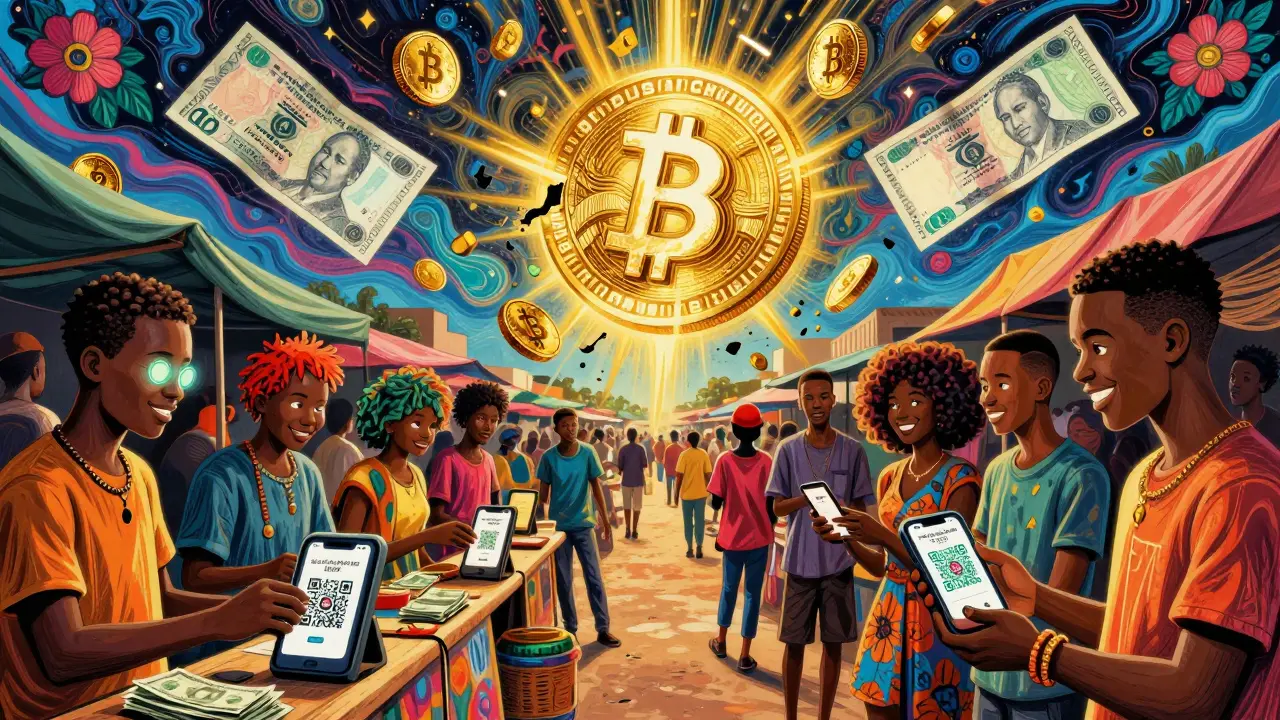
The Regulatory Shift: From Ban to Control
The 2025 Nigerian Investment and Securities Act didn’t legalize crypto. It acknowledged it. The government stopped fighting the tide and started building a dam. Now, exchanges must register. Users must verify their identity. Taxes are tracked. The CBN still doesn’t like it - but it can’t stop it.
This shift matters. It means crypto is no longer underground. It’s part of the economy. And that means the pressure on the naira won’t ease. It’ll just become more visible.

What Happens If Nothing Changes?
If inflation stays above 20%, if the CBN keeps manipulating exchange rates, if banking stays inaccessible for millions - crypto adoption will keep rising. More people will leave the naira behind. More businesses will price in dollars. More youth will build careers on crypto platforms instead of waiting for jobs that don’t exist.
The naira won’t collapse overnight. But it will keep losing ground. Slowly. Daily. Piece by piece. Until one day, it’s no longer the default.
Can the Naira Recover?
Only if the government stops treating crypto as a threat and starts treating the naira’s problems as the real threat. Fix inflation. Let the exchange rate float. Open banking. Reduce remittance costs. Invest in infrastructure. Then, maybe, people will trust the naira again.
Until then, crypto isn’t the enemy. It’s the symptom. And symptoms don’t disappear until the disease is treated.
Why is crypto adoption so high in Nigeria compared to other African countries?
Nigeria has the perfect storm: high inflation, a collapsing currency, poor banking access, a young and tech-savvy population, and a history of financial distrust. While other African nations face similar issues, Nigeria’s population size (over 200 million), mobile internet penetration, and early adoption of P2P crypto platforms created a tipping point. No other country in Africa has seen over 10% of its population hold crypto - Nigeria did it by 2025.
Do Nigerians use crypto for speculation or survival?
Most use it for survival. While some trade for profit, the majority use stablecoins like USDT to protect savings from inflation, send remittances, or pay for imports. A 2024 survey found 71% of crypto users in Nigeria cited currency stability as their main reason - not investment returns. The speculative crowd is small. The survival crowd is massive.
How does crypto trading affect Nigeria’s foreign exchange reserves?
It reduces pressure on them - but not in the way the CBN wants. Normally, remittances from abroad bring in dollars that boost reserves. But with crypto, those dollars bypass official channels. Nigerians abroad send crypto directly to family wallets. The family sells it locally for naira. The dollar never enters the central bank’s system. So while inflows continue, they don’t strengthen the naira or support the official exchange rate. The reserves stay low, and the black market thrives.
Is the Nigerian government still trying to ban crypto?
No. The 2025 Nigerian Investment and Securities Act marked a shift from prohibition to regulation. While the CBN still expresses concerns, outright bans have failed. The government now recognizes crypto as a reality. The focus is on regulating exchanges, taxing transactions, and preventing money laundering - not shutting it down.
What role do stablecoins like USDT play in Nigeria’s crypto economy?
USDT is the backbone. It’s used in 43% of all sub-$1 million transactions. Unlike Bitcoin, which is volatile, USDT is pegged 1:1 to the US dollar. Nigerians use it as digital cash - to save, pay, send money, or buy goods. It’s not a speculative asset. It’s a currency substitute. For many, USDT is now more reliable than the naira.
Write a comment