Russia Mining Compliance Checker
This is roughly equivalent to 10-15 high-end ASICs running 24/7
Bitcoin mining in Russia isn’t banned anymore-but it’s far from free. Since January 1, 2025, the country has operated under one of the most detailed and strict crypto mining frameworks in the world. If you’re thinking about setting up a miner here, you need to know the rules-or risk fines up to 2 million rubles ($25,500) and having your equipment shut off remotely, no warning needed.
Legal Mining? Yes, But Only If You Register
You can legally mine cryptocurrency in Russia, but only if you’re registered. The government created a national miners’ registry in late 2024, and since January 2025, any business or entrepreneur running mining equipment must be listed. Individual miners are exempt only if they use less than 6,000 kWh per month-roughly the power of 10-15 high-end ASICs running 24/7. Above that? You’re a business. You register. You pay taxes.
And yes, you pay taxes. Russia slapped a 15% profit tax on Bitcoin mining income starting November 2024. That’s not a small number. It’s also not optional. The Federal Tax Service expects miners to report all earnings, and they’re cross-checking electricity bills with blockchain data. As of mid-2025, only about 30% of miners had registered. That means two out of every three operations are still illegal-and getting riskier by the month.
Where You Can’t Mine at All
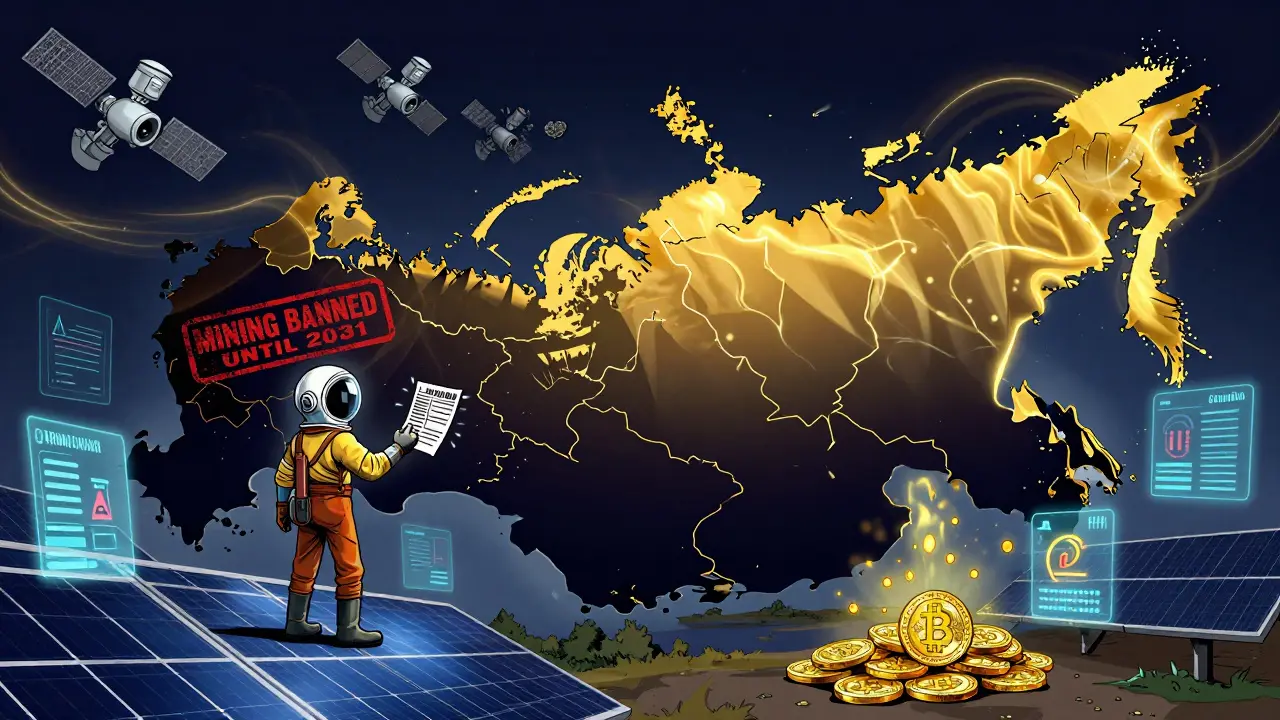
It’s not just about registration. Where you live matters more than you think. Ten regions in Russia have a complete, multi-year ban on all cryptocurrency mining. These include Dagestan, Ingushetia, Kabardino-Balkaria, Karachay-Cherkessia, North Ossetia, Chechnya, and four territories currently under Russian control: Donetsk, Lugansk, Zaporizhzhia, and Kherson. The bans are in effect until March 15, 2031. That’s not a temporary pause. That’s a six-year freeze.
Why these places? They’re all energy-starved. The power grid in the North Caucasus and southern regions can barely handle basic household needs, let alone the constant drain of mining rigs. The government isn’t trying to punish miners here-it’s trying to keep the lights on in hospitals and schools.
Seasonal Bans in Siberia
Then there are the three Siberian regions: Irkutsk, Buryatia, and Zabaikalsky. Mining here isn’t banned outright-it’s seasonal. From January 1 to March 15 each year, all mining equipment must shut down. In 2025, that window was extended to November 15 through March 15. That’s nearly five months of the year where you can’t run your rigs.
The reason? Winter. Siberia’s electricity demand spikes when temperatures drop below -30°C. Homes need heating. Water pipes need to stay thawed. The grid can’t handle mining rigs pulling power during peak hours. So the state flips a switch-remotely-and your ASICs go dark. No notice. No appeal. Just a signal from the grid operator.
Remote Shutdowns Are Real
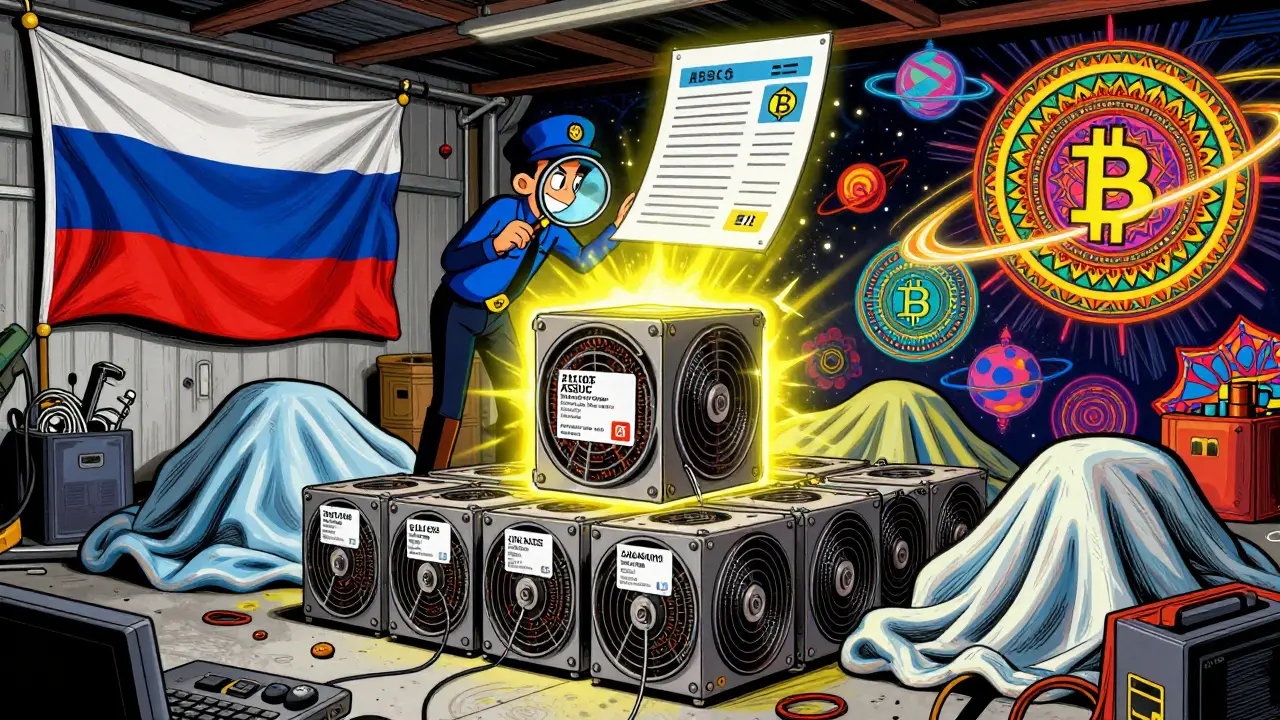
This isn’t science fiction. Every registered mining rig in Russia has to be labeled and certified. The government tracks each unit’s serial number, power draw, and location. If the national grid hits 95% capacity, authorities can cut power to mining operations instantly. Miners are classified as “fourth category” consumers-the lowest priority. Homes, hospitals, and water treatment plants come first. Mining? Last.
There’s no backup plan. No generator loophole. If your facility is connected to the public grid, and the grid says “off,” you turn off. Even if you have solar panels or a diesel generator, the law doesn’t protect you if your main connection is still tied to the state network. And if you’re caught running illegal equipment during a shutdown? Fines jump from 200,000 to 2 million rubles. The government is pushing that change through right now.
Hardware Registration and Tracking
Importing mining hardware into Russia now requires official certification. Every ASIC or GPU rig must be registered with the Ministry of Digital Development before it crosses the border. Customs checks serial numbers against the national registry. If your equipment isn’t labeled, it gets seized. If you bring in unregistered gear and plug it in? You’re automatically flagged as an illegal operator.
It’s not just about stopping smuggling. It’s about control. The government needs to know exactly how much electricity mining is using-and where. They’ve built a real-time monitoring system that links power consumption data to registered miners. If your facility suddenly draws 10% more power than your registered capacity, an alert goes out. They’ll come check. And if they find unregistered gear? You’re fined. Period.
What You Can’t Do, Even If You’re Legal
Legal mining doesn’t mean legal spending. Even if you’re registered, taxed, and compliant-you still can’t use Bitcoin or any other cryptocurrency to buy coffee, pay rent, or order parts online in Russia. The ruble is the only legal tender. That rule hasn’t changed.
And if you make more than 600,000 rubles ($7,500) in crypto profits in a year, you have to report it to the tax service. Failure to report can lead to criminal charges. The government doesn’t care if you mined it in Siberia or bought it on Binance. If it’s in your wallet and exceeds the threshold, you report it. Or you risk a fine of up to 20% of the unreported amount, plus interest.
Why So Many Miners Are Still Underground
Despite the legal framework, most miners still operate in the shadows. Why? Because registering means giving up control. You’re telling the government exactly where you are, how much power you use, and how much you earn. For many, that’s too risky. Some fear future crackdowns. Others don’t want to pay taxes. Some just don’t trust the system.
But the cost of staying illegal is rising. Fines are increasing. Enforcement is improving. The government now uses satellite imagery to spot large mining farms. They monitor grid anomalies. They cross-reference electricity invoices with blockchain transaction timestamps. The days of flying under the radar are ending.
Is It Still Worth It?
Yes-for some. Russia still has cheap electricity in certain regions, especially in the Urals and parts of the Far East where hydro and nuclear power are abundant. Industrial-scale miners with access to subsidized energy can still turn a profit, especially with Bitcoin’s price above $70,000 in late 2025.
But you need to plan. You need to register. You need to accept seasonal shutdowns. You need to accept remote disconnections. And you need to pay taxes. It’s not the wild west anymore. It’s a regulated industry with rules, deadlines, and consequences.
For the average person with a few rigs in their garage? It’s probably not worth the risk. The hassle, the cost, the uncertainty-it adds up. For companies with legal structure, energy contracts, and tax advisors? It’s a niche opportunity. But only if you play by Russia’s rules.
What’s Next?
The government says the current framework will last until at least March 2031. That’s six years of stability-on paper. But Russia’s energy situation is unpredictable. If renewable capacity grows, restrictions might ease. If another cold snap hits Siberia, bans could expand.
One thing’s clear: Russia isn’t trying to be Bitcoin-friendly. It’s trying to control it. To use it. To profit from it-without letting it threaten the ruble, the grid, or state authority.
If you’re considering mining in Russia, don’t look at the price of Bitcoin. Look at the power grid map. Check the regional ban list. Register your gear. Pay your taxes. And always assume your machines can go dark at 3 a.m. with no warning.
Is cryptocurrency mining legal in Russia in 2025?
Yes, but only if you register with the national miners’ registry and comply with all regulations. Individual miners using under 6,000 kWh per month are exempt from registration. All other operations must be officially licensed. Unregistered mining is illegal and carries heavy fines.
Can I mine crypto in Siberia?
Only during certain months. In Irkutsk, Buryatia, and Zabaikalsky, mining is banned from November 15 to March 15 each year due to winter energy shortages. Outside that window, mining is legal if you’re registered. Remote shutdowns can still occur during grid stress, even in permitted months.
What happens if I mine without registering?
You risk fines of 200,000 to 2 million rubles ($2,500-$25,500), seizure of equipment, and potential criminal charges. Authorities use electricity usage data, serial number tracking, and satellite imaging to detect unregistered operations. The government is actively increasing enforcement.
Do I have to pay taxes on crypto mining profits in Russia?
Yes. A 15% tax on mining profits was introduced in November 2024. You must report all earnings to the Federal Tax Service if your annual crypto income exceeds 600,000 rubles. Failure to report can result in penalties of up to 20% of the unreported amount.
Can I use Bitcoin to pay for things in Russia?
No. While owning and mining Bitcoin is legal under certain conditions, using it to pay for goods or services is still illegal. The ruble is the only legal tender in Russia. Any transaction using cryptocurrency for purchases violates currency control laws.
Are there regions where mining is completely banned?
Yes. Ten regions-including Chechnya, Dagestan, North Ossetia, and the occupied territories of Donetsk, Lugansk, Zaporizhzhia, and Kherson-have a complete ban on mining until March 15, 2031. These areas are energy-deficient, and the government prioritizes residential and critical infrastructure power over mining.
How does Russia track mining equipment?
All imported mining hardware must be certified and labeled with a unique serial number. The Ministry of Digital Development maintains a national registry linking each device to its owner, location, and power consumption. Authorities use this data to monitor usage, detect illegal operations, and trigger remote shutdowns during grid stress.
Can I use a generator to keep mining during a shutdown?
Technically, yes-if your equipment isn’t connected to the public grid. But if your facility relies on grid power, even with a backup generator, you’re still subject to the same rules. Authorities can detect anomalies in power usage patterns and may still investigate. Using generators to bypass restrictions doesn’t make your operation legal.
Write a comment