
When Cypriots want to buy Bitcoin, trade Ethereum, or hold other crypto assets, they don’t need to jump through hoops. The system is built for them - not in spite of regulation, but because of it. Cyprus doesn’t block crypto. It regulates it. And that makes all the difference.
Legal and Safe Access Is the Norm
Cryptocurrency is fully legal in Cyprus as of 2026. You can buy, sell, hold, and trade digital assets without breaking any laws. There’s no ban. No hidden restrictions. No need to use VPNs or offshore accounts just to get started. What you do need is to use a platform that follows the rules - and that’s easier than you think.The Cyprus Securities and Exchange Commission (CySEC) is the gatekeeper. It doesn’t stop people from trading. It makes sure the platforms they use are trustworthy. Since December 30, 2024, all crypto exchanges operating in Cyprus must be licensed under the EU’s Markets in Crypto-Assets (MiCA) regulation. This means every exchange serving Cypriots has to prove it’s secure, transparent, and follows strict anti-money laundering rules.
Before MiCA, some local firms operated under Cyprus’s old national rules. Now, those licenses are expired. Only MiCA-compliant providers can legally offer services. That’s why you’ll see platforms like Bitpanda, Kraken, and Coinbase listed as registered with CySEC. They’re not just popular - they’re approved.
How to Get Started: The Real Process
Getting started is straightforward. Here’s how most Cypriots do it:- Choose a CySEC-registered crypto exchange. Look for the official CySEC CASP register online - it’s public and updated daily.
- Sign up with your real name, ID, and proof of address. No aliases. No anonymous accounts.
- Complete the KYC check. You’ll need to upload a photo of your passport or national ID. Some platforms also ask for a selfie holding the document.
- Deposit euros via bank transfer or SEPA. Credit cards are rarely accepted due to higher fraud risk.
- Buy your crypto. The platform will show you live prices. You can buy fractions of Bitcoin as small as €10.
There’s no waiting period. Once your documents are verified - which usually takes under 24 hours - you can trade immediately. Many platforms even offer instant verification if you use digital ID tools like IDnow or Jumio, which are widely supported in Cyprus.
Payment Methods That Work
Cypriots don’t use cash or peer-to-peer apps to buy crypto. The system doesn’t support it. Instead, they use:- SEPA bank transfers - the most common. Free or low-cost, takes 1-2 business days.
- Instant bank payments - via PayNow or similar local systems integrated into some platforms.
- Debit cards linked to EU banks - accepted by a few exchanges, but not all.
Cash deposits, crypto-to-crypto on-ramps, or unregulated P2P platforms are risky. They’re not illegal, but they bypass the safeguards built into the system. If you use them, you’re on your own if something goes wrong.
Taxes? No Capital Gains, But Keep Records
Cyprus doesn’t tax profits from selling crypto. That’s a big deal. If you bought Bitcoin for €5,000 and sold it for €12,000, you keep the full €7,000 profit. No tax. No filing. No paperwork.But here’s the catch: you still need to keep records. CySEC and MOKAS (the anti-money laundering unit) can ask for proof of your transactions. If you’re audited, you’ll need to show:
- When you bought the crypto
- How much you paid
- When you sold it
- What you received
Most exchanges automatically generate transaction histories. Save those PDFs. Store them in the cloud. Don’t rely on your email inbox alone - accounts get hacked.
What Platforms Do Cypriots Actually Use?
You won’t find a public list of “top 5 exchanges in Cyprus,” but based on user reports and CySEC’s register, these are the most trusted:- Bitpanda - popular for beginners, supports EUR deposits, easy interface.
- Kraken - favored by active traders, low fees, strong security.
- Coinbase - widely known, good customer support, reliable for EU users.
- Bybit - used for derivatives and futures trading, licensed under MiCA.
- Bitstamp - one of the oldest EU-licensed exchanges, trusted by institutions.
These platforms all have CySEC registration numbers you can verify. Never use a platform that won’t show you its license. If they say “we’re licensed in another country,” ask: “Are you registered with CySEC under MiCA?” If they can’t answer, walk away.
What Doesn’t Work Anymore
A few things that used to be common are now blocked or discouraged:- Unlicensed P2P platforms - like local Facebook groups or Telegram channels selling crypto. These aren’t regulated. No recourse if you get scammed.
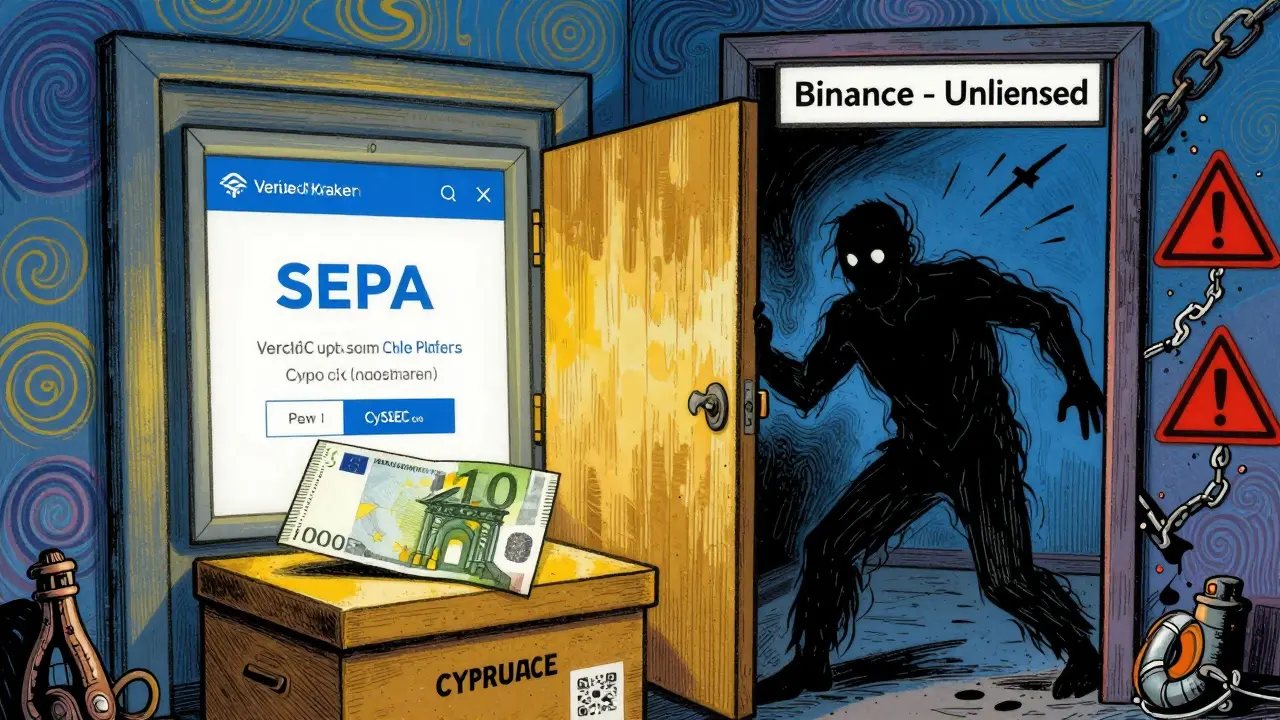
- Non-EU exchanges without CySEC registration - like Binance (unregistered in EU since 2023) or KuCoin. They may still let you sign up, but they can’t legally serve EU residents. Your funds aren’t protected.
- Using VPNs to bypass geo-blocks - risky. If detected, your account can be frozen. Your identity is tied to your bank account, not your IP.
Some Cypriots still try to use offshore platforms for higher yields or more coins. But the trade-off is real: no legal protection, no insurance, no recourse if the platform vanishes.

Why This System Works
Cyprus didn’t try to stop crypto. It didn’t ignore it. It built a bridge. By aligning with MiCA, Cyprus made sure its citizens could access global markets - safely. The system isn’t perfect. Fees are higher than on unregulated platforms. Verification takes time. But you know who you’re dealing with. You know your money is protected. And if something goes wrong, you can complain to CySEC.The Innovation Hub at CySEC even offers free guidance for new users. You can book a consultation to ask questions about compliance, security, or how to report suspicious activity. It’s not a sales pitch. It’s a public service.
What to Watch Out For
Even in a regulated environment, scams exist. Here’s how to avoid them:- Never share your 2FA codes - not even with “support.” Legit platforms never ask for them.
- Use hardware wallets for long-term holds. Exchanges get hacked. Your private keys should be yours.
- Watch for fake websites - always type the official URL. Bookmark it.
- Don’t chase “guaranteed returns” - if it sounds too good to be true, it is.
One real case in 2025 involved a Cypriot who lost €18,000 to a fake Kraken website. The site looked real. The support chat was live. But it wasn’t registered with CySEC. He reported it. CySEC issued a public warning. The site was taken down. But the money? Gone.
Next Steps for New Users
If you’re starting out:- Go to CySEC’s CASP Register and search for licensed exchanges.
- Compare fees, supported coins, and deposit methods.
- Start small. Buy €50 worth of Bitcoin or Ethereum.
- Enable two-factor authentication and backup your recovery phrase offline.
- Keep your transaction records for at least five years.
You don’t need to be an expert. You just need to be careful. And in Cyprus, the system is designed to help you do exactly that.
Is cryptocurrency legal in Cyprus?
Yes, cryptocurrency is fully legal in Cyprus as of 2026. It is not considered legal tender, but buying, selling, and holding crypto is permitted under the EU’s MiCA regulation. All exchanges serving Cypriots must be licensed by CySEC.
Can I use Binance or KuCoin in Cyprus?
No, Binance and KuCoin are not registered with CySEC under MiCA as of 2026. While you may still be able to sign up, these platforms cannot legally offer services to EU residents. Using them means you lose legal protections and insurance coverage for your funds.
Do I pay tax on crypto profits in Cyprus?
No, Cyprus does not charge capital gains tax on cryptocurrency profits as of 2026. You keep 100% of your gains. However, you must keep records of all transactions in case of audit by MOKAS or CySEC.
What payment methods work best for Cypriots?
SEPA bank transfers are the most reliable and widely accepted. Instant bank payments via local systems are also supported by some platforms. Credit cards and cash deposits are rarely accepted due to fraud risks and regulatory restrictions.
How do I know if a crypto exchange is safe in Cyprus?
Check the official CySEC CASP Register at https://www.cysec.gov.cy/en/casp-register. Only use platforms listed there. If a platform refuses to show its registration number or claims to be licensed elsewhere without CySEC approval, avoid it.
Can I use a VPN to access restricted exchanges?
Using a VPN to bypass geo-restrictions is risky. Exchanges can detect and freeze accounts if they identify suspicious activity. Your identity is tied to your bank account and ID documents - not your IP address. Bypassing rules doesn’t make you safer; it makes you a target.
Write a comment