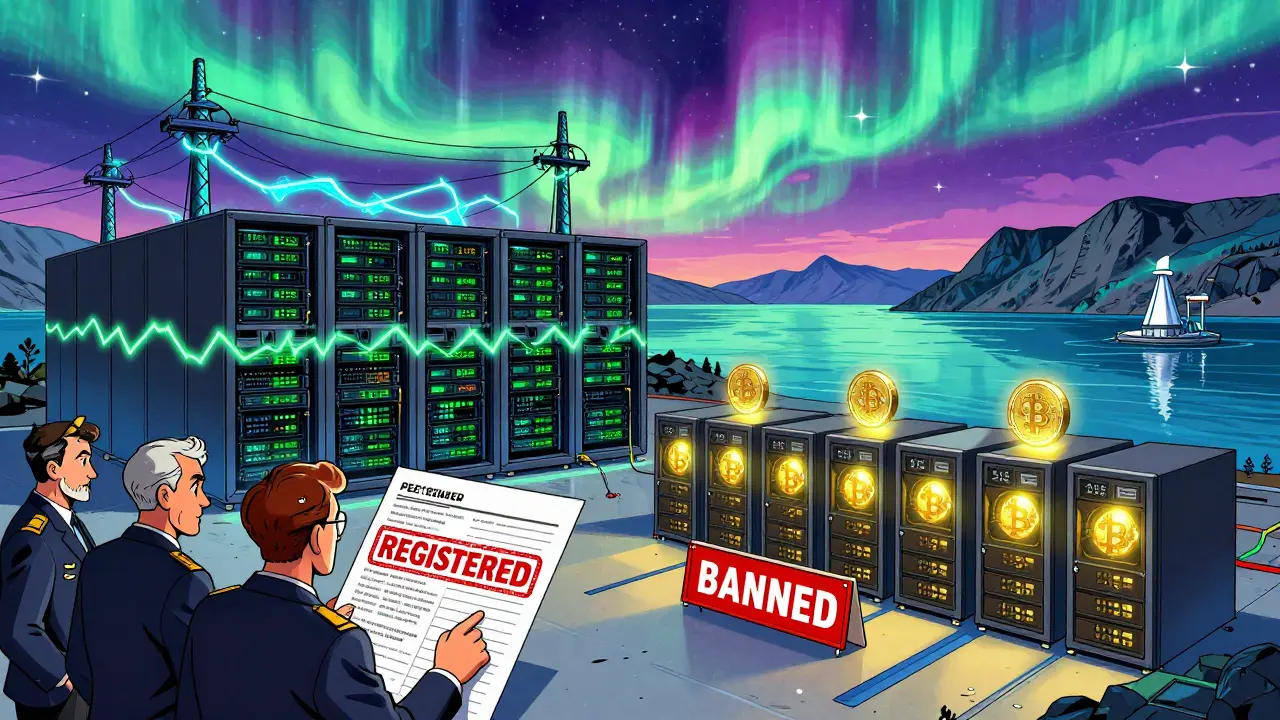
When Norway announced its new rules on cryptocurrency mining data centers, it didn’t just make headlines-it changed the game. As of January 2025, the country became the first in Europe to require all data centers to register with the government, and by autumn 2025, it stopped new crypto mining facilities from being built. This isn’t a temporary pause. It’s a long-term policy shift. If you’re running or planning a crypto mining operation in Norway, you need to understand exactly what’s happening-and why.
Why Norway Is Cracking Down
Norway has always been known for cheap, clean electricity. Over 90% of its power comes from hydropower. That made it a magnet for crypto miners looking to cut costs and reduce carbon footprints. But in 2024, the government flipped the script. Instead of seeing mining as a smart use of excess energy, officials started calling it a waste. Minister Karianne Tung from the Ministry of Digitalization said it plainly: "Crypto mining is very power-intensive and generates little in the way of jobs and income for the local community." That’s the core of Norway’s argument. While factories, steel plants, and data centers for public services create real economic value, crypto mining doesn’t. It uses electricity, pays minimal taxes, and leaves few skilled jobs behind. The government decided that electricity should go to industries that build things, employ people, and grow the economy-not to servers running 24/7 just to mine Bitcoin.The Two Big Rules: Registration and the Ban
There are two major parts to Norway’s approach. One is mandatory registration. The other is a hard stop on new mining centers. Registration is handled by the Norwegian Communications Authority (Nkom). Every data center in the country-whether it hosts websites, cloud services, or mining rigs-must now register. Operators have to give their company name, physical address, legal status, and the name of a contact person. They also need to list their customers. If even one of those customers is a crypto mining company, they must declare it. This isn’t about spying-it’s about visibility. The government now knows exactly where crypto mining is happening and how much power it’s using. Failure to register means fines up to 5% of annual turnover. That’s not a slap on the wrist. For a medium-sized data center, that could mean hundreds of thousands of euros. Existing centers had until July 1, 2025, to comply. New ones? They can’t even start construction without being registered first. The ban on new cryptocurrency mining data centers kicked in in autumn 2025. It doesn’t touch existing operations. They’re still running. But no new facilities can be built. The ban targets the most energy-hungry setups-those using older ASIC miners that burn through electricity just to solve one cryptographic puzzle after another. The government hasn’t published an exact power threshold, which leaves some operators in the dark. Is a 10-megawatt facility too much? What about 8? There’s no public answer yet, and that uncertainty is causing headaches for investors.How This Compares to Other Countries
Norway isn’t alone in worrying about crypto mining’s energy use. But it’s the only country that’s taken this exact approach. China banned all mining in 2021. It was total. No exceptions. Norway’s ban is the opposite: it allows what’s already there but blocks anything new. That’s a strategic middle ground. It doesn’t punish existing businesses, but it stops the sector from growing. Other Nordic countries are doing the opposite. Iceland still welcomes miners. Sweden has tax breaks. Finland offers low-cost renewable power. As a result, mining companies that left Norway are now setting up shop there. The shift has been noticeable. In late 2025, reports showed a 30% drop in Norway’s crypto mining hash rate, while Iceland’s rose by 22% in the same period. Even in the U.S., states like Texas and Georgia are competing to attract mining operations with incentives. Norway’s move puts it at odds with the global trend of trying to become a crypto hub.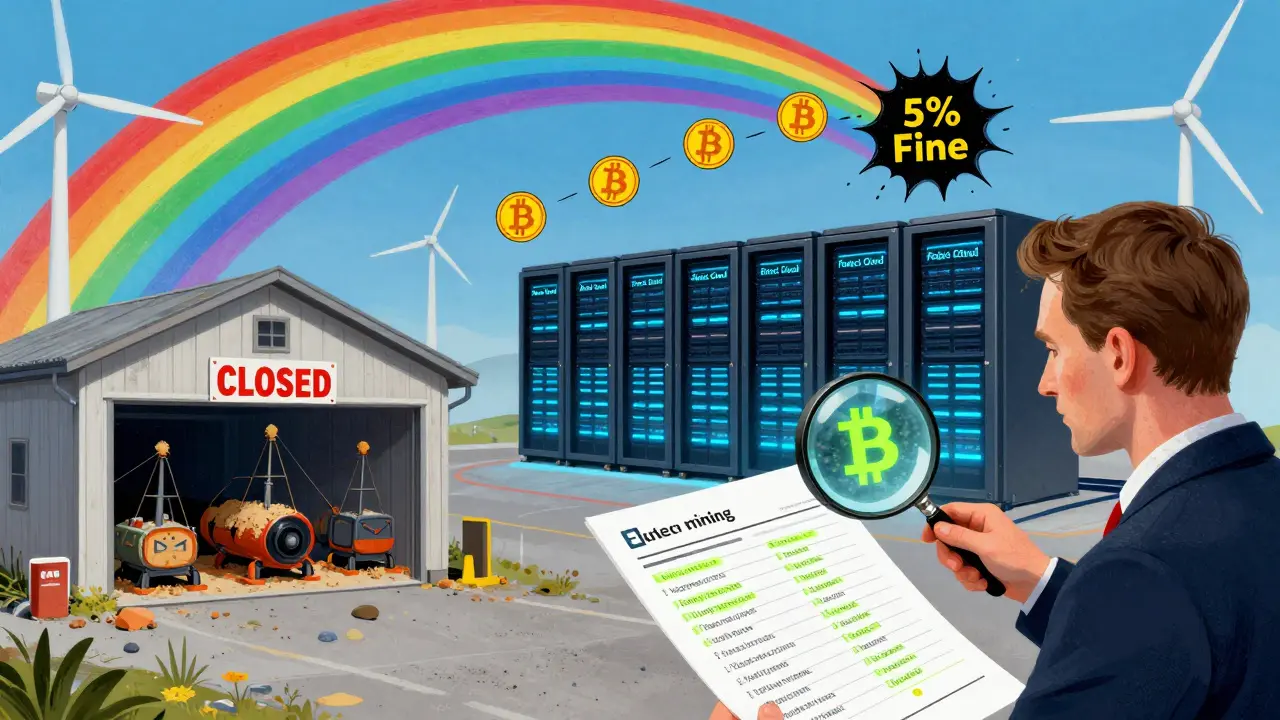
What This Means for Miners
If you’re a small-scale miner in Norway, this is tough. Registration costs money-legal fees, documentation, ongoing reporting. For someone running a few dozen rigs in a garage, it’s not worth it. Many have shut down quietly. Larger operators are adapting. Some are rebranding their data centers as "AI hosting" or "cloud computing" to avoid drawing attention. Others are installing power monitors to prove their energy use stays below the unofficial threshold. But that’s risky. If the government finds out you’re mining, you could be fined or forced to stop. One real-world example: A mining firm in Stavanger tried to hide its Bitcoin rigs under a "server farm for fintech clients." Nkom cross-checked customer lists and found three known crypto mining companies listed as tenants. The company was fined €230,000 and ordered to disconnect all mining equipment within 30 days.Is This Legal?
Some miners are asking: "Can they do this?" The answer is yes. Norway isn’t banning cryptocurrency. It’s regulating infrastructure. It’s like saying, "You can run a restaurant, but you can’t build a new one in this neighborhood because we need the space for schools." The government is also aligning with EU rules. The Markets in Crypto Assets (MiCA) regulation and the Transfer of Funds Regulation II are being rolled out in 2025. These require reporting on transactions and anti-money laundering checks. So even if mining continues, operators now face double regulation: energy limits from one agency, financial oversight from another. The Norwegian Financial Supervisory Authority (FSA) has already published draft guidelines. Miners now need lawyers who understand both energy law and crypto finance. It’s not just a technical problem-it’s a legal one.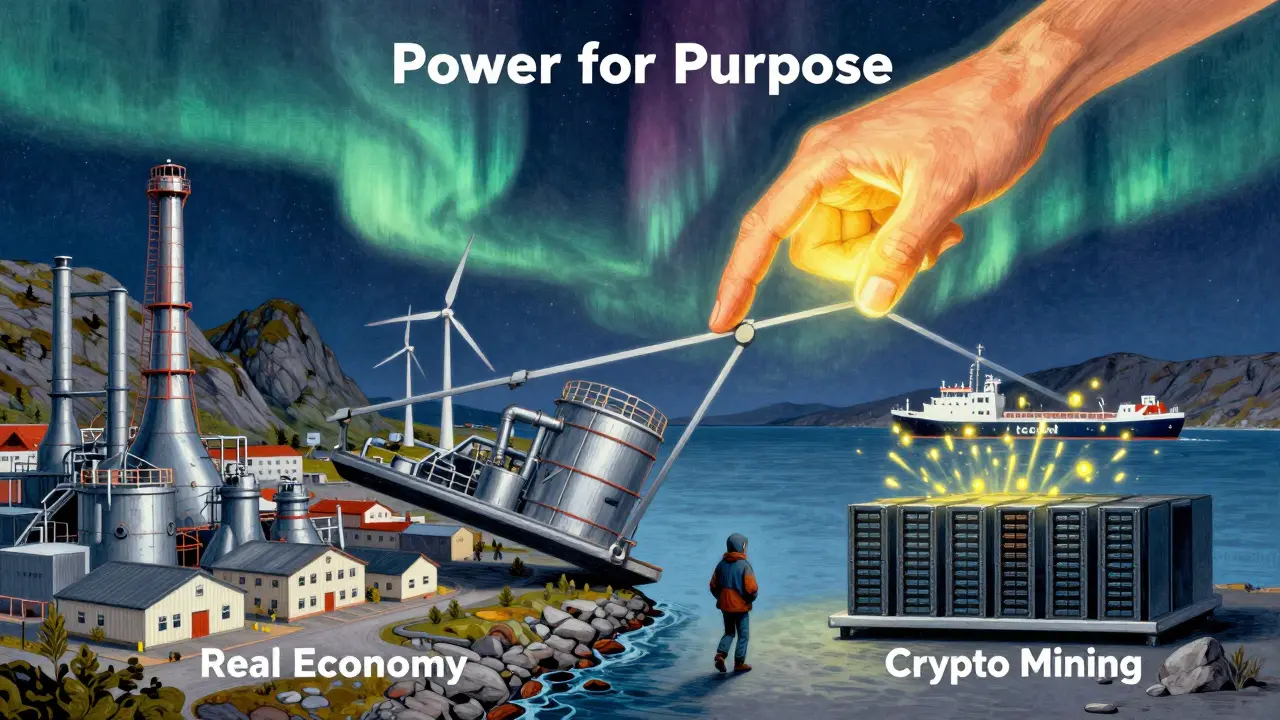
What’s Next?
No one thinks this is the end. Government officials have said they’re watching closely. If existing mining operations grow their power use, or if the environmental impact worsens, the ban could expand. There’s talk of limiting power allocation per facility. Or maybe even taxing mining electricity at a higher rate. The real question is whether Norway’s model will spread. Other countries with lots of hydropower-Canada, Sweden, Finland-are watching. If Norway proves that restricting crypto mining doesn’t hurt its economy, others may follow. That could mean fewer mining hubs in Europe and more in places like the U.S., Kazakhstan, or even Saudi Arabia, where energy is cheap and rules are loose.Final Thoughts
Norway’s approach isn’t about stopping technology. It’s about choosing where to put your resources. Electricity is a public good. The government decided it should go to industries that create lasting value-not to machines that turn power into digital coins with no real-world use. For miners, it’s a clear signal: Norway is no longer a friendly place. For everyone else, it’s a case study in how a country can prioritize long-term sustainability over short-term tech hype. The world is watching-and many are already moving on.Is crypto mining completely banned in Norway?
No. Only new cryptocurrency mining data centers are banned as of autumn 2025. Existing operations are still allowed to run, but they must be registered with the Norwegian Communications Authority (Nkom). The ban targets expansion, not existing activity.
Do I need to register my data center if I’m not mining crypto?
Yes. All data centers in Norway must register with Nkom, regardless of purpose. The registration system tracks all tenants and services. If a crypto mining company rents space in your facility, you must declare it. Failure to register can result in fines up to 5% of annual turnover.
What happens if I don’t register my mining operation?
You face financial penalties of up to 5% of your annual turnover. Authorities can also shut down your facility, seize equipment, or block power connections. Nkom cross-references customer lists and power usage data to identify unregistered mining activity. Enforcement is active and ongoing.
Can I move my mining operation to another Nordic country?
Yes, and many have. Iceland, Sweden, and Finland have become top destinations for miners leaving Norway. These countries still offer low-cost renewable energy and no outright bans. However, each has its own regulations-especially under the EU’s MiCA rules-so legal compliance is still required.
Why did Norway choose this approach instead of a full ban like China?
Norway’s government wants to avoid punishing existing businesses while preventing further growth. A full ban, like China’s, would have caused legal battles and stranded investments. The current system allows for oversight, gradual adjustment, and economic stability. It’s a middle path: control, not eliminate.
How much electricity does crypto mining use in Norway?
Before the restrictions, crypto mining consumed about 1.2 terawatt-hours (TWh) of electricity annually-roughly 1.5% of Norway’s total power use. That’s equivalent to the annual consumption of over 200,000 homes. After the ban and registration rules, usage dropped by an estimated 30% by early 2026.
Write a comment