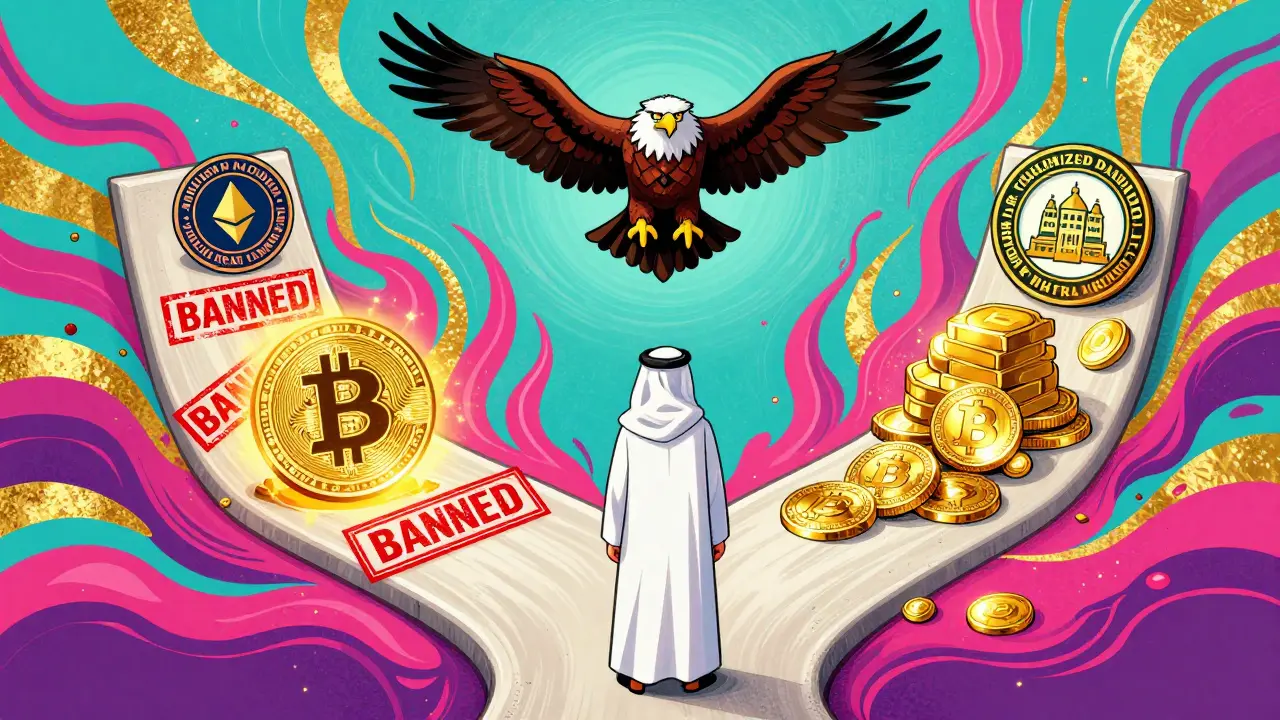
For residents of Qatar, owning or trading Bitcoin, Ethereum, or any other cryptocurrency isn’t just risky-it’s effectively illegal. While other countries in the Gulf are experimenting with digital currencies, Qatar has drawn a hard line. Since September 2024, the country’s financial regulators have made it clear: if a digital asset isn’t backed by real-world property like real estate, gold, or company shares, it’s banned. This isn’t a gray area. It’s a strict, enforced rule.
What Exactly Is Banned?
The Qatar Financial Centre Regulatory Authority (QFCRA) doesn’t leave room for interpretation. Under the Digital Assets Regulations 2024, all cryptocurrencies-including Bitcoin, Litecoin, and Dogecoin-are classified as "Excluded Tokens." That means no trading, no holding, no mining, and no using them as payment. Even stablecoins like USDT or USDC are banned because they’re designed to act like currency. The same goes for central bank digital currencies (CBDCs), even though Qatar might one day launch its own.
These rules apply to everyone: individuals, businesses, banks, and even crypto exchanges operating inside Qatar. The Central Bank of Qatar has been enforcing this since 2018, when it first blocked banks from handling crypto transactions. By 2020, the ban expanded to cover all virtual asset services within the Qatar Financial Centre. The 2024 update didn’t soften the rules-it made them official and permanent.
What Can You Actually Do?
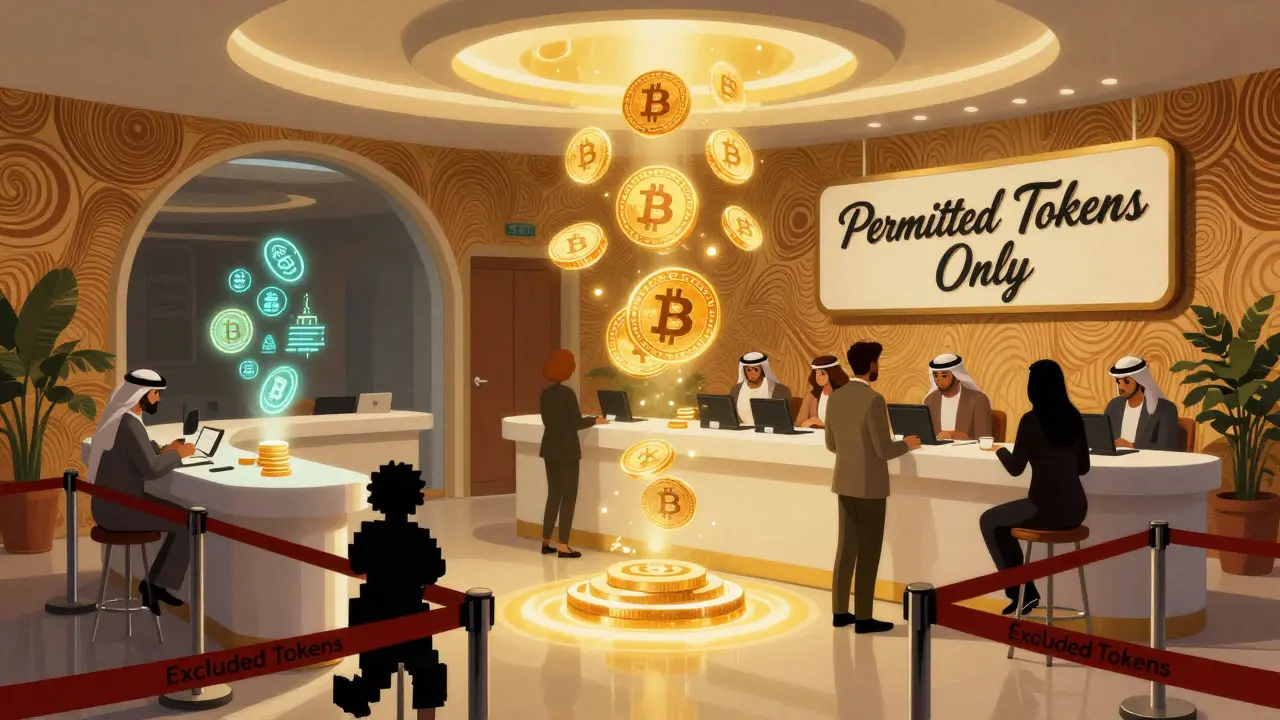
Here’s where things get interesting. While you can’t buy Bitcoin, you can invest in digital versions of real assets. The QFCRA created a legal pathway for "Permitted Tokens"-digital tokens that represent ownership in physical assets. Think of it like this: instead of buying a piece of real estate outright, you buy a token that proves you own 5% of that building. The same applies to bonds, sukuk (Islamic financial instruments), commodities like gold or oil, and even shares in private companies.
The process is tightly controlled. To create a permitted token, three steps are required:
- Validation - A licensed validator confirms the asset’s ownership and legal status.
- Request - The asset owner formally applies to tokenize the asset.
- Generation - A licensed token generator issues the digital token on government-approved infrastructure.
Only companies licensed by the QFCRA can run this system. That means you can’t just download an app and start trading. You have to go through approved providers. But if you do, you’re not breaking any laws-you’re participating in a regulated, government-backed system.
Why Does Qatar Do This?
Qatar’s government doesn’t trust cryptocurrencies because they’re volatile, untraceable, and hard to control. Officials worry about money laundering, terrorist financing, and financial instability. In 2019, they warned that virtual assets could be used to move illicit funds. Their solution? Don’t ban blockchain technology-just ban the parts that don’t have a clear link to real value.
By allowing tokenization of real estate and commodities, Qatar is tapping into its biggest economic strengths. The country has billions tied up in property, oil, and gas. Tokenizing those assets could make them easier to trade, attract foreign investors, and increase liquidity-all while keeping control in government hands. It’s not about rejecting innovation. It’s about controlling it.
What Happens If You Break the Rules?
There’s no public record of individuals being fined or jailed for owning crypto privately. But that doesn’t mean it’s safe. The QFCRA treats violations as serious. Financial institutions that facilitate crypto transactions face heavy penalties, including license revocation. For individuals, the risk is less about arrest and more about legal exposure. Qatar’s Anti-Money Laundering Law (Law No. 20 of 2019) defines "funds" broadly to include any digital asset. If you’re caught moving crypto through a bank or exchange, even once, you could be investigated for violating financial crime laws.
Also, using foreign platforms like Binance or Coinbase isn’t a loophole. Those services aren’t licensed in Qatar, and accessing them doesn’t make the activity legal. If you’re a resident, your financial activity is still subject to Qatari law-even if the transaction happens overseas.
How Does This Compare to Other Gulf Countries?
Qatar is the strictest in the region. Saudi Arabia and the UAE allow licensed crypto exchanges and even have their own crypto hubs. Bahrain has a full regulatory sandbox for digital assets. Even Oman lets residents trade crypto under certain conditions. Qatar doesn’t. It’s the only country in the GCC that explicitly bans all cryptocurrencies while creating a parallel system for asset-backed tokens.
This makes Qatar an outlier. But it’s also consistent with its broader financial strategy: stability over speculation, control over decentralization. While other countries chase the hype of Web3 and NFTs, Qatar is focused on building a digital infrastructure for traditional wealth.

What Should Qatar Residents Do?
If you’re a resident, your best move is simple: avoid crypto entirely. Don’t buy it. Don’t hold it. Don’t use it. The legal risks aren’t worth it.
If you’re interested in blockchain technology, focus on permitted tokens. Look for QFCRA-licensed providers offering tokenized real estate, commodities, or corporate shares. These aren’t speculative bets-they’re regulated investments with clear legal backing. You can’t get rich quick with them, but you also won’t get in trouble.
And if you’re a business owner? Don’t try to offer crypto services. The penalties are severe, and the market for it doesn’t exist. Instead, explore how your business can tokenize real assets. A real estate firm, for example, could offer fractional ownership of a commercial building via a permitted token. That’s legal. That’s smart. That’s the future Qatar is building.
What’s Next for Crypto in Qatar?
Don’t expect the ban to lift. The 2024 framework was designed to be long-lasting. The QFCRA has no plans to include Bitcoin or stablecoins in the permitted list. Instead, they’re likely to expand the types of assets that can be tokenized-maybe even fine art, intellectual property, or carbon credits.
One thing to watch: Qatar’s participation in regional financial initiatives. If the Gulf Cooperation Council moves toward a unified CBDC, Qatar might eventually accept it. But even then, it would be a government-controlled digital currency-not a decentralized crypto like Bitcoin.
For now, Qatar’s message is clear: blockchain is welcome. Cryptocurrencies are not. The line is drawn.
Is it illegal to own Bitcoin in Qatar?
Yes, owning Bitcoin or any other cryptocurrency is effectively illegal in Qatar. While there’s no specific law that says "you can’t hold crypto," all such assets are classified as "Excluded Tokens" under the Digital Assets Regulations 2024. This means they’re banned from the financial system, and using them through any domestic service-including banks or exchanges-is prohibited. Authorities treat crypto as a financial risk, not a legitimate asset.
Can I use Binance or Coinbase in Qatar?
Technically, you can access these platforms from Qatar, but doing so is legally risky. These services aren’t licensed by the QFCRA, and using them doesn’t make your activity legal. Qatar’s financial laws apply to residents regardless of where the transaction occurs. If you’re caught moving crypto through a Qatari bank or using a local payment method to fund your account, you could face investigation under anti-money laundering laws. It’s not recommended.
Can I invest in tokenized real estate in Qatar?
Yes, you can-and it’s completely legal. The QFCRA allows licensed providers to issue tokens that represent ownership in real-world assets like buildings, land, or commodities. These aren’t speculative crypto assets; they’re digital records of legal ownership. To participate, you must go through a QFCRA-approved provider and follow the official tokenization process. This is the only legal way to engage with blockchain-based investments in Qatar.
Are stablecoins like USDT allowed in Qatar?
No. Stablecoins are explicitly classified as "Excluded Tokens" under the 2024 regulations. Even though they’re pegged to the US dollar, they’re treated as currency substitutes, which are banned. The QFCRA views them as a threat to financial stability because they can be used to move money outside the regulated banking system. You cannot legally trade, hold, or use stablecoins in Qatar.
What happens if a bank in Qatar finds crypto in my account?
If a Qatari bank detects cryptocurrency activity linked to your account-like a transfer from a crypto exchange-they are required to freeze the transaction and report it to the QFCRA. This could trigger an investigation under the country’s Anti-Money Laundering Law. You could be asked to prove the source of funds. If you can’t, your account may be restricted, and you could face penalties. Banks in Qatar are under strict orders to block all crypto-related activity.
Write a comment