FedEx Crypto Scam: How Fake Delivery Scams Steal Your Crypto
When you get a message saying FedEx crypto scam, a phishing scheme that pretends to be a delivery notice from FedEx to steal cryptocurrency, it’s not a mistake—it’s a targeted attack. These scams use fake tracking links, forged emails, and urgent language to make you think you owe a small fee to claim a package. But there’s no package. No FedEx. Just a link that drains your wallet the moment you sign in or approve a transaction. This isn’t old-school spam. It’s a well-organized fraud that preys on people who trust well-known brand names.
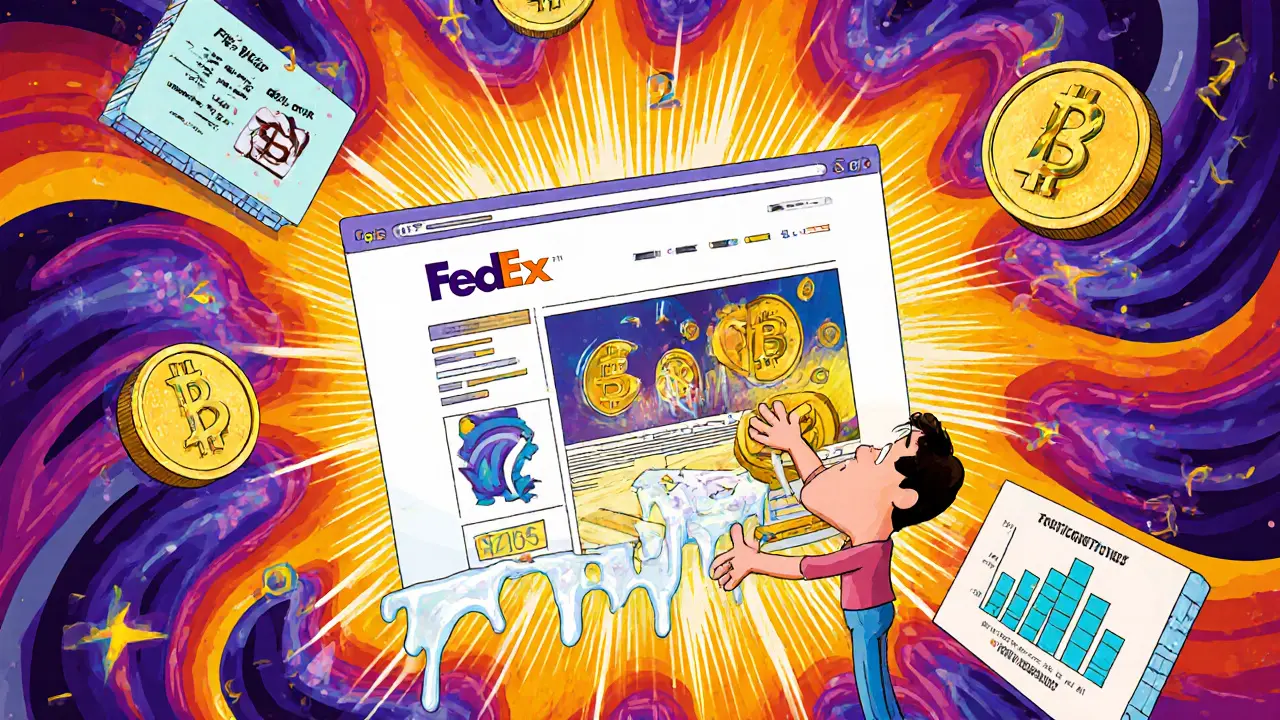
The crypto phishing, a method where scammers trick users into revealing private keys or approving malicious transactions behind these scams is simple but deadly. They send you an email or SMS that looks exactly like a real FedEx notification—same logo, same tone, even fake tracking numbers. Click the link, and you’re taken to a cloned website that asks you to connect your wallet to "pay the customs fee" or "verify your address." Once you approve the connection, the scammer takes everything. No refunds. No recovery. And because blockchain transactions are irreversible, the money is gone before you even realize what happened.
These scams don’t just target beginners. Even experienced users get fooled because the fakes are that good. In 2025, reports of fake FedEx crypto, fraudulent schemes impersonating FedEx to steal crypto through fake delivery claims jumped 140%—mostly because scammers now use AI to generate realistic emails and even voice calls. Some victims report getting calls from someone pretending to be a FedEx agent, asking them to confirm wallet details to release a "high-value shipment." It’s terrifyingly convincing. And the worst part? These scams are often linked to larger networks that sell stolen wallet access on dark web marketplaces.
There’s no such thing as a crypto delivery fee. FedEx doesn’t ask for crypto payments. They don’t send you links to connect your wallet. If you didn’t order something, you don’t owe anything. If you’re unsure, go directly to fedex.com—never click links in messages. And never, ever approve a transaction you don’t fully understand. Your wallet is your bank. Treat it like one.
Below, you’ll find real cases of people who lost thousands to these scams, breakdowns of how the fake websites are built, and the exact red flags to watch for before you click anything. This isn’t theory. It’s what’s happening right now—and how to stop it before it happens to you.
FDEX Crypto Exchange Review: Why It’s a Scam and Not a Legit Platform
FDEX Crypto Exchange is not real - it's a scam using FedEx's name to steal crypto. Learn why it's fraudulent, how it works, and how to avoid similar scams.